Petals & Roots: Easy Dinner Party Flowers to Instantly Elevate Your Spring Table
Up your hosting game with DIY flowers that look really professional


Outdoor hosting season is upon us, and if there is one thing I know how to do it's design a beautiful, seasonal floral arrangement that will impress your guests. It is actually so simple to create, and will instantly bring your table to life.
I've spent a decade creating floral designs for events and weddings, and there is one type of design I always come back to, and which my clients love. It's simple, elegant and structural in style, but still has movement and romance, and always creates a professional feel.
The key to this design is the mechanics of it; the behind the scenes engineering that holds it all together. In the most recent episode of Petals & Roots, I use pin frogs, or kenzans as they are also known, to create a repeated design in ceramic bowls. And here, I go into more depth about how to get the look.
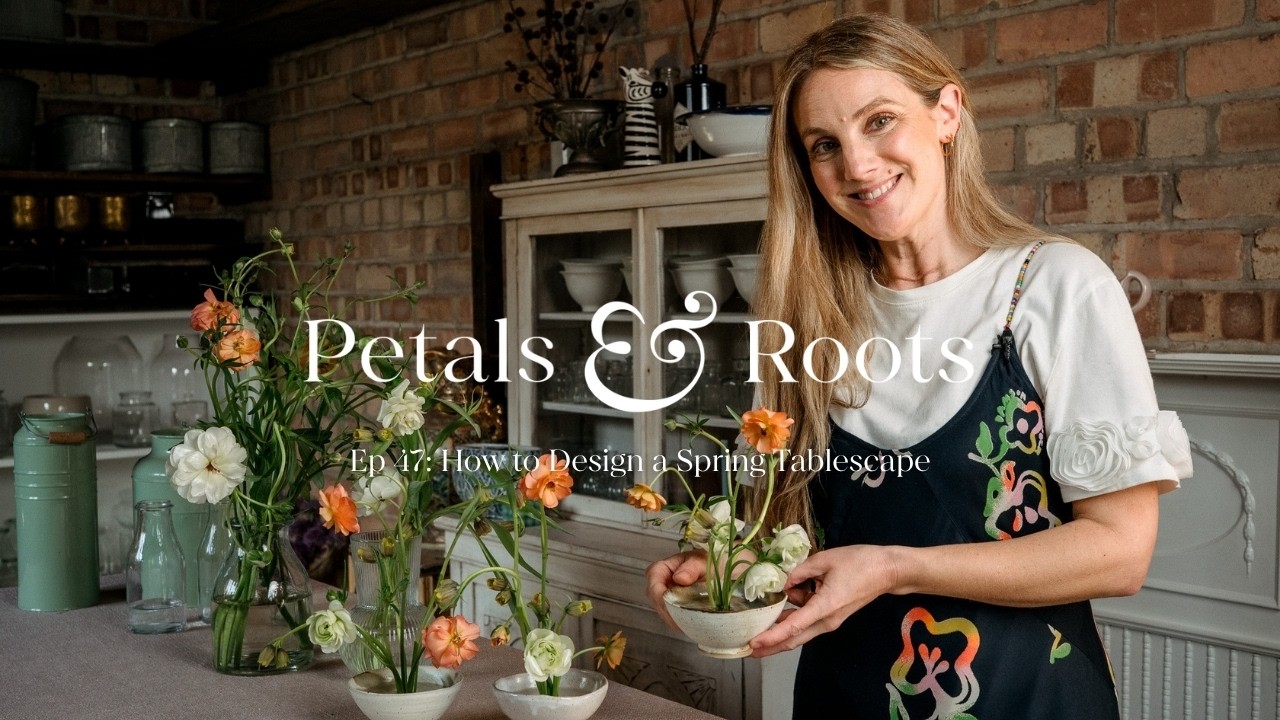
What You Need For This Floral Design Idea

- Floristry scissors, such as these ones from Amazon. Spending a bit more on a really good pair of sharp scissors pays off as they will last and make light work of all your snipping.
- Kenzans, also known as flower frogs or pin frogs, available from Walmart.
- A selection of ceramic bowls of your choice.
- Florist tack or putty, such as this from Amazon.
- Two or three varieties of seasonal flowers.
How To Create Your Own Dinner Party Table Flowers

To start with gather your vessels and pin frogs. To really get the look right, you need to opt for three or more (depending on the size of your table) ceramic bowls that are the same or similar. A neutral or pale tone would work best; this way you can take your pick with the colors and varieties of seasonal flowers you choose.
Pin frogs are a fantastic way to ensure your floral design is sustainable, and is a really good floral foam alternative.
To secure the pin frogs into the base of your bowls, take a piece of floristry tack (or putty as it is also known) and press firmly onto the back.
When you place this into your bowl, press and twist it to stick it down securely.

This is quite a contemporary design, and as such only requires two types of flowers. I used butterfly ranunculus in shades of peach and ivory, and uva vulpis fritillaries. Both are beautifully in season for this time of year, and carry a lot of natural movement in their stems, which is what we want for this idea.
To begin arranging, remove any dominant foliage from your stems, as we really want the blooms to take center stage in this design, and little else.
Place a stem in each of the bowls to get you started. Keep the first few central stems fairly tall, but do remember to stagger them, as I think it looks more natural if each of these bowls is a little distinct from one another.
I always work across all three vessels simultaneously, rather than individually, to ensure the design looks cohesive and each one is similar in size and stem count.

Bring in your second flower variety, varying the heights and the direction of each bloom. Remember that this design will be seen from all angles, so we don't want there to be a front and back.
Try to break up any long bare stems by adding a smaller flower next to it. This will interrupt any dense, green areas, and add interest from all angles.
Other types of flowers that would work beautifully in a design like this are Icelandic poppies, spiraea, aquilegia, lily of the valley, and sweet peas. Anything with curves and movement in the stems, and a really interesting and defined flower shape.

What to Shop

Originally used in the Japanese art of Ikebana, flower frogs or kenzans are an integral part of sustainable floristry, and can form part of a design.

The juxtaposition of stoneware and the pretty fluted design on these bowls is charming, and adds a playful note to a dinner party floral arrangement

I adore this butter yellow footed bowl, and think it would absolutely perfect as a centerpiece vessel, or as a triptych in a spring floral design.
Petals & Roots is a weekly video series fronted by me, Rachel Bull, Head of Gardens at Homes & Gardens. Every weekend on social, I share my seasonal gardening and flower arranging expertise and advice.
Love inspiring garden ideas, outdoor advice, and the latest news? Sign up for the Homes & Gardens newsletter and get the latest features delivered straight to your inbox.
