Your Bird Bath Needs More Than Fresh Water in Winter – These Tools Will Keep It Ice-Free for Visiting Wildlife
Keep your bird bath accessible with these handy tools


Keeping your bird bath filled up through winter is invaluable to wildlife, but keeping it ice-free is the real challenge to ensure it stays accessible. Luckily, there are so many products on the market that do the work for you.
While you can manually remove ice to stop your bird bath from freezing over in winter, the likes of heated bird baths (this gorgeous green heated bird bath from Amazon is my top choice), submersible bird bath heaters, and floating objects will do it for you. The best part is they're all perfectly safe for wildlife, so you can install them worry-free.
So, whether you've just acquired a new stylish bird bath or you're looking for ways to stop your existing one from freezing this winter, consider the below tools to keep your bird bath ice-free.
Heated Bird Bath

A heated bird bath is exactly what it sounds like: a bird bath with an integrated heater that stops the water from freezing over.
These can be a bit more pricey than a standard bird bath, but it's arguably the easiest way to stop your bird bath from freezing.
Typically, heated bird baths have a thermometer which detects when the temperature drops. It then automatically turns on to a safe heat that melts ice but isn't too warm for wildlife to use.
Bird Bath Heater

If you don't want to invest in a heated bird bath, you can turn your existing bird bath into a heated one using a bird bath heater.
This is a submersible heater that can be used in winter to warm up the water when freezing temperatures arrive, stopping ice from developing.
Many of these heaters are plug-in and have an automatic function to detect the temperature and turn on and off as needed.
They can typically be used in bird baths of a wide range of materials, including metal, plastic, stone or glass, but it is worth checking your chosen heater is compatible with your bird bath.
Floating Disk
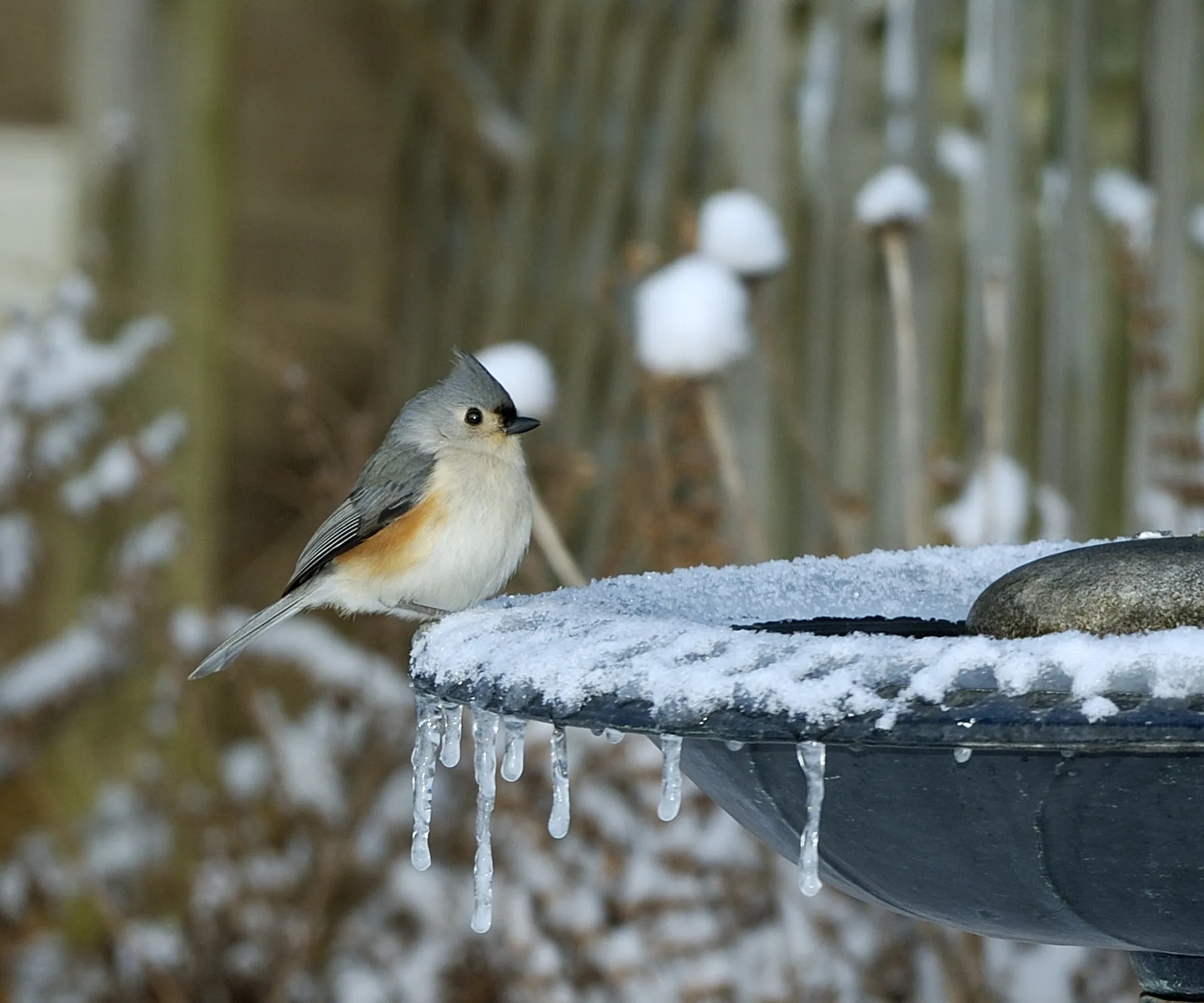
Another way to stop bird baths from freezing over is by keeping something floating in the water. This creates movement in the water which disturbs it, breaks up any ice that is forming, and stops it from fully freezing.
There are a few DIY solutions to this, including using a rubber ball or even a rubber duck, but if you're after something that doesn't compromise on aesthetics, you can purchase specific bird bath floating disk.
Likewise, a copper bird bath disk can be used as a natural purifier, which will also prevent the build-up of grime and algae.
FAQs
Can a Solar Fountain Pump Stop a Bird Bath from Freezing Over?
While a solar fountain pump will provide movement in the water to stop it from freezing over, it isn't the most reliable tool to use. The darker days of winter may limit its ability to charge and operate, and freezing temperatures may even damage the pump.
Stopping your bird bath from freezing over is just one element of bird bath winter care. You should also clean your bird bath frequently, keep it refilled, and remove any debris (like fallen leaves). Keeping your bird bath in shape like this will help garden birds in winter by providing a fresh water source.
If you love inspiring garden ideas, outdoor advice, and the latest news, why not sign up for our newsletter and get the latest features delivered straight to your inbox?
