What Your Hydrangeas Need in August to Recover From the Heatwave and Bounce Back Before Fall
These showy blooms still have much to offer in late summer


By late-August my hydrangeas are past their prime and looking a little tired, especially after such a long, dry summer. But, instead of letting them wilt away in the corner of my patio, I'm taking advice from the experts and doing a few things to get more out of these cottage garden blooms before fall.
If you grow hydrangeas, you'll know the type you have will determine the exact care it needs – especially when it comes to pruning. But in August, the advice is pretty much the same board: water deeply, provide protection from intense afternoon sun, and mulch roots to keep them hydrated. Pruning hydrangeas is generally not recommended in August, especially for those that bloom on old wood, as it could sabotage next year's display. This includes the spectacular climbing hydrangea, which is available at Trees.com, formerly known as Fast Growing Trees.
Essentially, late summer is all about protecting your hydrangeas from lingering hot temps and protecting next year's display. Here, the experts explain exactly what to do with hydrangeas in August.
1. Water Hydrangeas Deeply

If there's one thing we all know about hydrangeas, it's that they're very thirsty plants. During hot, dry spells, they can quickly wilt and droop from dehydration. That's why landscape designer, Caroline Ervin, stresses the importance of watering hydrangeas in late summer.
'You should continue to water deeply until the first frost so your hydrangea roots are not stressed in the heat of the late summer. Water early in the morning so the plant has ample water to get through the hot August days,' she advises.
Watering in the middle of the day risks both leaf scorch and the water evaporating before your plant's roots are able to soak it up.
'Watering the leaves can also cause fungal diseases like powdery mildew and leaf spot,' Caroline adds.
Hydrangeas want consistent moisture, so use a soil moisture meter (like this from Amazon) to monitor moisture levels and water accordingly. You can also use these terracotta watering spikes from Walmart to make watering more effortless during prolonged dry spells.

Caroline is a landscape designer. She has worked with clients since 2007 to install and maintain small and large residential gardens in Washington DC. She has more than 20 years hands-on experience gardening.
2. Protect it From Harsh Sunlight

Hydrangeas may have showy blooms, but they're also delicate and can show signs of heat stress from too much sun exposure. Of course, different hydrangea varieties prefer different levels of sunlight, but during a heatwave it is worth protecting all of them from the hottest part of the day.
'Providing afternoon shade can be helpful for hydrangeas, especially the bigleaf varieties,' says Lindsey Chastain, homesteader and founder at The Waddle and Cluck.
'If it is planted in the ground, you might want to consider whether it's planted in the right place rather than trying to rig up some type of temporary shade every August.
'You may want to consider moving them if they are in an area where they get full sun all day long. Morning sun with some protection during the hottest parts of the afternoon is a much better placement for hydrangeas,' she advises.
It's easier to move hydrangeas in pots to a shaded position, but you can use something like this shade cloth from Amazon for those in a more permanent position.
This will help stop your hydrangeas turn brown prematurely in summer.

Lindsey Chastain, a dedicated homesteader and skilled writer, is the driving force behind The Waddle and Cluck, a platform that celebrates sustainable living, gardening, and responsible farming
3. Mulch Roots to Keep Them Hydrated
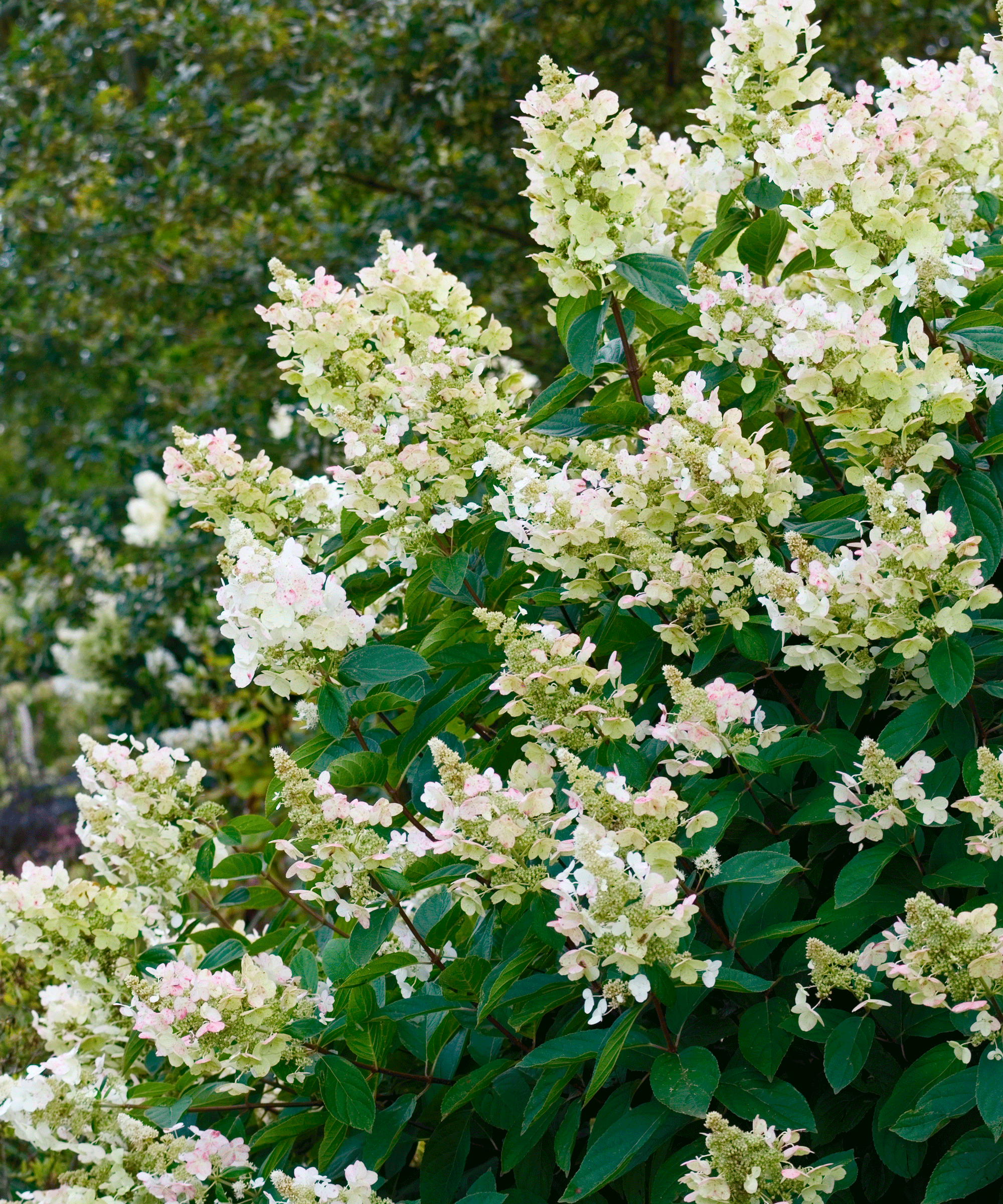
With soil drying out quickly in summer, you can use the technique of mulching to keep you hydrangeas hydrated. It involves putting down a layer of organic material to lock in moisture and keep roots cool.
Hydrangea expert the New York Botanical Garden, Lorraine Ballato, advises to: 'Check that the mulch layer is at least two inches and if it has depleted, add more.'
'Don’t pile too much mulch on hydrangea roots as they do not like to be in wet soggy soil. This causes root rot and other fungal diseases,' Caroline Ervin adds.
You should also ensure the mulch isn't right on top of the base of the plant, which may rot the stems. Aim to place your layer of mulch 3-6 inches away from the stems.
There are lots of types of mulch you can use, including fallen leaves, brown mulch from Lowe's, or even these mulching mats from Amazon.

Lorraine Ballato is a hydrangea expert and the author of the international best-selling book 'Success with Hydrangeas', available at Amazon. She is also an in-demand speaker throughout the US and the resident hydrangea expert at the New York Botanical Garden.
4. Do Not Prune Them

As mentioned, hydrangea pruning is a bit of a science, and it can confusing between different types.
'Hydrangeas either grow on old growth, meaning their buds are set while the previous growing season, or on new growth, meaning their buds are set during the current growing season,' Caroline Ervin explains. 'When a hydrangea sets its buds is the determining factor of when the shrub should or should not be pruned,' she adds.
Making a pruning mistake by getting the timing wrong could accidentally remove your buds for next year, sabotaging your entire display.
As far as pruning in August, Lorraine Ballato says to steer clear of pruning any hydrangea.
'Don't prune any old wood species: bigleaf, mountain, oakleaf, and climbing. You risk removing next year's flowers. Plus, all pruning stimulates a plant, and you don't want the plant to work to put on new growth this late in the season. It's likely the energy will be wasted, as much of that new growth won't make it through the winter,' she explains.
'For new wood species (panicles and woodland), you can plan to prune them after they have dropped their leaves and are fully dormant. Do not prune them now when they are active, as any cutting will stimulate the plant to grow, which is not the desired result,' Lorraine continues.
When you are ready to prune, use clean and sharp pruning shears (like this Fiskars bypass ones on Amazon) to make precise cuts.
5. Stop Fertilizing

Although hydrangeas are hungry plants and appreciate a boost of essential plant nutrients through summer (this liquid hydrangea fertilizer on Amazon is a top choice), the experts say late-August is when you should stop fertilizing hydrangeas.
'Fertilizing promotes new growth and plants will not have time to harden off additional new growth in the fall before freezing temperatures arrive,' Caroline explains.
This puts your hydrangea at risk of frost damage, weakening the plant and hindering next year's growth and blooming.
This is especially true if stems with developing buds are damaged by frost, removing next year's blooms.
Instead, start to plan for winterizing your hydrangeas:
'Decide if you need to protect your plant from frost with covers, another winter-persistent plant, or a leaf cage. If so, gather materials now so you can be prepared to protect the plant later in the fall,' Lorraine advises.
Burlap (available at Walmart) is a popular, breathable material to use to provide shrubs, trees, and potted plants with extra insulation in winter.
What to Shop

Use these Fiskars bypass pruning shears to tend to your hydrangeas. They're ideal for cutting through woodier stems.

Use this soaker hose to provide consistent moisture to your hydrangea's roots. It releases water through its porous material.

This shade cloth can be positioned over your hydrangeas to protect them from scorching sunlight.
Even though hydrangeas require some particular care, there are several hydrangea myths that aren't true. Reading up on them may help you grow yours more successfully.
Likewise, as summer starts to wind down, it can be a good idea to familiarize yourself with what to do with hydrangeas in fall.
If you love inspiring garden ideas, outdoor advice, and the latest news, why not sign up for our newsletter and get the latest features delivered straight to your inbox?
