How to Keep Ants Out of Hummingbird Feeders – 6 Simple Fixes That Actually Work (and Keep Nectar Clean for Longer)
Expert-backed techniques to keep hummingbird feeders ant free


As hummingbirds continue to return from migration, a dedicated feeder is one of the most rewarding ways to attract these ethereal birds to your yard. But the sugar-rich nectar doesn’t just appeal to birds. As temperatures rise, ants become persistent visitors, quickly overrunning feeders if left unchecked. The good news? With a few simple fixes you can prevent ants invading your hummingbird feeder.
Aside from being a nuisance, ants can spoil nectar and deter hummingbirds from feeding altogether, making prevention key. A few well-chosen strategies can keep feeders clear without harming wildlife. These easy steps stop ants reaching the nectar in the first place – protecting it from contamination and keeping hummingbirds coming back.
Here, we share six expert-backed tips to keep ants out of hummingbird feeders, so your setup stays clean, safe, and far more inviting for the birds you actually want to see.
1. Attach an Ant Moat on Your Hummingbird Feeder

One of the most effective ways to keep ants out is to use an ant moat, which are available at Amazon.
These are small dishes that contain water, creating an effective barrier that ants cannot cross. Stainless steel ant moats are particularly good at holding up against the elements, plus they are easy to clean.
Zach Hutchinson is an ornithologist at the nation's largest bird conservation group, a hummingbird bander, and a consultant for the wild bird feeding industry. He explains that many hummingbird feeders use moats that can be filled with water.
'These moats can be used to prevent ants from reaching the sweet, sugary goodness of nectar,' he says. 'Just make sure you keep the ant moat topped up with water, otherwise the feeder will likely be visited by ants.'
If your existing hummingbird feeder does not have an ant moat, you can pick one up at very little expense; this ant moat from Walmart, for example, is less than $2.

Zach Hutchinson is the owner of FlockingAround.com and an ornithologist striving to ignite bird conservation globally. He is also the creator of the Great Wyoming Birding Trail and the author of Birding in Yellowstone National Park. Zach has banded and tagged over 15,000 wild birds and has efforted to protect birds for over a decade.
2. Keep Your Feeder Clean
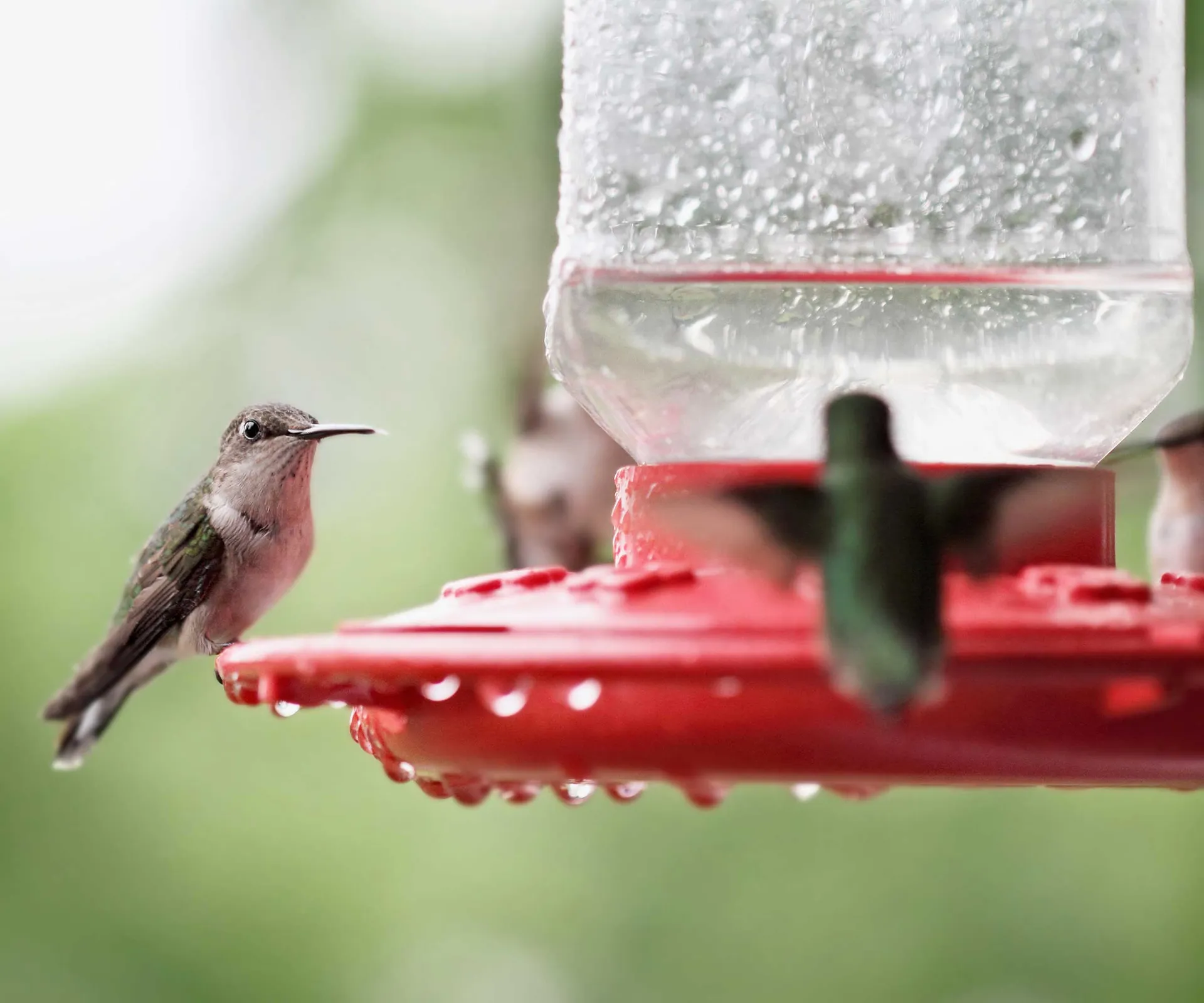
An easy way to reduce the presence of ants, and keep bees away from hummingbird feeders, too, is to keep on top of cleaning.
Little and often is best, and you might even consider cleaning your hummingbird feeder on a daily basis as part of your plant-watering routine.
Consistent cleaning will avoid any leftover residue from building up, which might attract ants.
If you're looking for a feeder upgrade, glass hummingbird feeders, such as this one from Amazon, are simply stunning and your hummingbirds will love it just as much as you.
3. Consider Switching Up the Placement of Your Feeder

Thinking carefully about hummingbird feeder placement is key to keeping ants at bay. Position feeders in a cool, shaded spot to help nectar stay fresh, but crucially, keep them well away from trees, fences, or walls that ants could use as a bridge. It should also be somewhere visible, so you can easily monitor activity and spot any issues early.
'Being close to ant colonies, ant aphid farms, or too near structures that already attract ants can exacerbate your ant problem,' comments Zach Hutchinson. 'However, if you can mount a hummingbird without direct contact with the ground, you can minimize access for ants.
'Suspension cables, pulley systems, and other similar hanging systems can minimize the ability of ants to detect your sugar water as well as their ability to climb to it.'
Using a thin, slippery fishing line to hang your feeder is another expert-recommended trick, as it makes it much harder for ants to gain traction.
If you live in an area with persistent ants, or find ant moats difficult to maintain, try hanging your feeder over water. Positioning it above the center of a wildlife pond or next to a water feature, such as a hanging solar birdbath fountain, from Amazon, creates a natural barrier ants are unlikely to cross, while also giving hummingbirds a place to drink and bathe.
And if ants keep returning, don’t be afraid to move your feeder. Even small changes (shifting it to a different spot on a patio or deck) can disrupt ant trails and solve the problem surprisingly quickly.
4. Sprinkle Cinnamon or Use Essential Oils as An Ant Deterrent

One solution might just be waiting in your spice drawer. Cinnamon is a powerful ant deterrent, and can also be used when getting rid of ants in the kitchen.
Spices can be used to deter common garden pests, and this is a quick and easy option to try.
'Cinnamon can stop ants from approaching the feeding zones for hummingbirds,' agrees Zach Hutchinson. 'Spread a heavy layer of cinnamon around the base of the hooks or other infrastructure used to hold your hummingbird feeders.'
Natural, essential oils, such as clove, lemongrass or anise, are also known to be very effective at deterring ants, as well as bees and yellow jackets.
Avoid putting the cinnamon or oils directly on your feeder, however. Positioning a small saucer of spice or oil nearby or below your feeder should be enough to prove effective.
5. Hang Your Hummingbird Feeder Using Fishing Line

Fishing line, available at Amazon, is incredibly durable yet super thin, so much so that ants find it difficult to hang on to it.
If you use it to hang your hummingbird feeder from a tree, a high branch, or a guttering at the side of your shed, this can prevent ants from reaching it.
They are also less likely to be attracted to a feeder that is positioned in the shade, as the sugar water will not ferment as quickly as when out of the sun.
You can still attract your beautiful hummingbirds to these areas by adding shade plants for hummingbirds.
6. Avoid Pesticides Near Wildlife Feeders

Avoid using harsh chemicals or pesticides anywhere near your hummingbird feeders. While they may seem like a quick fix for ants, they can be harmful to hummingbirds and other visiting wildlife.
Experts warn that many insect repellents don’t just target ants, they can also affect beneficial pollinators such as bees and butterflies, and are often less effective than simple, natural approaches like regular cleaning or deterrents such as cinnamon.
Instead, focus on creating a wildlife-friendly space that naturally draws hummingbirds in.
Planting nectar-rich flowers in their favorite shades (red dahlias and vibrant orange zinnias are flowers that attract hummingbirds) will help lure them away from problem areas and into a healthier feeding environment. The corkscrew vine is a wonderful example of a climber that hummingbirds adore.
You can also offer small amounts of fresh fruit as an easy, low-cost way to attract more hummingbirds to your yard.
Shop Hummingbird Garden Accessories

If you want to attract multitudes of hummingbirds to your backyard, these attractive flower-shaped feeding ports are sure to do the job.

The Birdfy Hummingbird Feeder Mini AI can identify more than 150 species of hummingbirds, gives you real time alerts when hummingbirds are feeding, and has a built in ant moat.

If your feeder does not have a built in ant moat, this hard moat option is made of high-quality plastic that looks attractive and will keep ants out of your feeders.
FAQs
Does Vaseline or Vegetable Oil Keep Ants Out of Hummingbird Feeders?
It may make surfaces slippery, preventing ants, but wildlife experts firmly advise against it: 'Please do not use any greases to prevent ants from climbing onto hummingbird feeders,' says ornithologist Zach Hutchinson. 'If this grease or oil gets onto the hummingbirds, it can be deadly.'
These oils affect a hummingbird's ability to control its feathers, which then impacts its ability to thermoregulate. With this ability inhibited, hummingbirds can suffer hypothermia or heat exhaustion in a matter of minutes. This method can also kill ants and other beneficial insects, like bees and butterflies, in a most inhumane way.
Avoid this hummingbird feeder mistake by following the steps above, from daily cleaning to careful placement.
To give hummingbirds somewhere to rest and digest their food, it is also important to provide perching or resting spots in your yard, particularly during the hummingbird migration when certain species will travel thousands of miles.
You could add a hummingbird perch into your outdoor space, and our guide has all the information you need.
Love inspiring garden ideas, outdoor advice, and the latest news? Sign up for our newsletter and get the latest features delivered straight to your inbox.
