Petals & Roots: How to Make A Sweet Pea Wigwam – For A Natural, Beautiful Frame to Support Your Favorite Flowers
It will elevate your cutting patch, but needn't coat you a dime


To grow sweet peas in your yard with any kind of success, these rampant, floriferous vines need to have a large frame or trellis to trail up, hook onto and bloom from. And creating your own needn't cost anything.
If there is one think I love doing in my garden, it's making supports and trellis from the natural materials I already have. I like to build a wigwam-style frame for my sweet peas, as it creates that quintessential, abundant cottage garden look in my cutting patch when they begin to flower.
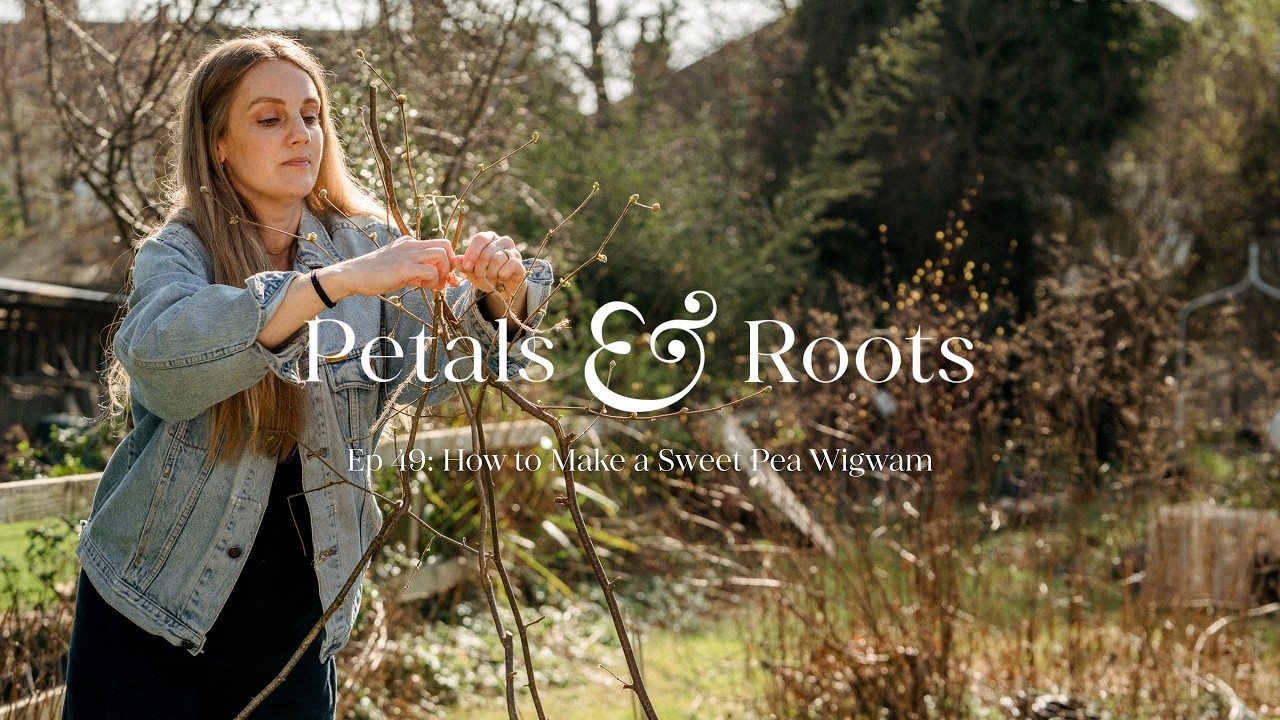
In the most recent episode of Petals & Roots, I show you how to build a rustic, DIY sweet pea wigwam out of hazel branches cut from my own garden. It's a simple, easy way to give your garden a little homespun charm, and the effect is magical.
What You Need

- Good quality pruning shears, such as the Fiskars Bypass shears from Amazon, which come with a lifetime warranty
- Eight or more hazel canes, but you could use bamboo stakes, available from Walmart
- Natural jute twine, from Target
- Gardening scissors
- Sweet pea seedlings or plug plants
- A plant dibber
- A watering can; this is my top rustic pick from Target
How To Make a Sweet Pea Wigwam

The first step is to cut the branches to create the wigwam frame. I love using hazel for plant supports because it's strong yet flexible, and I also have an abundance of it in my backyard.
If you don't have any branches or recent prunings you can use, willow or bamboo canes would work just as well, and you can usually find these at local garden centers.
When cutting your own, look for fairly robust branches that are at least half an inch thick. They should also be a fairly long length, at least 60 inches, as your sweet peas need a lot of height to reach their full potential.
I also love to choose branches with lots of interest and detail at the ends of them. Don't snip off these tiny shoots and thinner branches. Not only do they look charming in your wigwam, they will help to hold your frame in place.

Once you have your canes, lay them out and take four that are more or less the same length.
Place them deeply into the soil at the points of the compass and bend them towards each other to start creating the wigwam shape.
Tie some natural twine around the top of these four canes to secure them in place, roughly 10-15 inches from the tips.

Now it's time to make the frame more robust. Take four more canes, and place these firmly into the soil in between the four original branches.
You can keep adding to fill in the gaps, depending on how big you want to make your wigwam.
To give the frame and your sweet peas even more room to grow, the next step is to build in some horizontal support using your twine.

Decide where along the length of your frame you want to add some horizontal support, then tie your twine around one of the canes, just to secure it.
Take your roll of twine around the frame, wrapping it around each individual cane as you continue to move around it. Natural canes will often have small knots or other branches you can use to help anchor your twine in place. Repeat this two or three times, until you have a strong, tight line around the branches.
Then add another one further up the frame. You can add as many as you'd like. In my experience, it's helpful to have more towards the bottom of the frame, when plants are a little weaker and might need extra support as they get going.

Once your frame is complete, you can plant your sweet pea seedlings at the base. I have learnt from experience not to overcrowd them.
It is tempting, when plants are small, to pack them around each cane, but limiting it to two or three plants will give each one enough room to grow and flourish.
Once they get going, sweet peas are surprisingly robust and without the right amount of space to thrive the vines won't be able to produce as many beautiful flowers.
When vines get to six or seven inches tall, tie them onto the canes to encourage them to continue growing upwards, and in no time your frame will be covered in the most fragrant, romantic summer blooms.
What to Shop


Petals & Roots is a weekly video series fronted by me, Rachel Bull, Head of Gardens at Homes & Gardens. Every weekend on social, I share my seasonal gardening and flower arranging expertise and advice.
Love inspiring garden ideas, outdoor advice, and the latest news? Sign up for the Homes & Gardens newsletter and get the latest features delivered straight to your inbox.
