Patio Plants That Practically Look After Themselves – 5 Easy Flowers That Withstand Heat, Drought and Neglect
These fuss-free plants are sure to elevate your patio and entertaining space


Patios and entertaining spaces can be surprisingly tough environments for plants, especially during long, hot summers. Containers dry out fast in full sun, heat radiates off paving and decking, and at a time when many parts of the US are battling heatwaves and drought conditions, missed waterings can quickly spell disaster for thirsty blooms.
After years of gardening in everything from formal courtyards to sun-baked terraces in southern Italy, I’ve found that some plants are far better suited to life in pots than others. The best patio plants earn their place by delivering long-lasting flowers, fragrance and foliage while coping remarkably well with heat, dry soil and a little occasional neglect.
So, if you’re looking for low-maintenance patio plants that will still put on a beautiful summer show, these are five of my favorite easy-going flowers for pots that gardening experts say are almost impossible to get wrong.
1. Salvia
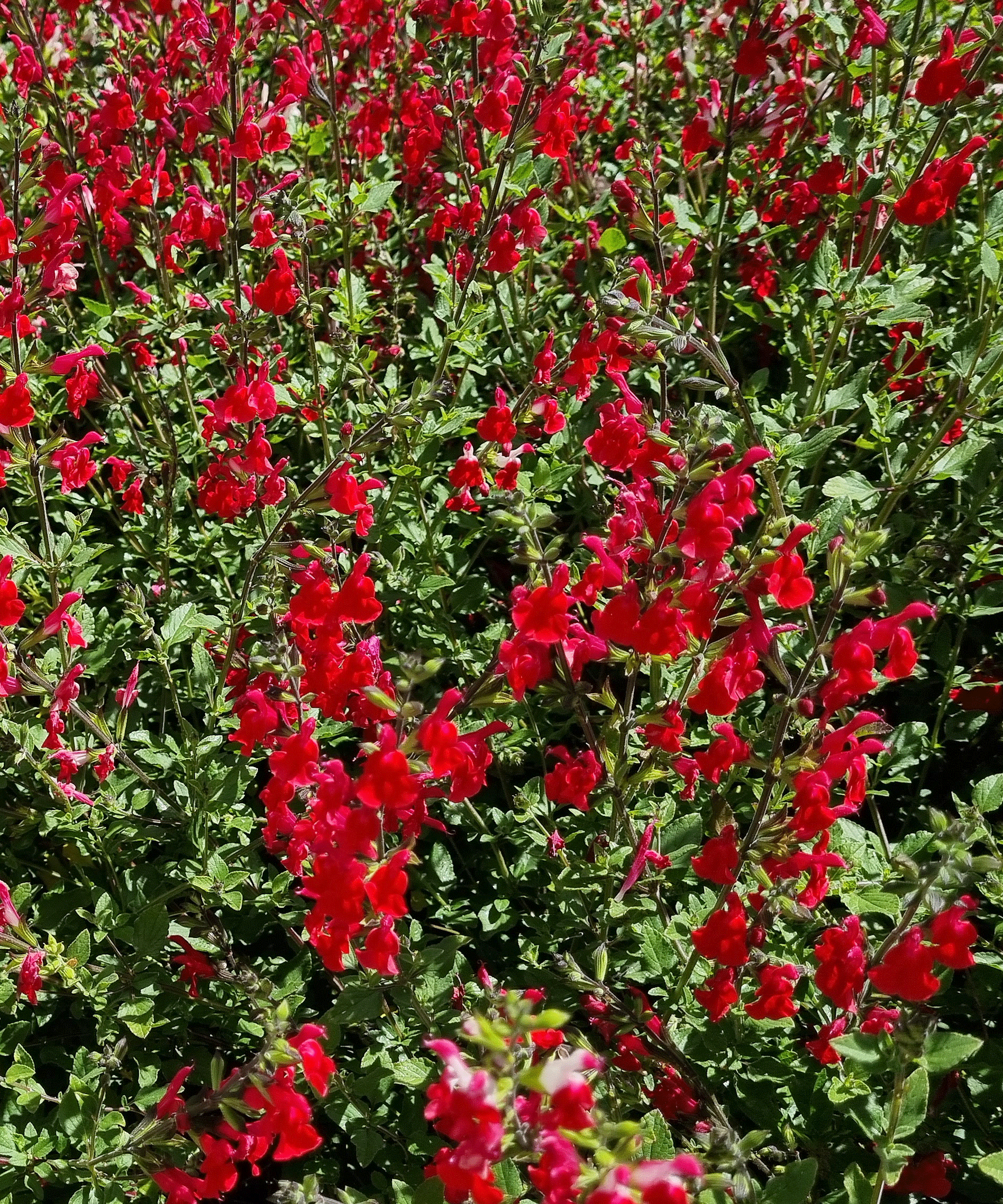
If you are after a patio plant that can cope with heat, dry soil and a little forgetfulness, salvias are hard to beat. These sun-loving perennials are among the best low-maintenance, drought-tolerant flowers for pots, thriving in exposed patios and containers where other plants quickly struggle during midsummer heat.
With more than 1,000 species grown worldwide, there is a type of salvia to suit almost every style, from airy cottage-garden planting to sleek Mediterranean-inspired patios.
Many varieties flower for months on end, attracting bees and butterflies while asking for very little in return beyond plenty of sunshine and good drainage.
One of the best options for pots is Salvia nemorosa, commonly known as woodland sage. Live Salvia nemorosa plants are available to order from Amazon.
Hardy down to zone 4, this resilient perennial is particularly good at handling hot, dry conditions, making it ideal for sun-drenched patios and low-water yards. Its upright purple flower spikes bloom for much of summer and pair beautifully with ornamental grasses and silver-leaved plants.
Once established, woodland sage is remarkably easy-going. Occasional deadheading will encourage repeat flowering, while a hard cutback in late fall or early spring helps keep plants compact and tidy year after year.
You can also find Salvia nemorosa 'rose marvel' at Fast Growing Trees.
2. Flowering currant

'The flowering currant, or Ribes sanguineum, is one of the best spring-flowering shrubs,' says Tabar Gifford, plant expert and American Meadows master gardener.
'Growing from zone 6 to zone 9, this plant is sure to brighten up patio areas with clusters of pink blooms in spring, providing an essential nectar source for hummingbirds before most other flowers have emerged.
'As one of the best shrubs that thrive on neglect, these tough plants can handle plenty of heat and drought once they are established, and can grow well in both full sun and partial shade.
'What's more, in addition to its showy flowers, the flowering currant boasts attractive foliage and berries that support wildlife throughout the seasons.
'For container growing, it performs best in large pots with rich, well-draining soil,' Tabar adds, 'and consistent, deep watering in extremely hot weather is important. Other than that, this easy-going species will put on a great display year after year.'
For an edible option, plant something like this white currant, with live starter plants available to order via Amazon.
With unusual, white berries during summertime, this fruiting shrub will prove impactful and delicious in any patio area.

Tabar is the Customer Experience and Partnership Cultivator at American Meadows and High Country Gardens. Tabar is also a Master Gardener and dedicated “plant geek,” who has a lifelong love for gardening and nature and a background in environmental studies. She gardens in zone 4 in Vermont.
3. Invicibelle Hydrangeas

'Invicibelle Hydrangeas are one of the best hydrangea varieties for small spaces,' says plant expert Katie Sunderlage, who is based in Wisconsin.
'Growing best from zone 3 to zone 8, there are so many different dwarf or mini invicibelle varieties that are perfect for patio pots.
'My favorite is 'Mini Mauvette', which only grows to about three feet tall and wide,' Katie continues. 'The rounded, pink and mauve blooms remain upright on thick stems that won’t flop over when blooms get wet or become full-sized.'
The similar Proven Winners Invincibelle Wee White® hydrangea is available from Fast Growing Trees.
'Being a smooth hydrangea variety, they will bloom from early summer until the first frost, thriving with little care in full to part sun locations.
'Hydrangeas prefer well-drained but moist soil,' Katie says. 'While they are fairly drought-tolerant once established, I always suggest adding a layer of mulch to the top of the root ball can help maintain more consistent water levels.
'Each spring, prune the plant back to about a third of its total height just as the new growth emerges.'
You can also find Ruby colored invincibelle hydrangea starter plants at Amazon.

Operations Manager at Holland Group, managing the customer service department and purchasing. Katie has been in the green industry since 2005 in the Greater Milwaukee area, earning her degree in Horticulture in 2008. She has been able to share her love for plants working in multiple garden centers, in sales positions and most recently in an online retail platform at Holland Group.
4. Mock orange

Mock orange, or Philadelphus, are native to North America, Europe and Asia, growing best from zone 4 to zone 7 in sunny yards.
'These are some of the best fragrant shrubs that are remarkably low-maintenance,' says Gail Pabst, gardening expert and Marketing Director for the National Garden Bureau.
'The perfume is not too different from orange blossom,' Gail adds, 'and works particularly well used on or near patios, filling the air with delightful scent.
'There are many new mock orange varieties that can be found in different shapes and sizes, including dwarf options from two or three feet tall.'
Beautiful mock orange shrubs are available at Nature Hills.

Gail is a passionate horticulturist with over 25 years' experience in the industry. She is an avid home gardener too and loves to try out the newest varieties and techniques. Gail is the Marketing Director for the National Garden Bureau and her work has helped her to continue their mission of inspiring, teaching and growing in gardening with others.
5. Lavender

There are many different lavender varieties to choose from, including French lavender, Lavandula stoechas, and English lavender, Lavandula angustifolia, both of which are wonderfully low-maintenance herbs that cope well with heat, drought and occasional neglect.
In terms of how to grow lavender, most varieties can be planted from zone 5 to zone 9, thriving in full sun and sharply drained soil. In fact, lavender often performs better in containers than in heavy garden ground, particularly in regions with humid summers or wet winters where soggy roots can quickly become a problem. Terracotta pots are especially effective, helping excess moisture evaporate faster during rainy spells.
These aromatic herbs are ideal for sun-drenched patios and seating areas, where their silver foliage and fragrant purple blooms can be appreciated up close throughout summer. The flowers are also highly attractive to bees and pollinators, helping to bring movement and wildlife to small outdoor spaces.
A light trim after flowering will also help maintain a neat, compact shape and prevent stems from becoming woody over time.
Browse a wide collection of lavender plants at Fast Growing Trees.
You can also try growing lavender in a raised bed on a patio, using something like this metal raised bed, from Garden In Minutes.
What to Shop

This weather-resistant planter box is on wheels and can be easily moved around the patio, helping you to create instant privacy where it is needed.

Made of lightweight and durable polyethylene, this Pepinn resin pot planter is perfect for patio pot displays and is ideal for colorful herbs and shrubs.

This beautiful textured planter is made of durable stoneware ceramic with drainage holes to support healthy plant growth. It measures 6x10x8".
You can also introduce some patio vegetable garden ideas to your plot, which is a good idea if you are keen on kitchen gardening.
For example, did you know that you can grow spinach in pots? This easy edible leaf can help to add an edible dimension to your patio pot displays.
For more low-maintenance inspiration, see our guide on the best small trees that thrive on neglect, including Japanese maples, which can be grown in pots and grown on part-shade patios.
If you love inspiring garden ideas, outdoor advice, and the latest news, why not sign up for our newsletter and get the latest features delivered straight to your inbox?
