Petals & Roots: How to Capture the Beauty of Late Summer in a Garden-Gathered Bouquet
There is still plenty left to pick and create with


It gets to early September, and the cuttings beds are inevitably looking a little depleted in my garden. The zinnias and cosmos are blooming, but there are far fewer to cut from.
I am often guilty of panicking that I have no blooms left to create with, but in fact it is so easy to make a bouquet using only two or three stems of everything. In truth, it looks much more natural and seasonal; a real representation of your garden right now.
In this weekend's episode of Petals & Roots, which you can watch below, I show you how to gather and arrange your late summer garden flowers to create a beautiful bouquet. And here, I talk more about the flowers I've used, and why I will be growing them again next year.
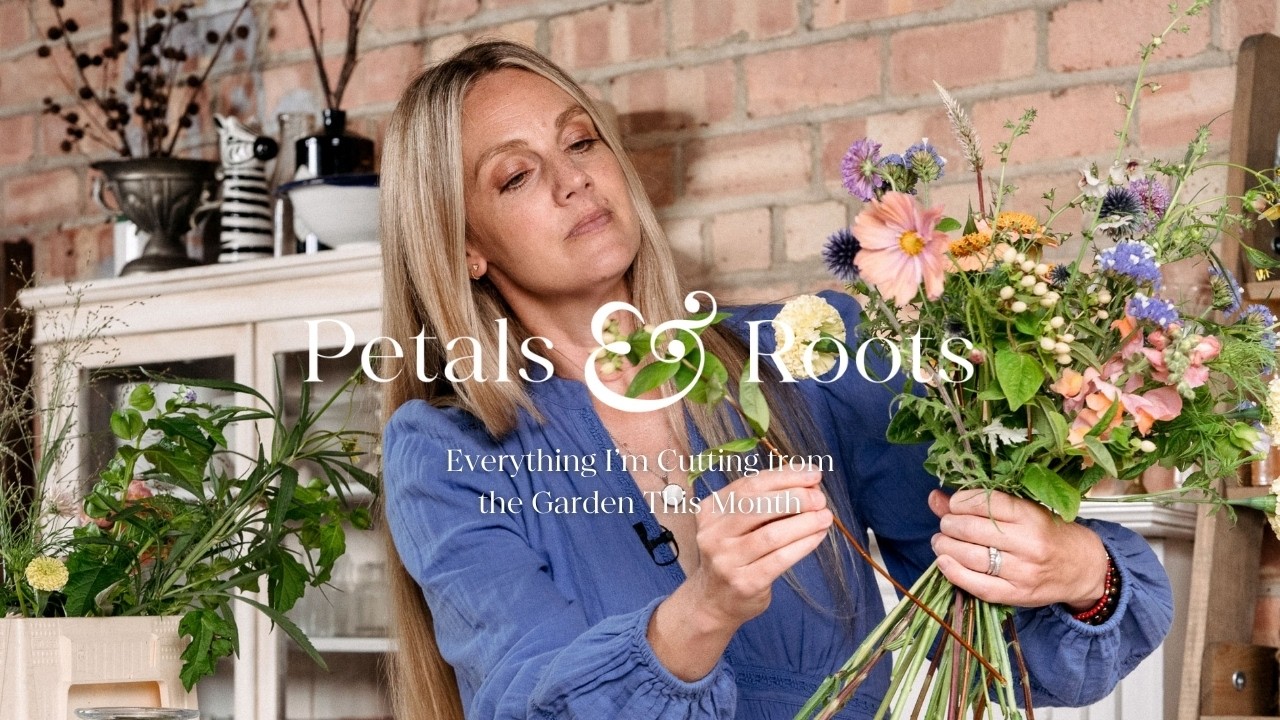
What You Need to Create a Late Summer Bouquet

- A large handful of seasonal, garden-grown flowers in a mix of shapes, sizes and colors.
- Sharp, clean floristry scissors; I highly recommend these floral scissors from Walmart for soft stems.
- For harder, woodier stems, have a pair of snips on hand such as these Fiskars snips from Amazon.
- A clear glass vase, just like this one from IKEA.
- Natural twine, exactly like this from Walmart.
Tips on Creating Your Garden Grown Bouquet

The idea with a bouquet like this is it needs to look utterly natural and reflect how each flower is growing naturally, so my first tip is to not overthink it! Keep your shoulders low and arms relaxed, and enjoy the shape and movement from each individual stem.
Start with some taller stems and place them towards the center of your gathering. This will give you some height to work with.
You can add shorter, larger flowers lower down, as I did with the zinnias, to create depth and movement.

Once you have a few stems in your hand, you can layer your flowers and build on your shape. Try to keep the larger flowers fairly spaced (in mine I'm talking about the antirrhinum) and then play with the lighter, airier stems so that they appear higher up and dance atop everything else.
It also looks good to cluster some of the same variety together, as I did with the zinnias, appearing lower down and in the center of my design.
It's important to remember that stems will want to move and that is fine!
Once you have your basic shape, if you feel there are gaps you can poke flowers through the bouquet where you want them to go. Loosen your hand, twist the stem gently to work it through, and then try to pull it from the bottom to secure it into place. (This is a useful technique as it avoids stem breakages!)
A Few of My Favorite Stems

Here are my favorite ingredients from this bouquet, and why I wil definitely be growing them again next year:
Echinops: Globe thistles are brilliant flowers for structure, texture. Their architectural, silvery-blue flowerheads bring a striking sculptural quality to bouquets and they haven't minded the heatwave one bit! You can also leave the seedheads for fall interest.
Zinnias: Another star of a very hot summer, the zinnias have continued to bloom really well and last in a vase. The bees love them, too. You can find beautiful pompom zinnia seeds at True Leaf Market.
Celosia argentea: I love this pale pink spire for adding a dot of delicate, subtle texture to a floral design. It holds its color beautifully in arrangements, and the flowers can be dried for use long after summer has passed.
Bidens aurea: This is a lovely, slightly unusual cut flower, with delicate yellow-and-white daisy-like blooms that bring a light, airy quality to arrangements. It has a wonderfully natural, meadow-like feel. It’s also a prolific bloomer, so there are plenty of stems to cut while still leaving flowers in the garden for pollinators.
Apricot lemonade cosmos: Even though it wasn't super happy in my garden this summer, I still adore it and will continue to grow this flower every year. I simply cannot get enough of this peachy shade. You can find apricot lemonade cosmos seeds at Amazon.

What to Shop


Petals & Roots is a weekly video series fronted by me, Rachel Bull, Head of Gardens at Homes & Gardens. Every weekend on social, I share my seasonal gardening and flower arranging expertise and advice.
Love inspiring garden ideas, outdoor advice, and the latest news? Sign up for the Homes & Gardens newsletter and get the latest features delivered straight to your inbox.
