9 Plants That Look Better in Fall Than in Summer – For A Breathtaking Cool-Weather Garden
These beauties excel in cooler temperatures, so add these for a spectacular outdoor space throughout autumn


We tend to think of spring and summer as the time when our gardens look their best. This is mostly true, unless we're experiencing a severe drought. Yet the fall garden can look spectacular too.
There are a number of plants whose appearance is enhanced once temperatures have dropped and they have fully matured; whether that's through their statuesque seedheads, rich foliage, late blooms or beautiful berries.
Discover the species landscape designers and professional gardeners recommend including in your fall gardening plan for spectacular seasonal interest.
1. Arkansas Bluestar (Amsonia hubrichtii)

This pretty clump-forming perennial grows well in full sun, and can cope in partial shade. With its tiny pale-blue panicles in spring and summer, Arkansas bluestar can liven up flower beds and borders, and particularly suits a prairie or cottage garden. However, autumn is when its spiky foliage transforms into something far more spectacular.
'Arkansas bluestar is one of my absolute favorite perennials, and while it has lovely little blue flowers in spring, the fall foliage will knock your socks off,' says New York-based landscape designer, Kat Aul Cervoni, founder, Staghorn Living.
'The leaves are incredibly fine and feathery, giving the plant this soft, almost cloud-like appearance. In fall, the entire thing turns a brilliant golden yellow peppered with oranges and a bit of red - when planted in a large drift, it's absolutely spectacular.
'I especially love how it contrasts with the heavier textures of other late-season perennials and ornamental grasses. I tend to treat this perennial like an ornamental grass or shrub amidst other perennials, due to its superb movement, volume and texture.'
This Narrowleaf Bluestar from Plant Addicts is fast-growing and un-fussy about soil, although it likes a neutral pH level. It can grow to around 3' tall and wide and grows well in zones 5-8.

Landscape designer, Katherine "Kat" Aul Cervoni is the founder and principal of Staghorn Living. Kat creates outdoor spaces that become natural extensions of a home’s interior. A member of the Ecological Landscape Alliance and the Association of Professional Landscape Designers, she also mentors young plant enthusiasts and upcoming designers.
2. Korean Feather Reed Grass (Calamagrostis brachytricha)
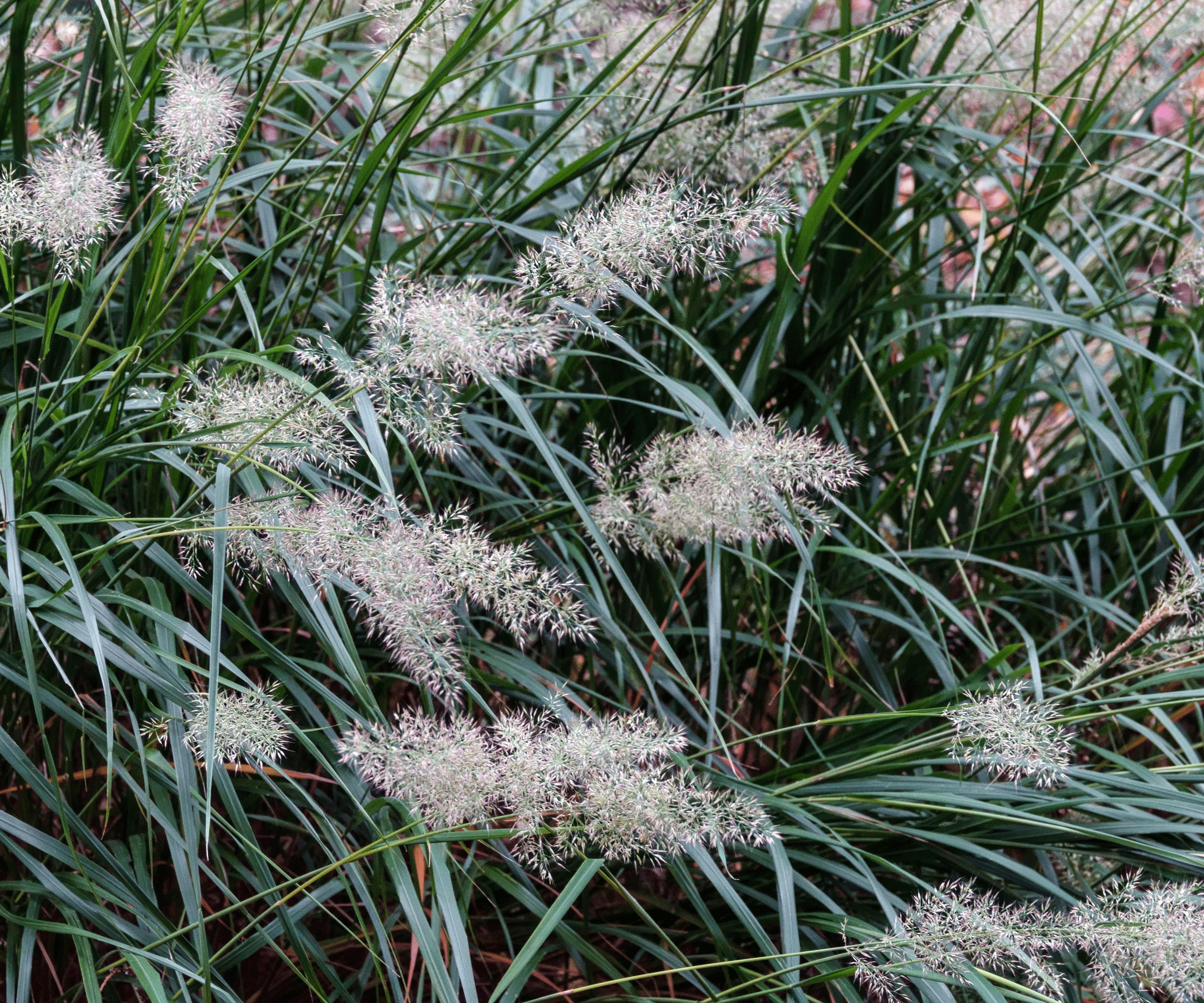
Ornamental grasses are a wonderful choice for those who like linear structure, soft texture and movement over blousy blooms and bold colors in the garden. They're also brilliant for autumnal interest but the choice is vast. Korean feather reed grass is a species that Kat favors for its ability to add flair to the fall garden with its feathery tufts.
'If you're not growing ornamental grasses for fall interest you need to jump on the bandwagon,' says Kat. 'Calamagrostis brachytricha aka Korean feather reed grass is particularly gorgeous because its fluffy, almost bottlebrush-like plumes really come into their own in late summer and fall.
'This variety is wide and fluffy in contrast to “Karl Foerster” which is famously upright and architectural. As the season progresses, the plumes mature into these beautiful soft, silvery-tan tones that give a beautiful glow when the low autumn sun hits them.
'I love using grasses like this to bring movement and softness into a planting design, especially when so many other perennials are starting to look a little tired and crispy this time of year.'
This Korean feather reed grass from Lowe's is low-maintenance and suitable for zones 4-9. It can reach 3" tall and wide and produces fluffy pink plumes in the fall.
3. Red Chokeberry (Aronia arbutifolia)

Popular in wildlife gardens for its ability to attract pollinators and songbirds, this native shrub offers structure and color across three seasons. Give Aronia arbutifolia plenty of space, as it can grow up five to ten feet tall and three to five feet wide. It prefers wet soil, so add mulch to the soil to retain moisture.
'I'm a huge fan of incorporating shrubs that offer more than one season of interest, and this is one of my faves,' says Kat. 'While red chokeberry does offer delicate clusters of white flowers in spring, the real show starts in fall, when the foliage turns brilliant shades of red and the branches are covered in glossy red berries.
'The berries can persist well into winter, which makes the plant especially valuable once the leaves have dropped. It's also native to eastern North America, and the berries are an excellent food source for song birds, so I love seeing who comes to visit our shrubs for a snack.'
Native to southern Canada and the Eastern U.S., this Brilliantissima red chokeberry from Plant Addicts lives up to its name with its vivid fiery fall foliage.
4. Muhly Grass (Muhlenbergia capillaris)

Another ornamental grass that puts on a dazzling display through fall is pink Muhly grass. Native to the southern US and Mexico, this densely-tufted perennial explodes with a profusion of pink plumes in late summer that enhance the landscape throughout fall.
It can be grown in containers, beds and gravel gardens and thrives in well-drained soil with full sun.
'In summer this grass is unassuming with its thin straight green blades, but as the season changes over to fall this grass is a showstopper,' says Laura Janney, CEO, The Inspired Garden Masterclass. 'The plumes reach out with soft billowing clouds of pink that just float through the fall garden.
'These gentle pink puffs create a beautiful contrast against the straighter lines and textural structures in the fall garden.'
This pink Muhly grass from Lowe's comes in a 3 gallon pot and is hardy in zones 6-10.

Laura Janney is a renowned landscape architect and designer, and CEO of The Inspired Garden Masterclass. Laura works with flowers in her signature style, using color, texture, and movement to evoke emotion and create unique spaces.
5. Ornamental Brassicas

We often look to selected perennials, shrubs and grasses for a reliably attractive transition into autumnal interest. Yet, despite being an annual (or biennial in some zones), frilly ornamental brassicas, such as cabbages and kale, are a favorite for Laura at this time of year.
'Ornamental cabbages are a must in our fall gardens as they add so much color and unique texture,' says Laura. 'Their soft yet sturdy, waxy leaves, and rounded growth make them a standout over any other fall planting.
'Brassicas are so incredibly cold-tolerant, sometimes we see them last through winter and into spring the following year. The best part is that as the temperature drops the colors get richer and more vibrant.'
This ornamental kale from Trees.com will liven up beds, borders and pots with its vibrant pink and green ruffles.
6. Beauty Berry (Callicarpa americana)

Shrubs and trees that burst with beautiful berries shimmer on crisp fall days, when other plants are losing their lustre. And while red and green is a gorgeous color combo, for something a little different, a shrub that stands out is Callicarpa americana.
Otherwise known as Beautyberry, by fall, this plant's inconspicuous flowers have transformed into clusters of mauve-magenta fruits, loved by birds.
'This shrub’s foliage is understated in the summer but come fall it puts on the real show,' says Laura. 'It has small clusters of magenta berries that have a pearly, almost metallic sheen. These little iridescent little jewels just glow up the garden and its texture is unlike any other plant in autumn.'
Easy to grow, this beautyberry bush from Plant Addicts can reach 3-6' tall and wide and is suitable for zones 7-11.
7. Coneflower (Echinacea)

We wouldn't exactly say that coneflowers (echinacea) look better in the fall than in the summer, but they do have their own kind of beauty once the petals have dropped and the statuesque seedheads remain. This striking plant is definitely one to grow for multi-seasonal appeal.
'One of our favorite summer staples is coneflower, as it continues to not disappoint in the fall,' says Laura. 'We love leaving the seedheads as their texture just adds so much interest to the fall and winter gardens.
'When the petals drop, you are left with a sturdy dome with hard-edged bristles, making a beautiful contrast to the softer textures in the garden.'
You can find coneflower seeds at True Leaf Market.
8. Highbush Cranberry (Viburnum trilobum)

Despite its common name, this plant is not a cranberry species; it is so called due to its resembling brilliant red berries. It's actually a viburnum native to the northern U.S. and parts of Canada – and grows well in zones 2–3 in moist, well-drained soil.
'Highbush Cranberry is a Prairie garden favourite that truly shines as autumn arrives,' says horticulturalist, Sharon Murphy, founder, Gardening with Sharon. 'Its attractive maple-like leaves turn beautiful shades of red, burgundy and orange as temperatures cool, while clusters of bright red berries add a spectacular splash of colour.
'The berries often remain into winter after the leaves have fallen, providing food for birds and adding beauty to the winter landscape.
'Give it plenty of room to develop its natural shape – mine is planted where its brilliant fall foliage and colourful berries take centre stage during the fall months.'
This Wentworth Viburnum from Plant Addicts will produce beautiful bright red berries and can grow up to 8-10" tall.

Sharon Murphy is a passionate horticulturist with over 30 years of gardening and greenhouse growing experience in Alberta, Canada and on the tropical island of St. Thomas in the US Virgin Islands. A third generation greenhouse grower, Sharon has a specialty in annuals and perennials, and also worked as greenhouse retail and marketing strategist.
9. Cushion Spurge (Euphorbia polychroma)

This clump-forming low-maintenance perennial suits many types of garden styles from cottage and wildlife to city and courtyard spaces. Cushion spurge is drought-tolerant, great for pollinators and has showy fall foliage that can bring much to the late-season landscape.
'Cushion spurge is a wonderful four-season garden plant that deserves a place on the fall garden list,' says Sharon. 'In spring, its rounded form is covered with brilliant yellow bracts, but its beauty doesn't end when the flowers fade.
'As temperatures cool in autumn, the foliage can develop beautiful shades of red, orange and purple, adding a final burst of colour to the perennial border. Its compact, mounded shape also provides lovely structure among taller grasses and perennials.
'Once established, cushion spurge is drought tolerant and requires little maintenance. Although, wear gloves when pruning, as its milky sap can irritate skin.'
What to Shop

Add these vibrant pink plumes to your landscape for eye-catching color, soft texture and easy upkeep.

Available in six sizes and nine colors, these simple Madison planters can be grouped to suit a range of fall plants.

Loved for its golden feathery fall foliage, this Amsonia hubrichtii will thrive in zones 5-8 with full sun and partial shade.
As you can see, there is so much more to rely on than gorgeous deciduous trees, for a fabulous fall display in the garden. Consider what would suit your space and seasonal conditions and liven up your landscape with color, texture and structure, while there is still time.
If you love inspiring garden ideas, outdoor advice, and the latest news, why not sign up for our newsletter and get the latest features delivered straight to your inbox?
