Add These Plants to Containers in September for a Garden Full of Winter Color and Interest
Our picks of 7 plants to put into pots in early fall


September is a perfect time to spruce up your container garden and get it looking on point for the colder months ahead. You can pick from a great selection of plants that will provide crucial color, structure, and interest all winter long.
Shrubs, evergreens, perennials, and cold-loving annuals can help any tired container garden transition successfully from summer into fall and look good well into winter and beyond. Your pots can end the gardening year with a bang, and you get something stunning to look at during the traditional leaner months.
If you are thinking about what to plant in September, we have something that offers beauty through the colder months. Indeed, certain shrubs and small conifers like Dwarf Alberta Spruce (available at Trees.com, formerly known as Fast Growing Trees) can provide year-round interest in a container. Use them on their own in a winter planter or pot, or complement them by pairing with some of these other plants for pots in September.
1. Violas & Pansies

Violas and pansies are two classic winter flowers for pots. The delicately flowered cool-weather annuals are routinely available as plug plants from garden centers, nurseries, and online in September to quickly add color to any container. You can also buy seeds to grow violas and pansies for winter hanging baskets, like these Johnny Jump-Up viola seeds on Amazon.
Winter pansies are part of the viola family, but offer larger flowers. Both violas and pansies come in a wide range of colors and bi-colored combinations that can offer elegant beauty in a winter container. They look great packed in numbers into containers, but also work well mixed with spring bulbs or foliage plants. Both plants are very cold-tolerant, and the flowers are resilient to snow and frost.
2. Coral Bells
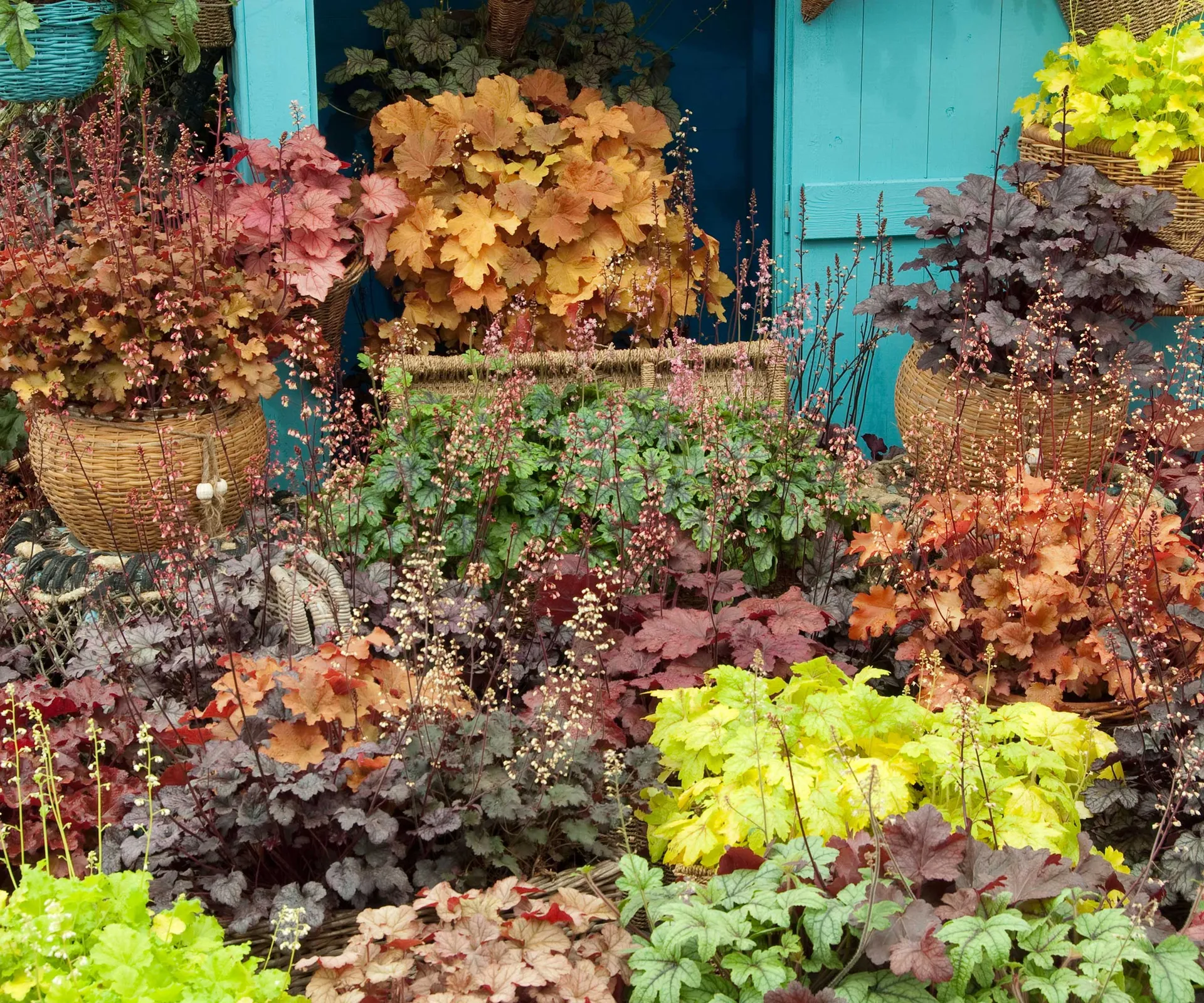
You can plant coral bells in pots to provide streaks of vivid color and pattern through the colder months. The evergreen plants provide year-round interest, with the beautiful foliage complemented by delicate flowers in summer.
That foliage comes in a kaleidoscope of colors – you can get heuchera varieties from dark purple to lime green and everything in between. This ‘Caramel’ coral bells at Nature Hills does what it says on the tin, with year-round heart-shaped caramel-orange foliage.
Picking coral bells is especially good if you’ve got a container in a shadier spot in the garden. Many plants may sulk in limited sunlight, but not coral bells, which prefer partial or dappled shade. Coral bells stay compact in a container and work well with other shade-loving plants for pots like ferns or lungwort.
3. Black Mondo Grass

Ophiopogon, or black mondo grass, makes a dramatic statement in winter containers. Its dark, almost black, strap-shaped leaves grow in clumps and reach no more than 12 inches tall. It makes an eye-catching addition to containers and provides a backdrop for silver foliage plants or bright flowers to really pop.
Black mondo grass is hardy down to US hardiness zone six. It can work in full sun or partial shade and will keep its unique foliage all winter long. You can get three live, pot-grown black mondo grass plants on Amazon to add to your winter containers.
Black mondo grass also works as a spooky plant if you want to create a thrilling Halloween container.
4. Nandina

Also known as heavenly bamboo, but not actually a bamboo, nandina offers gardeners a year-round show in a container.
It is an evergreen shrub with attractive leaves that start pinky-red in spring, then turn green, before turning a bright red, bronze, or purple color in the fall. The shrub also has star-shaped flowers in late spring and summer, which, after flowering, transform and turn nandina one of the best shrubs for fall berries.
Compact varieties of this low-maintenance evergreen shrub can be grown in large containers. Depth is key, as nandina has extensive roots. So is planting it in a general potting mix, but adding a layer of ericaceous compost or pine bark mulch (available at Lowe’s) to make the soil slightly more acidic.
This ‘Fire Power’ nandina from Trees.com, formerly known as Fast Growing Trees, is a dwarf shrub that grows to just 2-2.5 feet. It is suitable for zones 6-10 and will impress year-round with deep green foliage, white flowers in spring, and (as the name suggests) bright red fall color.
Heavenly bamboo is considered an invasive plant in many regions of the southeastern United States. It spreads by suckers and birds spreading seeds. However, growing nandina in a pot restricts suckering, and ‘Fire Power’ is a sterile, non-invasive variety that doesn’t produce berries or viable seeds.
5. Small Conifers

Dwarf conifers bring structure and year-round greenery to any container. Even during the leaner months, when not much may be flowering, the shape, formality, and permanence of these evergreen stalwarts offer so much.
Conifers like dwarf Alberta spruce (available at Trees.com), miniature Korean fir, dwarf juniper, or compact arborvitae offer cold hardiness and versatility. Gardeners can tightly clip them into a formal look or leave them as a more natural Christmas tree silhouette. Or you can create a gorgeous profile to flank an entryway with dwarf Italian cypress (available at Trees.com) in containers.
Conifers need a large, shorter container to stop them from blowing over in the wind. They also always need good drainage, so add some perlite (get bags of organic perlite at Amazon) to the potting mix and raise the container on pot feet.
6. American Wintergreen

American Wintergreen (Gaultheria procumbens) is a native plant ideal for winter containers thanks to its compact size. It grows six inches tall and 6-10 inches wide and can thrive in a part-shade corner of the yard during the colder months.
The evergreen shrub has reddish foliage in the fall and bright red berries that remain throughout the winter. The foliage has a herbal minty fragrance when crushed or bruised. Earlier in the year, the rounded leaves are a deep green, and the plants produce bell-shaped white or pink flowers.
When there is little interest elsewhere in the winter, the vivid fall foliage and berries can be a welcome sight. This ‘Winter Fiesta’ Wintergreen from Plant Addicts offers something a bit different, with white berries that turn pink when the temperatures drop. These can provide a pop of color during winter.
7. Ornamental Cabbages

These winter plants are a unique option for bringing cold-season color to pots. Ornamental cabbages have rosettes of leaves in various vivid colors, including different shades of white, yellow, pink, red, and purple. Once the temperatures drop, these colors intensify and make a dramatic show in a fall planter.
If you want to grow ornamental cabbages in winter containers, plant them in numbers to make a statement carpet of color. Alternatively, put them around the edges of large planters to create a dazzling skirt around central plants. These winter-hardy additions can tolerate frosts and cope with temperatures down to 5°F.
You can get packs of ornamental cabbage seeds at Amazon to sow in early fall.
If you need to protect pots from frost, there is a simple technique to remember. By moving your pots together for winter, they all benefit from the radiated warmth. Grouping pots creates a microclimate that traps heat and shelters them from cold winds. If you cluster them against a wall of your home, they also benefit from the residual heat.
If you love inspiring garden ideas, outdoor advice, and the latest news, why not sign up for our newsletter and get the latest features delivered straight to your inbox?
