The Red Tape Rule That Attracts Hummingbirds – This Works Whether You Have an Urban Courtyard or a Country Garden
This simple trick will entice these feathered-foragers who are on the hunt for hot-hued flowers


Seeing hummingbirds in your neighbors garden but not in your own? It can be perplexing, especially if you're hanging nectar feeders or planting their favorite flowers to lure them.
It's widely known that these feathered foragers make a beeline to red and orange flora. So if your neighbor has a banquet of hot-hued blooms, the hummers may have an abundant food supply already.
However, there is another trick you can try to entice hummingbirds to your yard. Attributed to bird enthusiast, the late Bob Sargant, the red tape rule is used by avian admirers who want to coax these captivating creatures closer. Discover why this practice works and what experts suggest.
Why Red Tape Attracts Hummingbirds
Tying red or orange surveyors tape or ribbon is a trick used by birders to attract hummingbirds. It is believed the flash of color on the tape acts as a beacon and catches the eye of passing hummers in flight, who will often swoop down for a closer look, in case it's a plant, like this Burgundy Cardinal flower from Nature Hills.
'Anything red can attract hummingbirds to investigate your garden for nectar; tape is simply one of the easiest ways to create that visual cue,' explains Yaron Levite, founder, Nature Anywhere. 'Hummingbirds will notice the red tape and briefly scout the immediate area for a food source.
'However, if there’s no nectar nearby, they’ll move on and are unlikely to return, no matter how much red tape you use.'
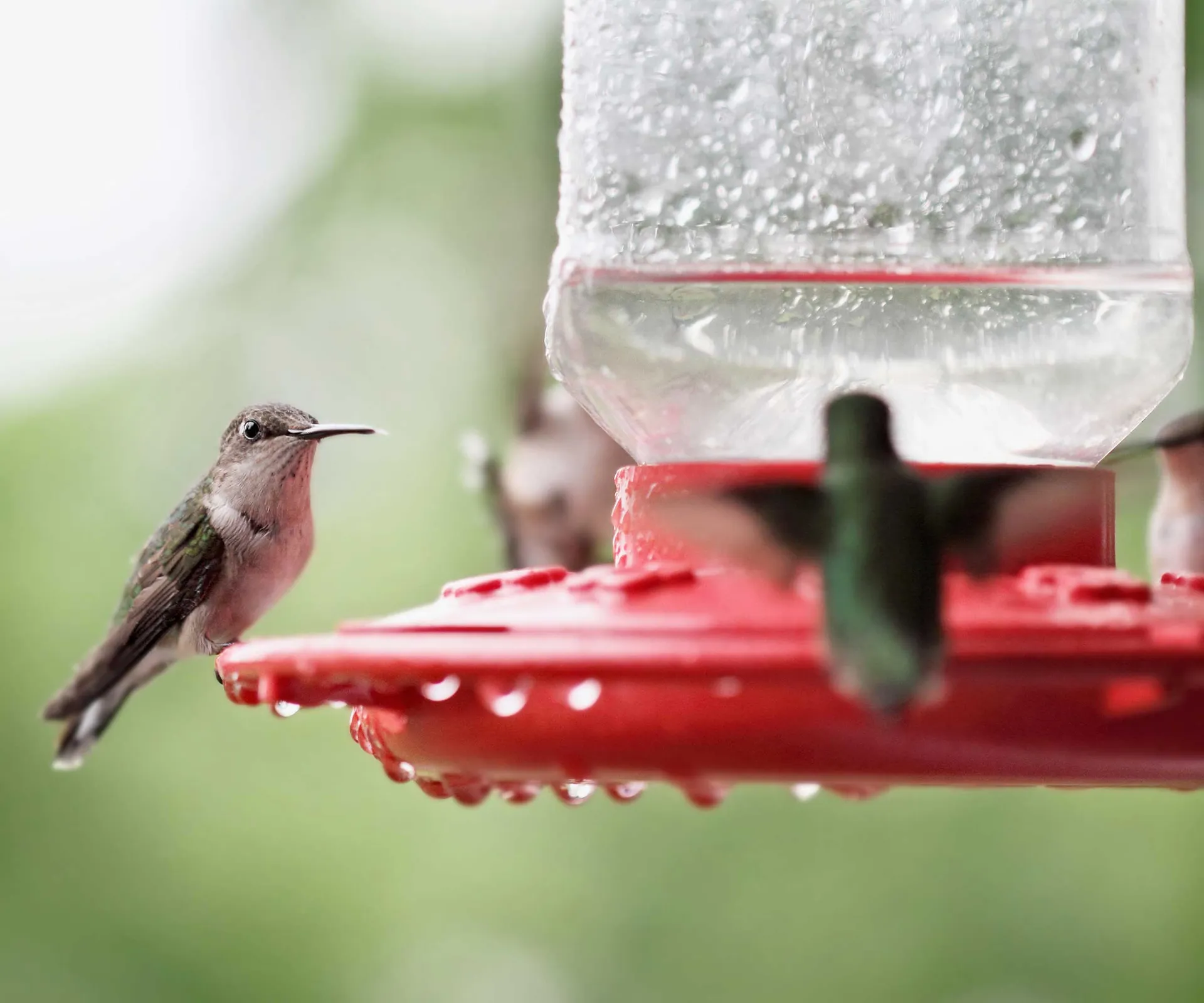
As well as red nectar-producing flowers, this feeder from Ace Hardware would encourage hummers to stay in your yard.

Yaron Levite is the founder of Nature Anywhere, a premium bird-feeding brand focused on helping people create thriving backyard ecosystems through thoughtful design and high-quality nutrition.
How to Use Red Tape Safely and Effectively

When coaxing hummingbirds into your yard with red surveyors tape, or ribbon, it's important to not cause them – or other wildlife – any harm. The tape used is generally non-adhesive and made of PVC (plastic), like this flagging tape from Ace Hardware, so it needs to be tied securely so it can't come loose and cause havoc for wildlife.
'If you’re using red tape, place it right next to your feeder or flowering plants,' says Yaron. 'Think of it as landing lights for hummingbirds; it doesn’t feed them, but it guides them straight to the food.'
Yaron explains that hummingbirds rely heavily on vision. 'In nature, many nectar-rich flowers are red or orange, so birds learn to associate those colors with food,' he says. 'A red ribbon mimics that signal and can trigger a quick investigation flight.
'However, it’s important to note: the attraction is learned behavior, not instinct alone. And the ribbon only works if there is a reward nearby (feeder or flowers).'
As mentioned, these feathered-foragers are not going to hang around if tape is all there is on offer. Once you've caught their attention, if you want them to stop by, so you can enjoy their avian antics, you will need to offer nectar–producing flowers that attract hummingbirds–and ideally places for them to drink, bathe and forage for nesting materials.
This Major Wheeler honeysuckle from Nature Hills has the red tubular blooms that hummingbirds adore.

If you're after a more striking set of swings, try this bright red pack. They're sure to tempt hummingbirds to your yard.

For a solar hummingbird feeder camera to watch these ethereal birds feeding in your yard, you won't find better value than this model.

These disc-shaped feeders allow birds to rest while feeding. They're leakproof, easy to clean, and they're red – to attract hummingbirds.
Where to tie the tape for best results

Yaron recommends tying the red tape or ribbon on a branch above or beside a hummingbird feeder, or near flowering plants that hummers already visit, or that would attract them.
'Placing the ribbon roughly eye-level to slightly above feeder height (5–8 feet) works well,' says Yaron. 'Use a soft, thin strip (1 inch wide) of tape that can move slightly in the breeze. Movement catches the hummers attention much better than a static object.
'Avoid large, heavy pieces that look unnatural or cluttered–and avoid loose loops that could entangle small birds.'
Red tape is used as a temporary attractor, usually during hummingbird migration, and not as a permanent fixture.
'Using it for one to three weeks, early in the season before birds establish routes is best,' says Yaron. 'Especially when introducing a new feeder. Once hummingbirds are visiting regularly, you can remove it—they’ll remember the location.'
People often choose red feeders like this one from Lowe's to lure the fascinating feathered foragers too.
As you can see, applying the red tape rule can help to attract passing hummingbirds in your area. Yet once in your yard, they will only stay if they can feed and forage. So hang feeders, install a bird bath and plant their favorite flowers, then sit back and enjoy their adorable antics.
Feeding stations, like this hanging nectar feeder from Lowe's will also help hummers refuel on their migration journey. And shallow water in this bird bath from Ace Hardware would provide somewhere for them to drink and bathe.
Love inspiring garden ideas, outdoor advice, and the latest news? Sign up for our newsletter and get the latest features delivered straight to your inbox.
