The One Bulb to Plant in September for a Head Start on Next Year’s Pollinator Garden
Alliums are easy to grow and a favorite with bees – how to plant them for the best results, according to experts


It might feel like there's not much left to do in the garden once fall arrives, but this is actually one of the best times for a September plant for pollinators. Alliums are a standout choice – get them in the ground now, and they'll have time to establish before winter, ready to flower next year.
If you want more from your garden than just a display that looks good, alliums are one of the best options when it comes to choosing what to plant in September. Their tightly packed flowerheads give bees and other pollinators plenty to feed on, and choosing different varieties can help extend how long your garden has something to offer. Purple Sensation alliums, available from Amazon are a classic choice if you're looking to get started.
Here, our experts explain why early fall is the best time to plant alliums, the best varieties to choose for a pollinator-friendly garden, and how to plant and protect them for a strong display next year.
Why Early Fall Is The Best Time To Plant Alliums

If you want to give pollinators more to feed on next year, getting the timing for when to plant allium bulbs matters.
'The best time to plant allium bulbs is when the weather turns cooler in fall and the soil has cooled to around 55 to 60°F,' says Jessica Mercer, plant expert at Plant Addicts. 'The cooler soil allows the bulb to begin making roots without encouraging top growth.'
Plant too early, when the soil is still warm, and you risk the bulb pushing up new growth before winter arrives. On the other hand, 'Planting very late gives the roots less time to establish before the soil freezes,' explains Jessica.
When that window falls depends on where you live, as it varies between US hardiness zones. In the coldest regions, October is a good time to plant, whereas in some milder areas you can wait until November or even December, says Ben Rotteveel, owner of Dutch Grown.
'If you want one rule that works no matter where you live, watch the soil, not the calendar,' Ben says. 'Plant once nighttime soil temperatures have settled below 60°F, but before the ground actually freezes solid, usually about six weeks ahead of your first hard frost.'

Jessica Mercer, PhD, is the Senior Content Marketing Coordinator and plant expert for Plant Addicts. As a 'plant collector', Jessica enjoys growing many different plants and learning about the best cultural practices for each. Writing for Plant Addicts is a real joy for her, as she can use her science background to research interesting plant topics. She carefully considers how to best present the information to other gardeners, with a focus on sustainability and the environment
Why Alliums Are Good For Pollinators

Alliums aren't just a colorful addition to the garden, they're also one of the best plants for pollinators.
'The shape of an allium bloom makes it a great pollinator plant,' says Brooke Addison sustainable landscape designer and owner of Lark Haven Studio. 'It has a large surface area with clustered blooms, allowing substantial harvest without a costly energy expenditure from the bees.' In other words, the flowers offer something of a one-stop food source, with plenty of individual blooms close together.
This can make alliums particularly useful when planted in groups rather than dotted around the garden. 'For gardeners focused on pollinator support, I recommend clustering plants by species,' advises Brooke. 'It's easier for insects to locate the plants and quicker for them to harvest.'
Large swathes of alliums can also create a stronger visual impact, so this planting approach works as well for gardeners as it does for the insects visiting.

Sustainable landscape designer and small business owner based in Seattle, WA, working with homeowners across the U.S. Specialising in ecological, water-wise gardens that support both people and wildlife, Brooke is a Certified California Native Plant Landscaper and Certified Water Harvesting Practitioner, with additional training in permaculture, sustainable landscaping, and ecological design aesthetics. She is also a member of the Association of Professional Landscape Designers.
Choosing The Best Allium Varieties For Pollinators

When it comes to choosing allium varieties, it pays to look beyond the familiar purple globes. Planting a mix of varieties with different flowering times can help provide food for bees and other pollinators for longer, as well as adding a mix of height, colour and flower shape to your wildlife garden.
'For the strongest pollinator display, plant several allium varieties with different bloom times for a long season of feeding,' says Jessica.
She suggests Purple Sensation Allium (Allium hollandicum) as an ideal option to start with as it produces violet-purple globes in late spring. Other varieties include Star of Persia (Allium christophii) which flowers in mid-late May, and produces large, airy purple flower heads, and the particularly tall allium, Summer Drummer, which provides color later in the season.
Jessica also recommends including at least one native allium in the planting. Nodding Onion (Allium cernuum) is a North American native, which produces loose clusters of nodding pink flowers from early to midsummer and is visited often by bees and butterflies.
There's no shortage of varieties to choose from, but as Ben puts it: "The real trick isn't picking one perfect variety, it's thinking about timing." He suggests pairing an early bloomer like 'Purple Sensation' with a late one like the Drumstick Allium (Allium sphaerocephalon), which flowers mid to late summer.
For more unusual varieties, Ben recommends cultivars including 'Gladiator Sensation', 'Pinball Wizard', 'Round and Purple' and 'White Giant', which provide mixed heights, flower, size and color.
Shop Allium Bulbs
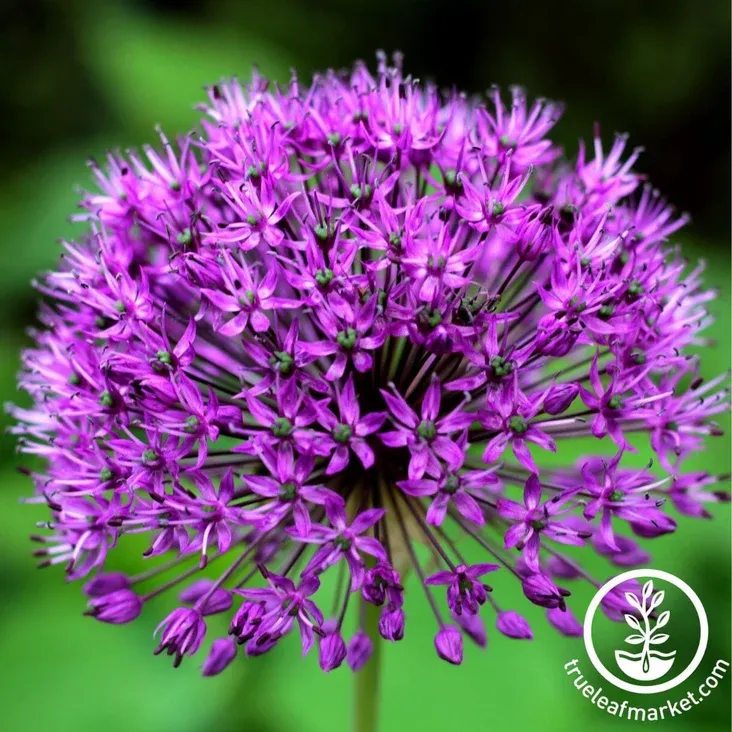
If you're looking to get started, Purple Sensation is an ideal option - they're easy to grow, naturally deer-resistant and will produce violet-purple globes in late spring.

Allium Globemaster is a showstopper, producing huge, long-lasting blooms that hold their shape for weeks.

Nodding Onion makes a striking visual impact with it's clusters of pastel lilac-pink bell-shaped flowers, and it blooms from late spring until midsummer.
How To Plant Alliums For The Best Results

Alliums are relatively low maintenance drought-tolerant plants once planted, as long as they're in the right spot.
They should be planted in full sun and in well-drained soil, says Jessica. "If you have heavy clay that stays wet through winter, improve the drainage of the entire planting area or use a raised bed." Alliums are particularly susceptible to rot in wet soil, so avoid low-lying areas where water tends to collect.
"A general rule for planting depth is to plant the bulb about two to three times its own height deep, with the pointed end facing upward," Jessica adds.
Large alliums - such as Globemaster and Star of Persia - can be planted around 6 to 8 inches deep, and roughly 8 to 10 inches apart; while smaller bulbs can be planted shallower and closer together.
One of the benefits of alliums is that they work well in both borders and containers, so you don't need a big garden to grow them.
Brooke recommends the "container bulb lasagna" method, for smaller patios, which she says is a space-wise method of layering bulbs with different flowering times. These Paloma Ceramic Bowl Planters from Terrain are perfect for planting a bulb lasagna.
Once planted, alliums don't need much attention over winter. Avoid overwatering, particularly after flowering. "Once alliums bloom, allow the foliage to yellow and die naturally before you cut it back, because the leaves are still photosynthesizing and replenishing the bulb," says Brooke.
Alliums are one of the more rodent-resistant bulbs out there, says Ben. "Squirrels and voles tend to steer clear because of their oniony smell and taste," he says. "That said, a little protection never hurts. Freshly turned soil can attract digging even when the bulb itself isn't the target, so laying down mulch or pinning a light layer of chicken wire over the planting area for the first few weeks can head off any curious digging."
Shop Planting Essentials

Ideal for getting alliums in the ground quickly and at the right depth, the spring loaded handles that make planting easy.

If you're planting a large number of bulbs at once, this augur drill bit attaches to a standard drill, for fast, easier planting.

Protect newly-planted bulbs with a plant protector. This set of 10 from Amazon has a simple wire cover that sits over the planting area, and can be easily lifted away once shoots appear in spring.
Alliums are a great September plant for pollinators and among the best flowers to attract bees, but they don't need to be the only addition to your pollinator-friendly garden.
Planting a mix of flowers that bloom at different times will help to provide a regular source of food for bees and other insects throughout the growing season. Planting your allium bulbs now will give your garden another valuable source of food for pollinators next year.
If you love inspiring garden ideas, outdoor advice, and the latest news, why not sign up for our newsletter and get the latest features delivered straight to your inbox?
