Kitchen Cabinet Materials Explained – An Expert Guide to Help You Make the Best Choice
From solid wood to MDF and plywood, here's everything you need to know about the most commonly used kitchen cabinet materials

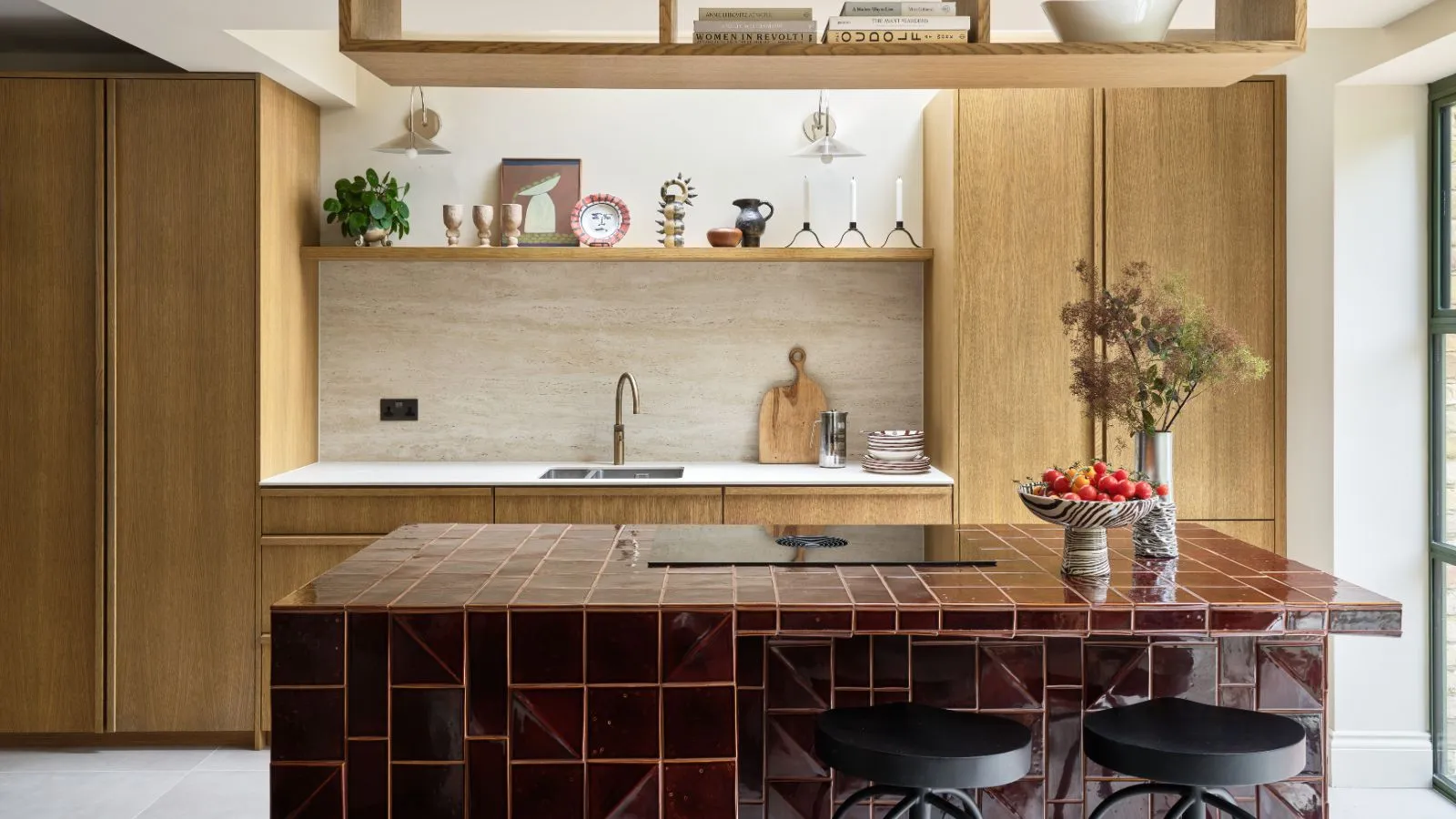
You might think the main choices you need to make for your kitchen cabinets center around color, style, and storage, but there's another very important detail that should never be overlooked: the material.
Both functionality and aesthetics need to be considered when choosing kitchen cabinets, and the material you select will impact the durability, cost, and overall look of your design. Even if you don't plan to leave the material unpainted, it still dictates how your kitchen cabinet ideas will look and how long they'll last.
If you're in the process of designing a kitchen, these are the main cabinet materials you need to know about to make an informed decision, what they are good for, and which designers say are your best choice.
Solid Wood

This design showcases how solid wood can be customized, with fluted details framing the top of the cabinetry.
Solid wood kitchen cabinets are considered one of the best material options because they are both hardwearing and look good over long periods of time. This includes oak, walnut, and cherry – solid wood cabinets are a single cut of wood, rather than different pieces being manufactured together.
'Solid wood cabinets have a timeless quality that is difficult to replicate. They offer exceptional durability, can often be refinished multiple times throughout their lifespan, and develop a beautiful patina as they age. For custom homes and heritage-inspired projects, they provide a level of authenticity and craftsmanship that many homeowners appreciate,' explains interior designer Kimberly Oxford.
'One of the greatest advantages of solid wood is the level of customization it allows. Details such as tambour doors, fluting, and other decorative profiles can be CNC-machined directly into the wood and then sanded and stained as one continuous surface. This creates a seamless, richly detailed finish that simply cannot be achieved with veneers or MDF.'
Oak is often favored for kitchen cabinets, offering a sturdy construction, beautiful grain, and easy customization. It takes different stains really well, so you can create a wooden kitchen perfectly tailored to your style and home's architecture.

For a more classic look, oak kitchen cabinets here offer an organic grain detail that can't be achieved with synthetic products.
'White oak remains one of my most specified species because its quiet, linear grain complements both traditional and contemporary architecture, while accepting stain beautifully,' Kimberly explains.
Oak kitchen cabinets are thick and heavy, so they can withstand everyday wear and tear while maintaining their appearance through regular use. If you choose oak cabinets, they are likely to last for decades.
Solid wood appeals in kitchens of every size and style – the way the solid oak cabinetry reads will depend on the type of cut used to create the doors. 'The cut of the wood is often just as important as the species itself,' Kimberly agrees.
'Rift-sawn and quarter-sawn white oak create a much quieter, more architectural grain, while plain-sawn boards have greater movement and character. Selecting the right cut can dramatically influence whether cabinetry feels modern, classic, or rustic.'
Burl Wood

Burl wood cabinets have been paired with a statement backsplash for a maximalist feel.
Burl wood kitchen cabinets certainly make a statement, which is why they are appearing in this year's kitchen trends. In many ways, it's a sustainable option, as it's made from trees that are twisted, deformed, injured, or diseased, which is what gives the wood a unique finish. These trees would not be used for other solid wood cabinets.
The appeal of this material is the twists, knots, and unique grain that the deformities create. According to Austin Carrier and Alex Mutter Rottmayer of Hommeboys Interiors, a texturally rich material like burl wood is an ideal choice for streamlined kitchen cabinetry because it adds visual interest and depth to the space.
While burl is a solid wood option, it's actually better as a kitchen cabinet material when it's adapted into a veneer. Burl wood is usually very heavy, more so than your oak or walnut options, and it's more prone to cracking and warping in its solid form. Veneer still offers the unique profile, but creates a longer-lasting and lighter door that's far easier to use.
Burl wood is also a more expensive option, and because it's chosen for aesthetic reasons rather than many of the more practical ones that make oak a winning choice, a veneer approach becomes far more favorable.
'Our clients are coming to us wanting spaces that are very personal and material forward, possibly a bit of fatigue from the washed-out, algorithm-fueled aesthetic that's consumed design for the past decade or so,' interior designer Nicholas Potts explains. 'What we love about a burl veneer is that each piece is singular, no tree (and no burl) is ever alike, and it provides an opportunity for a one-of-a-kind space.'
Wood Veneer

The kitchen cabinets in this design are made from pre-veneered MDF boards cut to project size.
Veneer kitchen cabinets are a hybrid between natural wood and man-made materials. They are made by taking a very thin slice of solid wood and bonding it to an engineered material, such as plywood or MDF. It's a more affordable option than oak that still gives a natural look.
Veneered kitchen cabinets are often confused with synthetic materials widely available at more budget retailers, but it's distinguished by the use of solid wood. And it's a kitchen cabinet material that is more durable and practical than you might think.
'Despite assumptions from some customers, veneers are made from real timber logs and are not to be confused with faux-veneer laminates. They are applied to MDF similarly to laminates but are treated with an oil or lacquered finish to provide protection against moisture and bring out the natural features of the wood,' Fiona Ginnett, Co-Founder at Holte, explains.
MDF

This charming blue kitchen features cabinets with a standard MDF core, offering a more contemporary finish.
MDF has become one of the most-used kitchen cabinet materials in recent years, adapted to blend the integrity of natural products with reinforced synthetic materials to increase strength and offer a more affordable alternative to solid wood.
'MDF (or Medium Density Fibreboard) is an engineered board made from wood pulp and set with phenol resins. We have found that MDF is more stable than ply, and when laminated, it is the perfect material for maintaining structure and form,' explains Fiona, who adds that certain types of MDF are better suited to kitchen cabinetry.
'We use MDF, moisture-resistant MDF, and Valchromat, which is an evolved, FSC-accredited engineered board from Portugal made from raw pine pulp and impregnated with resins and pressed. Valchromat is denser than MDF, with built-in moisture resistance and a higher mechanical strength.'
The key consideration you need to make with MDF kitchen cabinets is the limitations of their use. It needs to be treated and edged sufficiently to withstand water and wear typical of a busy cooking space. There are also aesthetic restraints that might make MDF less suitable for your design.
'The trade-off is that MDF isn't intended for exposed natural wood finishes, cannot be refinished like solid wood, and is more susceptible to damage if exposed to prolonged moisture. For that reason, I typically pair MDF painted doors with plywood cabinet boxes to achieve the best balance of beauty, durability, and longevity,' Kimberly adds.
Plywood

High quality plywood adds a beautiful texture to kitchen cabinets while offering all the functionality required.
If there's one kitchen cabinet material that divides opinions, it's plywood. Another engineered option, it's made by gluing lots of thin sheets of wood together and alternating the grain to increase its strength, then pressing it together under high heat. However, not all plywood is made equal, nor are they all sufficient for kitchen cabinetry.
'We used Birch ply for many of our projects during the early years of Holte. However, as we grew in experience and our quality control became more sophisticated, we found that ply was unviable for use in kitchens,' Fiona warns. 'We found issues like warping and bowing from moisture content, inconsistent grain, knots and streaks in the grain, and voids in the edging and plugs used to fill holes.'
The key to successful plywood kitchens is to choose sheets that have been specifically made for furniture use, and that have been finished and protected to a high standard. 'One of the reasons I regularly specify furniture-grade plywood is that it offers an outstanding balance of durability and performance without adding unnecessary weight,' says Kimberly, adding that the increased cost is something to consider.
'Furniture-grade plywood is more expensive than alternatives such as particleboard, and because it is made from natural wood veneers, the edges require finishing or edge banding for a refined appearance. However, for clients making a long-term investment in their home, I believe the added durability and structural integrity are well worth it.'
Painted

Painted cabinets are some of the most versatile, allowing homeowners to choose a color that speaks to their style.
Anyone who prefers a colorful kitchen will probably have considered painted cabinets. Even muted tones bring a different energy than natural wood or stained finishes. But getting them right is a bit more complex than you might think.
Painted kitchen cabinets are usually made from wood (maple is particularly popular) or MDF. Solid wood can be easily sanded for a smooth finish, or if you want to change the color at a later stage. There's also the added appeal of solid wood kitchen cabinets, as previously mentioned. With MDF, it's all about the finish.
'Because MDF has no natural grain, it creates an exceptionally smooth painted finish and is less prone to the seasonal expansion and contraction that can cause joints to telegraph through paint on solid wood doors. That's why many high-end custom cabinet makers use MDF for painted door and drawer fronts,' says Kimberly.
Despite the current trends for DIY painted cabinets, designers recommend leaving it to the professionals. 'Whether the cabinetry is finished by the manufacturer or custom sprayed in a spray booth, the quality of the finish is significantly higher than what can typically be achieved on site,' Kimberly explains.
'Professional cabinet finishes are applied using specialized spray equipment and commercial-grade coatings in controlled environments that minimize dust, regulate temperature and humidity, and allow the finish to properly cure. The result is a smoother, more consistent finish with greater resistance to chipping, staining, moisture, grease, cleaning products, and everyday wear.'
Laminate

Laminate cabinets are better suited if you like a modern scheme.
If you're designing a kitchen on a budget, laminate can offer a more affordable cabinet material. It's made by sandwiching a wood center, usually MDF or plywood, between layers of plastic or resin, which is what gives it its smooth, shiny finish. While this makes them really easy to clean, laminate kitchen cabinets are nowhere near as hardwearing as other materials.
Standard laminate kitchen cabinets are notoriously hard to fix if any cracks, chips, or dents occur, and if water sits on them for too long, damage is inevitable. However, some laminates have been created with cabinetry in mind.
'High-pressure laminates are made by fusing multiple layers of paper under extreme heat and pressure. Well-made HPLs are extremely durable, offer excellent water and scratch resistance, and tend to be cheaper than veneers. The variety in laminate colors and tones can appeal to customers looking for a cleaner, more modern look,' Fiona explains.
Laminate is a good option if you are designing to a smaller budget or as a short-term solution before a larger renovation, but for longevity and a more high-end look, some of the more durable and hardwearing materials are generally a better choice.
The right kitchen cabinet material should last for years to come. It's about choosing something that is not only durable, but fits your design style and budget. It's a structural part of your kitchen that needs to support your countertops, so take all of these things into consideration when making your selection.
Love beautiful design ideas, expert advice, and inspiring decor trends? Sign up for our newsletter and get the latest features delivered straight to your inbox.
