7 Flowers to Instantly Revive Your Summer Containers – And Keep Your Patio Bursting With Color for Months
Discover what to plant in your containers in July for instant impact


Container gardens are a versatile way to provide instant and changeable color and interest throughout the year. However, when it comes to summer containers, care is needed to keep your plants looking fresh throughout the hottest months.
Over my nearly 20-year horticultural career, I have had the privilege of managing many container displays. From private gardens to community and commercial spaces, I share some of the best container flowers to plant in July for a colorful display in either full sun or shade.
If you are wondering whether there is still time to plant up your vegetable patch, the answer is most definitely yes. From dwarf French beans to arugula and mizuna, our feature on what to plant in July is brimming with ideas of what flowers and veg you can plant this month and still enjoy later this year. (And when it comes to flowers for pots, you can find my particular favorite, May Night salvia, at Fast Growing Trees.)

Best July Container Plants
Containers and planters are a fantastic way of creating a display, especially if you are limited to a patio or terrace. From creating height with climbers in pots to adding depth by layering containers, planters can bring an outdoor space to life.
However, depending on where you live, July can be a hot month, and new plants must be irrigated adequately and not planted out during a heatwave.
If you are trying to decide what to plant in your pots this month, the choice available online or at your local garden center can feel overwhelming at times.
To help you whittle down the options, here are seven of the best container flowers to plant in July for a summer display.
Dahlia

Brilliant for a border, a cut flower garden or a container, dahlias are perfect for adding color and interest from midsummer until the fall. Thriving in warm, sunny weather, you will want to position your dahlia container somewhere it receives at least six hours of direct sunlight a day.
With flower shapes ranging from ball and pompon to cactus and waterlily and available in almost every color imaginable, there is a dahlia variety for every garden. However, for a summer container you will want to choose one of the more compact dahlia cultivars as some can grow in excess of 4 feet tall.
Typically flowering from midsummer onwards, any dahlias you plant up a container with in July may well already be in bloom or just about to, meaning they will add immediate impact. With limited soil and nutrients, you can help to encourage flowering by fertilizing your dahlias with a high-potash tomato fertilizer, such as Espoma organic concentrated tomato food, available on Amazon.
Salvia
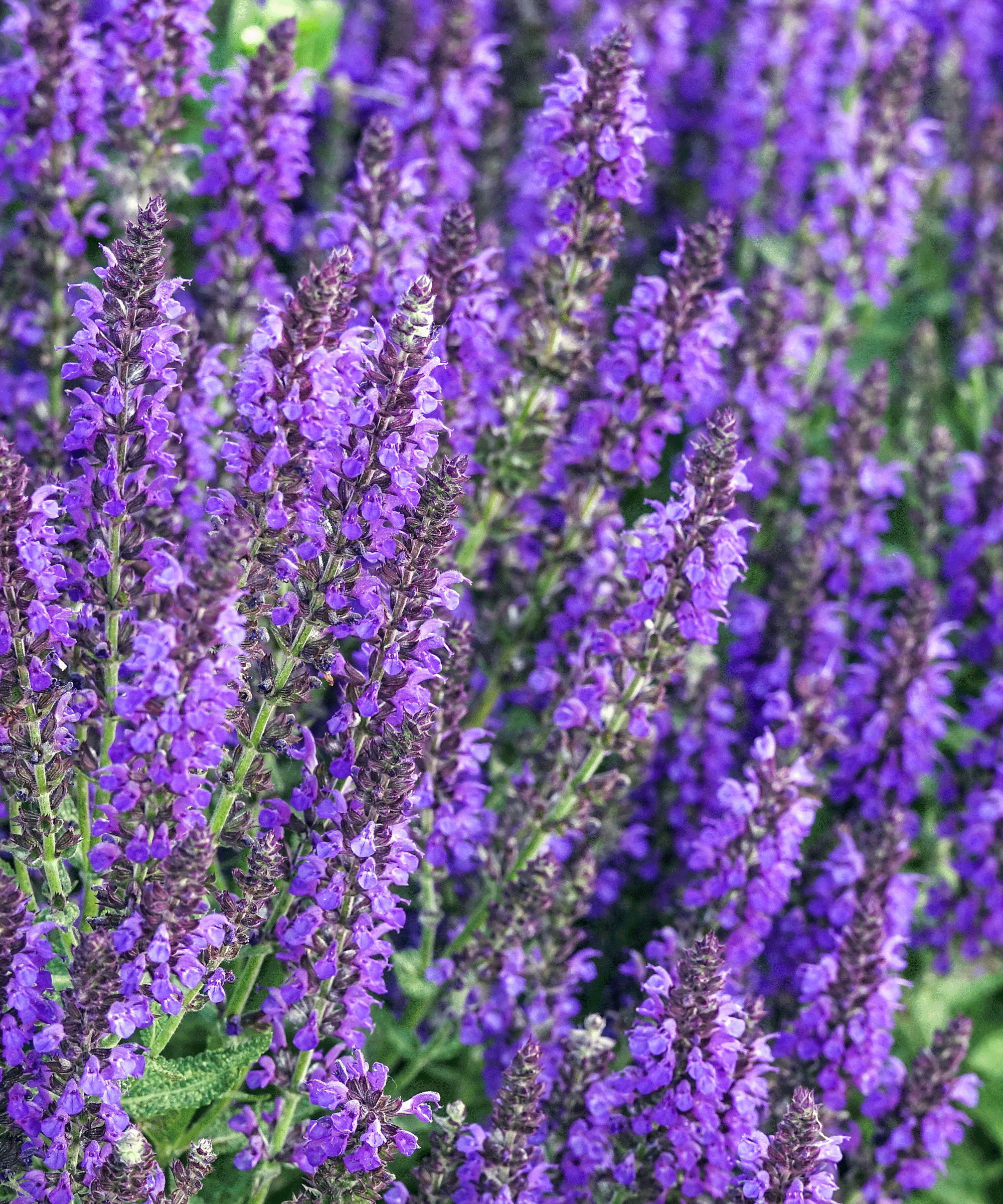
Having grown and cared for numerous salvias over my career, they have become a firm favorite of mine for their flowering capacity and resilience.
A large genus, there are hundreds of salvia species to choose from, with an array of colors and sizes. Nevertheless, with its violet-purple flowers and 2 feet height and spread, May Night Salvia, available to purchase from Nature Hills, can be ideal for a pot or container.
To encourage continuous blooms over the summer, you can prune back any spent flower spikes with a sharp and clean pair of garden pruners, such as these Okatsune 103 bypass pruners, available from Amazon.
Tobacco Plant

Nicotiana, commonly known as flowering tobacco, is prized as an ornamental, long-lasting plant for a summer garden. Native to Central and South America, it thrives in full sun and is commonly grown as an annual plant.
With several varieties available, the most widely grown Nicotiana alata (Jasmine Tobacco) is the one I tend to grow for its wonderfully scented, elegant blooms. Commonly grown from seed and often available as starter plants at your local garden nursery, Nicotiana alata comes in white, pink and lime green shades.
However, as they grow to around 3 feet tall, you may require a large container to accommodate them. Perfect for time-poor gardeners, Rim Self-Watering Planters are available to purchase in different colors and sizes from Plant Addicts.
Shop The Container Edit

This sculptural piece offers a versatile alternative for styling greenery. Made from durable resin, it’s designed to withstand the elements with a weatherproof, fade-resistant finish.

Perfect for displaying flowers or herbs, these durable planter pots combine sturdy support with weather-resistant performance. Their versatile design makes them just as suited to patios and balconies.

This modern, decorative ceramic planter has a gently ribbed surface and a weathered blue glaze. It also has a drainage hole and removable rubber plug.
Mexican Fleabane

Grown for its profusion of daisy-like blooms, Erigeron karvinskianus is one of the best perennial plants for pots and a reliable choice I often return to. Considered cold-hardy in USDA zones 6-9, Mexican fleabane grows best in full sun and in well-drained soil and can reach 1 foot tall and spread 2-3 feet across.
Even though it is a drought-tolerant perennial, to keep it looking fresh, water thoroughly on planting and during hot, dry spells. If it appears leggy and sparse during the summer, you can prune it back by half to encourage new bushy growth.
Perfect for trailing over the edge of a large container or raised bed, you can purchase Santa Barbara daisy plants from Walmart.
Coleus

It is all very well if your patio or balcony receives full sun, but what if your outdoor space is north or east-facing?
Chosen for its colorful, dramatic foliage, coleus is commonly treated as an annual because of its tender nature. Preferring partial shade and protection from the harsh afternoon sun, coleus plants are ideal for an east-facing spot and are recommended as a shade-loving plant for pots.
With its vibrant leaves, Coleus Alabama Red/Yellow is available to purchase from Home Depot.
Hosta

Adored for their lush and textured foliage, hostas are useful for turning a shaded patio into a verdant jungle. These shade-loving perennials are also hardy and often suitable for growing in USDA zones 3 and above.
Regrowing in the spring, hostas are generally planted then or the fall. However, you can still plant them in a container in July, but make sure they remain cool in the shade and their soil is kept consistently moist to help them establish.
With its golden-yellow and green foliage and a size of 2 feet tall and 1-3 feet wide, Great Expectations Hosta, available from Nature Plants, is suitable for a large container.
Japanese Windflower

Preferring morning sun or partial or dappled shade, Japanese anemones tend to struggle in full shade, where they fail to thrive and produce fewer blooms.
Flowering from midsummer until the first frost of winter, Japanese Windflowers are a great perennial to extend the season in your garden. However, they are commonly known as invasive perennials due to their propensity to spread vigorously via underground rhizomes, and can quite easily take over a bed or border if not controlled. Thankfully, though, windflowers thrive in pots, where you can naturally restrict their spread.
Depending on your area, Japanese windflowers can start to bloom in July and subsequently add immediate impact to a planter. Cold-hardy in USDA zones 4 through 8, Honorine Jobert Windflower is available from Plant Addicts and develops pure white flowers surrounding yellow centers on thin stems 3-4 feet tall.
Due to milder temperatures, transplanting or digging in new plants is generally left until the spring or the fall. However, as you have just read, it is still possible to plant up containers during the warmer months as long as certain precautions are taken.
To give your new plants the best chance of establishing quickly and looking good for the rest of the season, watering correctly and at the right time of day is key.
If you love inspiring garden ideas, outdoor advice, and the latest news, why not sign up for our newsletter and get the latest features delivered straight to your inbox?
