8 Psychology-Backed Tips to Calm Your Nervous System While Decluttering Successfully in 2026
If stress, anxiety, or a sensation of panic gets in the way of organizing your home, our experts in psychology have tips to soothe and succeed


If you've ever felt your mind go blank or your hands start to shake when anxious, nervous, or upset, that's your nervous system starting a cascade to 'protect' you from a perceived threat.
If that 'threat' is what happens when you try and fail to declutter, fret not.
Here, psychologists and experts in the space share eight ways to calm your nervous system so that all the decluttering tips you've got up your sleeve will be able to be actioned. It's quite satisfying how such tiny tweaks can turn a difficult experience into a smooth one.
Nervous-System Friendly Tips for Stress-Free Decluttering in 2026
First, it's important to understand why your nervous system is being activated when you're doing a common household task, such as decluttering your kitchen or bedroom.
Reuven Rosen, a licensed clinical social worker and couples therapist at ConnectWell Therapy, says most people would be surprised by how often this connection appears in homes across the US.
He says, 'From what I see, clutter is often a signal that someone is overwhelmed, not a sign that they don’t care. Some clients describe feeling constantly on edge in a messy space. They can’t focus, they feel irritated for no clear reason, and it’s hard to actually relax at home. Sleep is often lighter, too.
'For others, clutter isn’t about not caring. It shows up during grief, depression, or burnout, when even small daily tasks feel like too much.'
Here are some simple and small steps you can take to help you regulate your nervous system so you can succeed at decluttering.
1. Shift from Protection Mode to Permission Mode

Calm the nervous system by giving yourself permission to get rid of things, then tackle an emotionally neutral category of items.
Tim Shurr, Peak Performance Mind Architect and Founder of Shurr Success and IndyHypnosis says, 'Over my 30-year career, I've found that people who have failed every organizing system often succeed once the belief “I’m not safe without this” is addressed. One client with severe shopping compulsion was able to release 14 boxes in one afternoon, not because she tried harder, but because her nervous system no longer interpreted discarding as danger.'
For people who feel panicky, compulsive, or frozen when decluttering, Tim shares insight that the problem is rarely the 'stuff'. He says, 'It’s an unconscious safety belief. Before decluttering, spend 60–90 seconds deliberately shifting the nervous system from protection mode to permission mode.'
A study published in the National Library of Medicine found that perceived safety cues reduce amygdala reactivity and stress responses.
When actioning this 'permission' step with clients, Tim asks them to pause, place one hand on the chest, one on the abdomen, and say (silently or aloud): 'Nothing bad happens if I let this go. I am safe even without it, and any of this can be replaced.'
Then, start decluttering a neutral category of items that will not require a lot of thought or deliberation, such as recycling old packaging, duplicates, or out-of-date items with an easy expiration sweep. Avoid decluttering sentimental items at this point.
Tim adds, 'This works especially well for compulsive shoppers, people with trauma histories, chronic anxiety, ADHD, or those who intellectually want to declutter but feel overwhelmed or distressed when trying.'
Another study in the same publication found that feeling threatened impairs executive function and decision-making, which explains why your emotional history may make decluttering feel panic-inducing and send your nervous system into overdrive.
Tim says his approach replaces “force and discipline” with nervous-system permission, creating lasting change instead of rebound clutter.
2. Boost Dopamine with Music

Tackle a small area whilst listening to music you enjoy, or a show you're familiar with.
Playing fun music increases dopamine, which is known as the 'feel-good' hormone, and creates a positive association with the task.
You can also achieve this with dopamine pairing, where you play a favorite show or film, one that you're familiar with and won't heighten your anxiety, whilst you're doing the decluttering. This shifts the focus from the task your hands are doing, to the enjoyment your mind is feeling.
Body doubling is also helpful, where you video call a friend or loved one and both of you declutter together. If you're not up for a call, try a decluttering video on YouTube instead.
Dana White is a professional organizer, owner of A Slob Comes Clean and author of Wall Street bestseller, Decluttering at the Speed of Life, available in multiple formats on Amazon.
I recently interviewed Dana about her fabulous Five-Day Clutter Shakedown and loved how no step of it leaves a big pile of mess to be sorted later. Every move you make brings tangible progress. It's also excellent for banishing decluttering indecision.
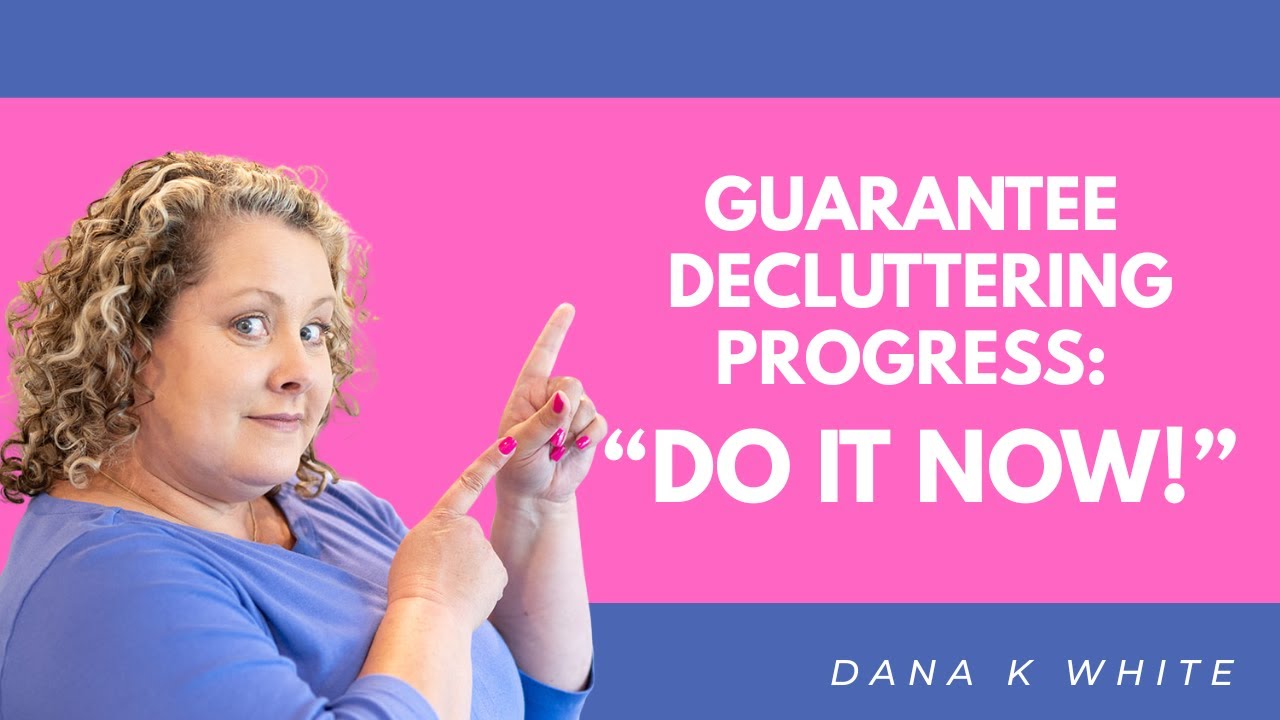
We also love some of the decluttering shows on Netflix, which pairs nicely with our next tip.
3. Have an Exit Strategy

Streamline a small area such as a nightstand to reduce the sensation of overwhelm.
Permitting yourself to stop at any time instantly takes away the stress of facing a long decluttering session.
Set a timer, such as the visual Pomodoro timer available from Amazon, and work for 10 minutes to declutter a drawer, a nightstand, or other small space. You can instead watch one episode of a show you have had on your watch list, or are familiar with.
Working within these timed boundaries eases the stress reaction we often face when dealing with tasks we feel are beyond our scope or too large to manage in one sitting.
Having a clear end in sight makes it possible to declutter when feeling overwhelmed and calm the nervous system.

The KonMari Method, with its revolutionary category-by-category system, leads to lasting results. Renowned professional organizer and author Marie Kondo gives detailed but easy-to-follow guidance for determining which items in your house 'spark joy' (and which don’t), so you can easily declutter and enjoy the unique magic of a tidy home, and the calm, motivated mindset it can inspire.
4. Take 'Forest Bathing' Breaks

Take yourself into the yard barefoot, or look out of the window and notice the clouds or trees for 90 seconds to reset your nervous system by 'forest bathing'.
Taking a 'nature break' and 'forest bathing' is a well-known Japanese wellbeing technique.
Simply go into the yard with bare feet and stroll on the grass. The impact of nature on the human body shouldn't be overlooked, as simply seeing green or blue reduces the heart and breathing rate within minutes.
Putting your skin on natural materials such as sand or grass triggers the parasympathetic nervous system and brings calm because our bodies are designed to respond to natural surroundings, which is why so many people find being by the sea, or taking a stroll through the woods, clears their mind and silences anxiety.
If you live in an apartment and don't have access to a yard or lots of natural space, simply look out of your window at the sky instead (but don't look at the sun directly), and notice the pattern of the clouds, the breeze on your skin.
This will calm and soothe your nervous system in the same way. Even 90 seconds spent looking at trees from my home office window brings my heart rate down, which is why I have it scheduled as a recurring reminder that pops up on my screen every 90 minutes in my workday.
Doing this before, during, or after decluttering, or whenever you feel the task is getting on top of you, will result in your baseline of stress during this task lowering.
You will feel calm and grounded instead of anxious, panicked, or overwhelmed by chores. Writing Morning Pages is another fabulous technique we've tried and loved for helping get the mind and body organized and working efficiently without internal chatter and worries getting in the way of household tasks.

Each bundle of three notebooks features three books with full-color covers, stitched binding, gold foil accents, and 64 ruled pages. It'll make it easier to stick with your Morning Pages when you have a gorgeous notebook to jot your thoughts down in.
5. Activating Your Body's De-Stress Button
The vagus nerve runs through the torso, connecting your brain with your heart and gut. It's a vital part of the parasympathetic nervous system, which controls involuntary actions. Activating it can hit a reset of sorts, lowering your heart rate, breathing rat,e and reducing stress.
Susan Reis is a Somatic Practitioner at The Cyclical Seed, who is also completing her MSc in Applied Neuroscience. She works on the body-mind connection and nervous system every day.
She says, 'Humming while decluttering can also be super effective. The vibration created by humming stimulates the vagus nerve, helping to shift the body out of a stress response.
'This can reduce adrenaline output and support calm and focus, making the task feel more manageable. Letting the humming turn into a song can also bring a sense of ease or even enjoyment to it.'
Try Homes & Gardens playlist for a mix of fun and motivating tunes. Having an affordable, portable and wireless Bluetooth speaker from Amazon that instantly connects with my phone and delivers great sound wherever I am whilst decluttering, has been my favorite small purchase for my home.
Try our Homes & Gardens playlist

Enjoy some fun eclectic pop through the ages, handpicked by us on Spotify or Apple Music
6. Try Simple Somatic Exercises

Keep open storage neat and tidy with baskets that 'hide' clutter in plain sight to stop your mind from going into overdrive and triggering a nervous system stress reaction.
Somatic means something that relates to the mind, but is felt in the body. The same can be applied to physical exercises or movements that calm the mind.
Susan explains, 'I often see how such common factors like home clutter contribute to chronic nervous system stress, as a visually busy environment keeps the brain in a low-grade state of alert and can increase anxiety, fatigue, poor sleep, and overwhelm, particularly for people already under stress or dysregulated.'
This is one of the reasons we are stressed by the visual clutter of open storage. Simply adding a set of pretty wicker boxes from Wayfair to your shelves so items are corralled instead of on display can reduce that inability to relax around all your 'stuff'.
Susan adds, 'Clutter adds ongoing cognitive and sensory load and is registered by the nervous system as unresolved stimuli over time, meaning the body and mind are constantly processing more than they need to.'
Instead of visual clutter in the living room simply being that, it becomes a mental 'to-do' list, which can make it hard to unwind in that space.
One simple tip Susan gives is to declutter one small, high-impact area you notice daily, like a bedside table, rather than the whole house.
She says, 'Completing a contained space gives the nervous system a clear signal of safety and completion without becoming an overwhelming demand. Take a moment to briefly notice how this clear space feels in the body and mind to help reinforce more regulated patterns over time.'
Here are some of our favorite decluttering methods, which we have tried and tested, that are great for blasting through streamlining to-do lists:
7. Don't Aim to Declutter Everything

Our homes are meant to be lived in, so don't expect perfection from yourself, or your space. It's a recipe for stress, say our pros.
Couples therapist Reuven Rosen describes working with a duo recently who argued constantly about the mess in their home. He says, 'One partner felt overwhelmed by clutter and said their body just shut down in it.
'The other partner had recently lost their mother and was still deeply grieving. She wasn’t ignoring the mess on purpose. She was emotionally drained and felt unseen. What they were fighting about every day wasn’t really dishes or piles on the floor.'
Decluttering after bereavement is especially tricky, and needs a lot of self-love and compassion to move through.
One small shift that helped Reuven's couple was changing how they talked about the task. Reuven explains that instead of asking each other why they didn't just keep particular spaces clear, they focused on what clutter did to each person.
'They picked a few shared areas where order mattered most and let the rest go for the time being. The tension dropped almost immediately.'
Ditching housekeeping perfectionism is a good thing all around, as we live imperfect lives. There is no reason to expect perfectionism in our household tasks either.
This mindset shift is an instant reliever of stress that can crop up and manifest as nervous-system activation.
8. Tackle Surface Clutter First

Clearing surface clutter brings an immediate sense of calm and is a low-lift task, meaning it can be done quickly and easily.
Nick Friedman, co-founder of College HUNKS Hauling Junk & Moving on the impact of clutter on body and mind.
'Over the past 20 years, I’ve seen firsthand how clutter doesn’t just take up space in a home, it takes up space in people’s minds and bodies too. From a mental health standpoint, clutter creates constant visual noise, especially when surfaces are crowded, unfinished projects pile up, or rooms feel chaotic.
'I’ve spoken with countless customers who describe feeling anxious, overwhelmed, or even ashamed in their own homes, and that chronic stress can absolutely bleed into sleep quality, focus, and motivation.'
One simple but effective decluttering tip Nick offers is to reduce visual clutter first and dial down the stress that is activated in your body and mind.
'Clear countertops, nightstands, and entryways. These are the areas your eyes land on most often, and simplifying them can deliver an immediate sense of calm and control.'
You can try the Ski-Slope Method for a quick fix that doesn't involve any decluttering decision-making, the Sunday Butterfly Method if you're struggling to focus, or the Desire-Path Method to easily tackle one area that's a magnet for mess in your home.
What to Shop
A few helpful items can help you not just declutter with less stress, but tackle household chores without perfectionism.

Improve the connection between your body and mind with just five minutes of targeted somatic work a day. This book will help you unlock the movements that can naturally ease anxiety and reduce stress.

This wireless speaker is a perfect companion for decluttering with dopamine in mind. Simply connect to your phone and blast your favorite playlist, wherever you are in the house. It has 16 hours of playtime on a single charge.

Handy for everyday note-taking, business, or journal writing, this wrapped journal features beautiful gilded pages. It comes in five color options, and every letter of the alphabet for initial customization.

Prefer to keep things digital? Opt for a digital notepad such as the Kindle Scribe to keep everything easy to access while minimizing paper waste. With AI tools to transform your notes, keeping on top of to-do lists has never been easier.

Explore the Japanese art of decluttering and organizing in this bestselling book, which packs so much information into a mere 200 pages, in a readable and digestible format that's accessible to all readers of all ages.

A set of matching baskets such as these, which have reinforced iron framing inside, are perfect for clearing the visual clutter on shelves and inside closets.
Meet the Experts

Reuven Rosen, LCSW-C, is a licensed clinical social worker and couples therapist with five years of clinical experience. He works with individuals and couples around stress, grief, burnout, and relationship conflict. He is trained in Emotionally Focused Therapy (EFT) and Internal Family Systems (IFS) and is a member of ICEEFT. He owns ConnectWell Therapy in Columbia, Maryland, where he provides in-person and telehealth therapy.

Susan is a somatic practitioner, mindfulness and meditation teacher, and nervous system specialist with several years of professional experience. She is completing her neuroscience MSc.

Tim has an MA in Counseling Psychology, is a Certified Clinical Hypnotherapist
and author of One Belief Away. He has over 36 years of experience helping high-performing and highly sensitive individuals resolve anxiety, compulsive behaviors, and attachment patterns by upgrading subconscious safety beliefs. He has conducted more than 16,000 one-on-one sessions and trains professionals worldwide in belief-based nervous system regulation.

Nick is the Co-Founder of COLLEGE HUNKS HAULING JUNK, the largest and fastest growing US-based hauling and moving company, providing collegiate teams to move your home and business, as well as remove unwanted items from commercial and residential properties.
You can also try tips for decluttering at 20, 30, 40, 50, 60, 70, and 80, to help guide you through each life phase with expert insight.
