Designer/Maker: Geoffrey Fisher
In his Buckinghamshire studio, this talented artisan produces unique pieces from foraged wood, including coat hooks, clothes brushes and brooms

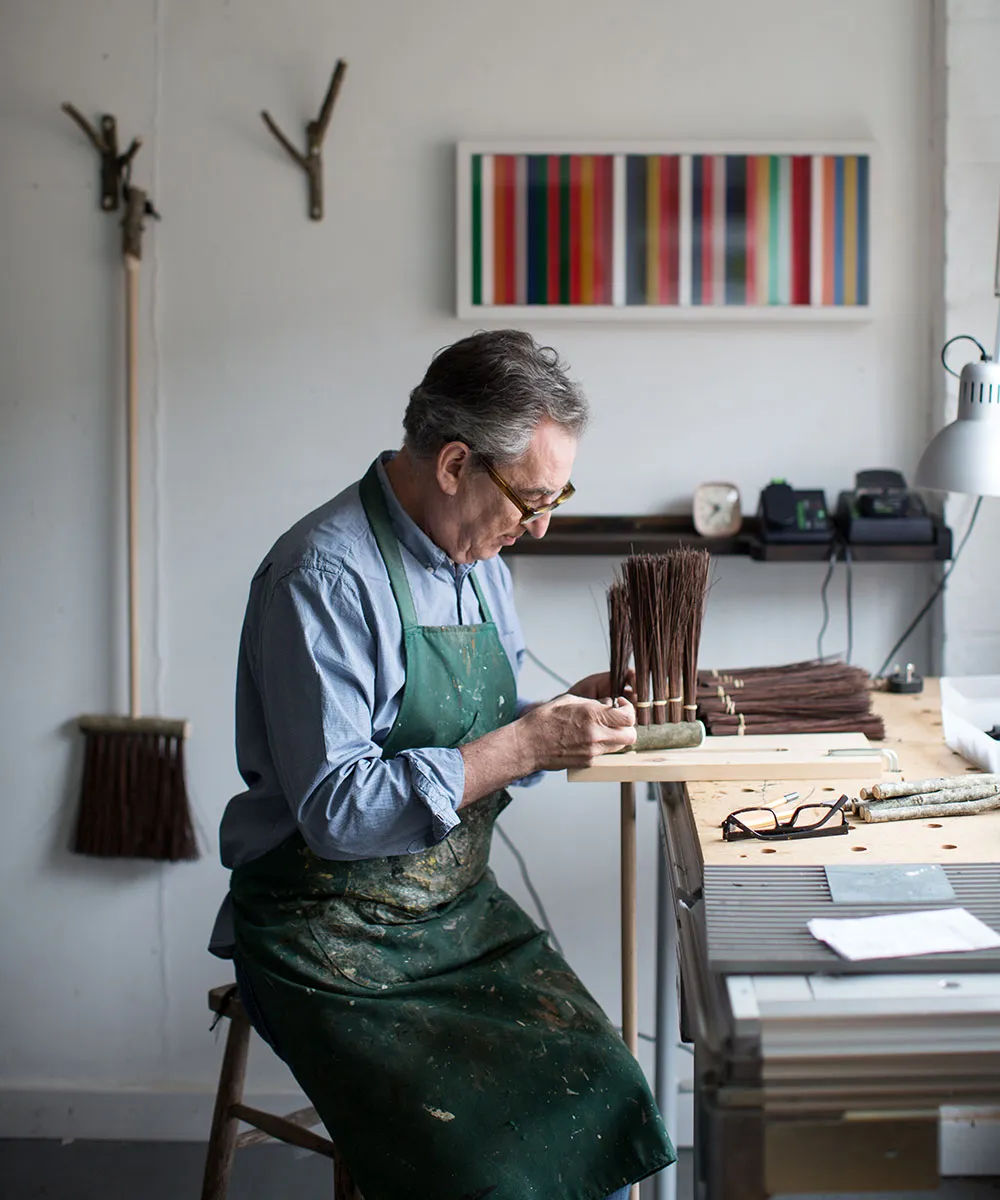
Geoffrey Fisher's artistic journey began at Hornsey College of Art. After graduating in 1976, he set up a studio in a disused factory close to London's Brick Lane and began working with gathered wood.
He moved to Greece for a number of years, where he continued to experiment with wood before returning to the English countryside to forage and make.
His pieces have a pleasingly utilitarian feel and are available at The Conran Shop, Another Country and Twentytwentyone, among others, and from his online shop.
- See: Interior design trends – the top looks for the New Year
For as long as I can remember, I've been designing and making with wood. Whether in the form of a piece of furniture or an abstract construction, it has always been a way of expressing myself visually.

I grew up in Buckinghamshire and spent a lot of my time in the woods behind our family home and further afield. Nature has always been an important part of my life, especially when I lived in Greece. Now, each week, I'll work in local woodland, learning more about the seasonal changes that take place and the distinctive quality of each type of tree. I tend to work with ash, beech, oak and, occasionally, yew.
I've been using this method of collecting and making utilitarian products from foraged wood for about five years. I still can't fully understand the appeal of what I produce. It's not enough to say that the materials are from sustainable sources and the pieces are entirely handmade, and that isn't always apparent at first glance. There's definitely a tactile quality to the products and, from an aesthetic point of view, they're unusual and slightly challenging. Some pieces have a humorous element, which makes my clients smile.
Working with foraged wood happened by chance. A tree came down in the garden and the shape of one of its branches suggested that it could be used as a coat hook. This way of making was completely different from anything I'd done before; it involved working alongside nature, rather than imposing something upon it. Now I spend time going out to collect – it's relatively affordable and is sustainable, but always demanding to work with in its raw state.
My brooms have proved very popular. It started when a friend suggested that I should try incorporating brush bristles into a length of foraged wood. I thought that would be virtually impossible, because of all irregularities and the unique shape of each piece. However, after a number of failed attempts, a prototype was ready to take to one of my retailers. From that point on, a small production run was made and eventually a larger one.
This year, Ive introduced two new materials to the range. I'm using brightly coloured synthetic fibre for some of the brushes and galvanised steel for dustpans. I like the contrast between the natural shape and texture of the foraged wood and the manufactured qualities of the plastic and metal. I'm also writing a book about my work. In between collecting the wood and creating my pieces, I try to set aside a couple of hours a day to work on it. One thing I know is that wood has always been my main source of inspiration, both for practical and aesthetic reasons.
Geoffrey Fisher, geoffreyfisher.com. Studio visits by appointment only. You can buyGeoffrey's products via his website or book an individual making workshop with him.
Photography/Helen Cathcart
