The 8 Best Robot Vacuums for Carpets, Hard Floors, Mopping and Pet Hair – Tested Picks for Every Budget
This is the complete guide to choosing the best robot vacuum cleaner for your needs


November 23, 2026: We've updated this guide with eight hands-on recommendations after fresh testing, adding additional categories for mopping and hidden stains. We have also checked retailer links and early Black Friday prices.
A good robot vacuum can tackle pet hair, crumbs, and everyday dust between deeper cleans, freeing up valuable hours in your week and taking the effort out of everyday floor care. We've spent more than 7,000 hours testing over 30 robot vacuums in real homes, assessing their vacuuming and mopping performance, navigation, reliability, and ongoing maintenance needs.
Here, you'll find our top eight robot vacuums, a comprehensive guide to choosing a robot vacuum, and our recommended selections at every price band, so you can automate floor cleaning with one of the best vacuums for your home.
Our eight picks cover carpets, hard floors, mopping, and everything from hidden stains to stray socks. If you’re shopping ahead of Black Friday, we’ve also checked current US prices from the brands below.
Black Friday Robot Vacuum Deals


The Top 8

The best robot vacuum you can buy
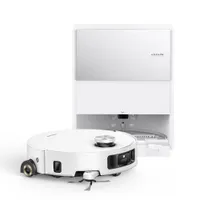
The Dreame Aqua10 Ultra Roller's cleaning performance surpasses any robot vacuum we've tested, resulting in a 70% reduction in manual vacuuming. Its mop continuously cleans itself while lifting spills and residue from hard floors, and 30,000Pa suction effectively vacuums dust and debris from carpets. It also climbs 3.15-inch obstacles with retractable 'legs'.

The best robot vacuum for pet hair and carpets
The Dyson excels at picking up hair from carpets and rugs, getting deep into even thick-pile carpets, and its built-in filters – on both the robot and dock – sweep dust and allergens away. Its mopping capabilities are weaker, but still worth the investment.

The best robot vacuum for value
A self-washing roller mop and strong carpet suction make this a versatile pick for the money. In testing, it lifted oily stains and handled fine and larger debris, though maximum suction was loud.

The best robot vacuum for a smaller budget
This slim vacuum and mop cleaned methodically, picked up pet hair and reached under low furniture in our tests. The dock is loud when it empties, and thick stains can take another pass.

The best multi-function robot vacuum cleaner
The eufy 3-in-1 E20 comes with a detachable handheld vacuum, so that whenever the robot misses something, you can quickly and easily vacuum it up. It's the full package: While the robot cleans your floors, the stick and handheld can tackle furniture and upholstery.

The best robot vacuum for mopping
The Ultra’s roller mop was excellent on hard flooring in our tests. It ran quietly and was easy to maintain, though vacuum-only cleaning missed some edges.

The best robot vacuum for stains
UV light helps the Shark find marks that are hard to see in normal light. Our tester watched it detect hidden stains and then scrub them, making it a useful pick for busy kitchens and homes with pets.

The best robot vacuum for picking up objects
A mechanical arm lets the Saros Z70 pick up some small items from the floor. It is an expensive option best suited to homes where loose socks and similar clutter regularly get in the way.
How to Choose a Robot Vacuum for Your Home
Types of Robot Vacuum
Robot vacuums can range anywhere from as low as $150 to $1,500+ and within that are plenty of different types to choose from.
Budget vs premium: Budget robot vacuums can save you $100s, but in reality, these low-cost robots don't have the hardware to deep clean your home. The suction is often weak, the brushroll tangles with hair, and you'll spend so much time cleaning up after it that you'll wonder why you ever bought it.
If you live in a clean, quiet home with no pets and exclusively hard floors, a budget robot vacuum might be enough. But otherwise, it's better to opt for a premium robot vacuum from brands such as iRobot, Dreame, eufy, and Roborock that are better suited to actual cleaning.
These models have stronger suction and advanced navigation to reduce how often you have to step in. Balance your maximum budget with a set of features that are a dealbreaker for you (more on these below).
Vacuuming and mopping: Some robot vacuums can also mop the floors for you. On test, we've found they work to varying success, but even the budget models will leave your floors looking and smelling fresher than usual. The more advanced models (such as the Dreame Aqua10 Ultra Roller) will mop your floors almost as well as you would yourself, and dramatically reducing how often you're having to clean your floors manually.
If a mop is a dealbreaker, I'd recommend aiming to spend at least $600-900+ on a robot with a secure and fast-acting mop cover to protect carpets and rugs, like the Yeedi S20 Infinity Ultra.
Self-emptying: Most robot vacuums come with (or at least have the option for) a self-cleaning station. These docks charge, empty, refill (if mopping), and self-clean the robot. They typically store dust, dirty water, and clean water for up to 60-75 days, depending on how often you use it. I'd always recommend a self-emptying station, but you can save a little money if you don't mind emptying it after each run. Some robots, such as the iRobot Roomba j9+ Combo have stations that double up as stylish side tables.
What You Can Get at Each Price Band
Robot vacuums have some of the highest prices of any home appliance you can buy, but they're discounted quite often. Always wait for a promotion; otherwise, you'll be spending $100s more than you need to.
Here's what you can get at each price band:
- Under $250: Look for a basic robot for surface dust on hard floors. At this price, mapping and obstacle avoidance are usually limited.
- $250 to $450: Look for more reliable mapping and, in some models, a self-emptying dock or a mop. The Ecovacs Deebot T50 Pro Omni was $399.99 when checked.
- $450 to $950: Discounts can bring more advanced vacuum-mops into this range. The Yeedi M16 Infinity and S20 Infinity Ultra both offer self-washing rollers. The Dyson Spot+Scrub Ai is the better fit for carpets and pet hair.
- Over $950: Flagships often add more advanced obstacle detection, self-cleaning docks or specialized features such as the Roborock Saros Z70’s mechanical arm. Sale prices can move these robots into a lower bracket.
Robot vacuum |
Suction |
Mop |
Self-empty dock |
Navigation |
Noise in testing |
US price on November 18 |
|---|---|---|---|---|---|---|
Dreame Aqua10 Ultra Roller |
30,000 Pa |
Self-cleaning roller |
Yes |
LiDAR and cameras |
73 dB robot |
$699.99 |
Dyson Spot+Scrub Ai |
18,000 Pa |
Self-cleaning wet roller |
Yes |
dToF LiDAR and HD camera |
62 dB robot |
$799.99 |
Yeedi M16 Infinity |
30,000 Pa |
Self-washing roller |
Yes |
LiDAR and cameras |
66 dB robot |
$599.99 |
Ecovacs Deebot T50 Pro Omni |
15,000 Pa |
Dual spinning pads |
Yes |
dToF LiDAR and camera |
72 dB robot |
$399.99 |
Yeedi S20 Infinity Ultra |
22,000 Pa |
Self-washing roller |
Yes |
App-based mapping |
56 dB robot |
$899.99 |
Shark PowerDetect UV Reveal |
Not disclosed |
Vibrating pad |
Yes |
LiDAR and cameras |
66 dB robot |
$699.99 |
Roborock Saros Z70 |
22,000 Pa |
Dual mop pads |
Yes |
StarSight 2.0 |
50 to 60 dB robot |
$1,299.99 |
And don't forget – robot vacuums come with recurring costs in the form of filter replacements, roller replacements, and cleaning solutions. To avoid this, look for robots with lifetime filters, durable rollers and mops that only use fresh water, but really, models with recurring costs tend to come with better performance.
Key Specifications, Explained
- Suction power: Manufacturers quote suction in pascals (Pa). A larger number can help, but brush design, navigation and how well the robot seals against the floor also affect what it picks up.
- Navigation: LiDAR and cameras help a robot map rooms and avoid obstacles. Look for dependable object avoidance if you regularly leave toys, cables or pet bowls on the floor.
- App controls: Look for room-by-room scheduling, no-go zones and maintenance alerts.
- Pet hair: An effective brush roll matters on carpets and rugs. The Dyson Spot+Scrub Ai was especially good at lifting embedded fur in our tests.
- Noise: Compare the robot and the dock separately. The dock’s dust-emptying cycle can be much louder than the robot’s regular cleaning run.
The 8 Best Robot Vacuum Cleaners
The Best Robot Vacuum Cleaner


Our seasoned robot vacuum tester, Victoria Woollaston, has reviewed 20 robot vacuums over the past 10 years, and the Dreame Aqua10 Ultra Roller resulted in the most significant reduction in manual vacuuming – around 70%.
That's the true beauty of investing in such an expensive appliance. The best vacuums make cleaning easier and more thorough, but a good-quality robot vacuum actually changes your lifestyle, freeing up hours of time a week that you would otherwise spend cleaning your home.
The Dreame Aqua10 Ultra Roller is that exact investment, with the most powerful vacuuming and mopping power we've seen so far.
It has 30,000 Pa suction, which is incredibly high compared to the typical 8,000 to 18,000 Pa. In reality, everything from dust to large debris is vacuumed easily from hard floors and carpets, and as the Aqua10 Ultra Roller has such outstanding navigation, it knows when to finish cleaning a particularly dirty area before moving on.
Its most exceptional performance is its mopping:
Unlike most robot vacuums, the Dreame Aqua10 Ultra Roller actually lifts grime from the floor and deposits it into its dirty water tank, rather than simply wiping it. Its roller constantly cleans itself while running, then deep cleans itself when docked at the station.
This results in outstanding mopping performance, removing spills and sticky residue from your floors, with minimal effort needed from yourself, then leaving them so spotless that you can comfortably walk around barefoot.
The Dreame Aqua10 Ultra Roller can also climb 3.15-inch thresholds, allowing it to pass from hard floors to rugs and carpets without getting stuck, as many robots often do. We also found that its navigation was almost flawless, avoiding toys, pet bowls, and obstacles rather than dragging them around.
Read more in our full Dreame Aqua10 Ultra Roller review.
The Best Robot Vacuum for Pet Hair and Carpets


Victoria Woollaston tested the Dyson Spot+Scrub Ai for four weeks in a home with children and a dog, and in that time, she did more than 90% less manual vacuuming.
The transparent dock bin made it easy to see what the robot had pulled from carpets that already looked clean, and around the places where her dog regularly settled, there was noticeably less fur on the floor.
For a home with shedding pets or several carpeted rooms, that day-to-day pickup is the strongest reason to choose the Dyson.
In the standardized tests, the Dyson lifted nearly all the sugar and lentils on the first pass across carpet and hard flooring, then collected the remainder on a second pass.
The reason it doesn't take the best overall slot from Dreame is that it had a harder time with larger debris, and its mopping doesn't live up to its vacuuming prowess.
In targeted cleaning mode, it often steered around pieces as if they were obstacles, leaving some behind. The camera and LiDAR were more convincing around furniture, and the robot crossed the raised threshold between the kitchen and hallway without getting stuck.
The wet roller lifts when the robot detects carpet, so it can move between a rug and a hard floor during a mixed clean. On the kitchen floor, however, it handled ketchup much better than mustard. The thicker sauce spread, and foam trails sometimes sent the robot back over the same patch. Our tester still reached for a manual mop when the kitchen needed a thorough wash.
The dock took care of emptying the bin and washing and drying the roller. It is sizable, and Dyson’s own cleaning solution adds to the running costs. This is the pick we’d choose when carpet and pet hair come first, with the Dreame or the Yeedi S20 Infinity Ultra better suited to homes where mopping is your priority.
Read more in our full Dyson Spot+Scrub Ai review.
The Best Value Robot Vacuum


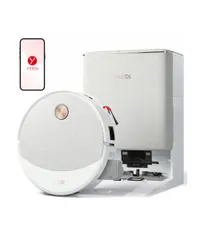
Jason Cockerham tested the Yeedi M16 Infinity at home and found that it took over most of his routine floor cleaning. It can pick up everyday debris and lift sticky residue in the same run, and the dock empties the dustbin and washes the roller between jobs.
It was straightforward to set up and mapped his single-storey home in under 10 minutes. The station takes up a fair amount of space, so measure where you plan to put it.
The M16 Infinity was strong on both tile and rugs. In our standardized tests it generally cleared fine, medium and larger debris within one or two passes. The app gives you control over suction, mop settings and cleaning patterns, which is handy if the kitchen needs more attention than the guest room. It can be more detail than you need for a basic daily run. Maximum suction was loud, and clearing small toys from the floor still helps it finish uninterrupted.
The extendable roller was particularly useful along walls and when the kitchen floor had oily residue. It washes itself as it goes, and the dock cleans the roller with hot water. Jason found that it could lift stubborn messes that would otherwise have sent him back for a manual mop, although a mopping run could take longer than expected.
At a retail price of $999 (although we often see it discounted to around $599), it’s expensive, but not nearly as pricey as competitors from Dreame and eufy. This is a great value buy if you want both reliable vacuuming and a proper roller mop without moving into the most expensive tier.
Read more in our full Yeedi M16 Infinity review.
The Best Budget Robot Vacuum


Victoria Woollaston tested the Ecovacs Deebot T50 Pro Omni for four weeks. What made it stand out was how consistently it covered the floor. Its low, 3.19-inch profile let it get under furniture that is awkward to reach by hand, and it crossed the high threshold between the kitchen and the hallway without getting stuck.
It was also good at keeping pet hair under control. In testing, it picked fur up from both hard flooring and carpet without leaving it wrapped around the roller. At $399.99, those are incredibly useful strengths for a lower-priced vacuum-mop.
The Deebot is rated at 15,000 Pa but, in practice, it was the coverage that impressed Victoria most. It vacuumed the edges and the areas under furniture where debris tends to accumulate, with little left behind in normal use.
Reliable mapping helped it get around obstacles and work its way methodically across rooms. Victoria still vacuumed carpets and stairs by hand on weekends, but the robot took care of most of the cleaning in between.
The two spinning mop pads were a pleasant surprise. In the kitchen, the Ecovacs returned to marks it could still see and scrubbed them again, leaving the hard floor visibly cleaner. Thick stains can need a second pass, so it is worth dealing with a large, sticky spill before sending the robot out.
The dock makes the process easier by emptying the bin and washing the pads. Its emptying cycle was loud, and the cleaning solution costs extra. For the money, we’d take those trade-offs in exchange for reliable daily vacuuming and mopping.
Read more in our full Ecovacs Deebot T50 Pro Omni review.
The Best Multi-Function Robot Vacuum


The eufy 3-in-1 E20 resolves a common issue found across almost every robot vacuum: sometimes, mess gets left behind. Robot vacuums are still nowhere near as powerful as, say, the best upright vacuums, and it's to be expected that they occasionally won't pick up everything.
eufy's answer is to stick a small handheld vacuum in the robot's body, so that you can quickly pull it out and vacuum manually. Like the best cordless vacuums, all you have to do is attach the wand and floorhead, and you have a full-sized vacuum ready to go.
The existence of an additional vacuum might give the impression of a weak robot, and in some instances, the E20 isn't as powerful as others in this guide, like the S1 Pro Omni, but it means you can count on it for just about any mess.
'During testing this combo in my home for two months, I found it tackled carpets, hard floors, sofas, upholstery, and everything in between with ease,' wrote tester Punteha van Terheyden, and the addition of the handheld vacuum meant that nothing was getting missed.
'The cordless and robot both moved easily between floor types, and the latter did not get bamboozled by oddly-shaped deep-pile rug,' Punteha wrote, showing off the E20's credentials as one of the best multi-surface vacuums. It's also more affordable than separately buying two vacuums to use together.
It sadly doesn't have a mopping function, but instead it costs $100s less than most of the robots in this guide. And for that small price, you're getting the full vacuuming package, with the handheld/cordless vacuum picking up all the tasks the robot can't do.
Read more in our full eufy 3-in-1 E20 review.
The Best Robot Vacuum for Mopping
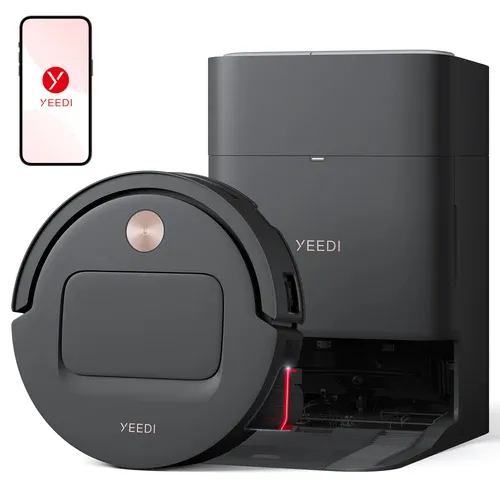


James Holland used the Yeedi S20 Infinity Ultra daily for a week in a home with five adults and two French bulldogs. Running it across hard flooring and carpet gave him a good sense of what it could take off his hands between deeper cleans. At standard vacuum-and-mop settings he measured about 56 dB, quiet enough that the robot could run without demanding much attention.
The Ultra earned this spot for how it handled everyday hard-floor messes and sauce spills. The removable roller also made it easier to clean the machine itself after a particularly dirty run.
The 22,000 Pa vacuum made quick work of rice on hard flooring, but it scattered a little cereal and left sugar behind on the first pass. It needed another pass for the sugar on carpet, too. A deep-clean setting with two passes helped. The robot handled most obstacles in testing, although it gave them plenty of room, and vacuum-only runs missed some edges because the extending component is the mop roller.
In our mopping test, the Yeedi cleared soy sauce, ketchup and mustard in a single pass, leaving the floor clean and free of sticky residue. The roller extends toward the baseboards and washes itself as it works. The targeted spray was less persuasive. James saw it wet a corner of the selected zone instead of hitting the dirt directly, although the robot still cleaned the patch.
On larger areas, the Yeedi stops to refill and rinse its roller at the dock. That adds time, but it also keeps the mop fresh throughout the run. If you have a lot of hard flooring and want fewer manual mop sessions, that’s a trade we’d make. Budget for dust bags and cleaning solution over time.
Read more in our full Yeedi S20 Infinity Ultra review.
The Best Robot Vacuum for Stains


Jason Cockerham tested the Shark PowerDetect UV Reveal for two weeks. Its most useful trick was the front-facing UV light, which helped it flag marks that were easy to miss in normal lighting. Once it spotted a stain, the vibrating pad could work over that patch. This is a good fit for kitchens and other busy hard-floor areas where a spill can dry before you notice it.
Setup took a few attempts to connect to Wi-Fi, but the robot mapped the room layout and furniture once it was connected. The app is best suited to a single floor because it only stores one map.
We also scattered sugar, lentils and cereal on hard flooring and carpet. On carpet the Shark picked up sugar and lentils on the first pass, while cereal took two passes. Jason didn't have to pull wrapped hair off the rollers during the trial. The Shark generally moved quickly and avoided obstacles well, though the app offered less control over room boundaries than some rivals.
In the kitchen, Jason used spot mode to see how it would handle ketchup and mustard. It scrubbed its way across the ketchup in small sections and left no visible smears, but took about 20 minutes. The thicker mustard needed a second attempt. That patient spot-cleaning routine is a good match for stubborn marks if speed is less important to you.
The bagless dock saves on replacement dust bags and washes and dries the mop pad. A short spot clean did not always trigger a pad wash, so it is worth checking the pad after a sticky spill. The UV feature is the clearest reason to choose this model over a simpler vacuum-mop. Especially if you have pets with muddy paws, or small children who are always on their hands and knees.
Read more in our full Shark PowerDetect UV Reveal review.
The Best Robot Vacuum for Picking up Objects


The Roborock Saros Z70 introduces a world-first: A mechanical arm that can pick up objects. It doesn't just clean the floors, it actually tidies up for you, as you can set locations such as the trashcan, laundry basket, or shoe rack.
Using AI object recognition, it's able to identify 108 objects, and you can train it to recognize 50 additional custom objects. So, whether it's tissues, laundry, shoes, or toys, the Saros Z70 solves one of the common pet peeves with robots, which is having to continually clear the floor for it to work.
The Saros Z70 is rated at 22,000 Pa. In Victoria Woollaston’s home, it cut manual vacuuming by about 70% and left the kitchen and hallway visibly cleaner. There was some hair wrap, which makes the Dyson a better fit if fur on carpet is your main concern.
The Roborock handled dried coffee splashes and dusty footprints in one pass in our tester’s kitchen, and the hallway dried without visible streaks. Its main reason to buy is the mechanical arm, which can move small objects out of the way during a clean and keep the floor looking tidier.
Honorable Mentions
Our eight picks cover the most common floor-care needs; however, below are some other options we tested and loved that narrowly missed a top spot in our guide.
- Shark PowerDetect 2-in-1: This earlier Shark is a capable everyday vacuum-mop if you mainly want routine floor cleaning and a self-emptying dock.
- Roborock Q7 M5: This lower-cost robot is a good fit for smooth hard floors. Its carpet pickup was weaker in testing.
- eufy Robot Vacuum Omni S1 Pro: The eufy is a strong pet hair alternative for households looking for a robot vacuum that requires less brush-roll maintenance.
Pros and Cons of Robot Vacuums
Robot vacuums might sound like a miraculous cure-all for floor cleaning at home, but there are certain pros and cons you should consider before making the investment.
Pros |
Cons |
|---|---|
They reduce time spent on chores by cleaning for you |
They won't replace your regular vacuum (yet) |
They soothe allergy symptoms by removing pet hair and allergens daily |
They're not as quiet as you might think |
They excel on hard floors |
Only expensive robots can clean carpet |
How We Test Robot Vacuums
We put a lot of thought into how we test robot vacuums. The testing process is similar to how we test vacuums, with a few key differences.
We test robot vacuums in our own homes to assess their ability to clean real-world messes, navigate obstacles such as cables, toys and pet waste, and build maps of real homes. We test them in homes with shedding pets and multiple floor types (carpet, linoleum, hardwood) to build a picture of what the robot is capable of.
We also run specific tests on substances to evaluate the robot's ability to clean fine debris, large debris, stains and spills. These standardized tests have been refined over the years, previously, they have included rice, flour, coffee grounds and more, but these are the tests we've discovered work best:
- A quarter cup of sugar, on hard floors and carpet
- A quarter cup of lentils, on hard floors and carpet
- A quarter cup of cereal, on hard floors and carpet
- A quarter cup of ketchup (if the robot can mop)
- A quarter cup of mustard (if the robot can mop)
These tests show the robot's ability to clean substances of varying sizes and properties. Alongside these tests, we also assess the robot's general cleaning abilities, noticing what it picks up and what it doesn't, how the floor feels afterwards, and how often we have to clean up after it.
We also test the robot's navigation and obstacle avoidance, weigh up app features compared to others, and determine how easy it is to clean the robot vacuum itself by taking it apart.
Essentially, we assess every aspect of a robot vacuum that someone might consider when buying. We do this over one to two weeks.
Brand Comparison: Roomba vs. Shark
- Shark: Stronger and more consistent cleaning performance, new UV technology, better value, lower noise levels.
- iRobot Roomba: Smoother app and more stylish designs.
For years, some of the highest performing robot vacuums we've tested were from iRobot Roomba. More recently, Shark robot vacuums have surpassed iRobot Roomba's offerings in quality and efficacy, introducing new technology and more consistent cleaning performance at a more accessible cost.
With the release of the Shark PowerDetect UV Reveal, an outstanding robot that vacuums and mops thoroughly, using UV light to detect stains that others can't, Shark has overtaken the technology that we once praised from the iRobot Roomba.
Moreover, the iRobot Roomba MAX 705 Combo, the latest flagship from the brand, was somewhat of a let-down compared to the strong performance we observed when testing the older iRobot Roomba j9+ Combo.
As Shark's robot vacuums can be discounted to as low as $400 during sale seasons, while still offering strong cleaning performance, their robot vacuum lineup is simultaneously more affordable and a more reliable choice.
However, iRobot Roombas are not without their merit. iRobot was one of the first brands to introduce robot vacuum cleaners to the mass market, meaning they have tremendous research and development resources. So, while the MAX 705 Combo may have been surprisingly weak, there's a high chance that their newer releases will fix any issues and improve the designs.
Also, the iRobot Roomba app is smoother to use, and their robot vacuums are much more stylish. Their cleaning stations often double up as side tables, with sleek aesthetics and warm tones to blend into your interior. Contrastingly, Shark's robot vacuums can somewhat stand out.
However, it's important to note that Dreame, Dyson, eufy and Yeedi are the four winning brands from our rigorous robot vacuum tests, offering more advanced cleaning and (often) lower prices than both Shark and iRobot.
FAQs
How Long Do Robot Vacuums Last?
With proper care and regular maintenance, the average robot vacuum lasts around four to six years. The lifespan depends on how often you vacuum, the type of flooring in your home, and how often you keep up with cleaning the robot vacuum and its filters, brushes, and sensors.
Models that are neglected or overloaded tend to wear out faster, while those treated like a well-used appliance, rather than a set-it-and-forget-it gadget, can easily last longer.
Do Robot Vacuums Work on Thick Carpet?
It depends on the pile and the brush design. On thick carpets, a robot can struggle to reach embedded debris and may have trouble moving over deep rugs. The Dyson Spot+Scrub Ai was particularly good at lifting pet hair from carpet in our tests. For a deeper clean or an especially thick rug, keep a full-size vacuum handy.
Are Robot Vacuums Worth It for Pet Hair?
Robot vacuums excel in their ability to clean little and often. They're not as powerful as the cordless and upright models in our best vacuums for pet hair guide. Instead, they offer frequent maintenance of your floors, picking up pet hair that's likely to accumulate throughout the day.
This cleaning style makes robot vacuums a big help for anybody with pet allergies. I've spoken to dozens of consumers who have praised robot vacuums as the single most effective solution to managing pet hair and avoiding buildup, to keep your home clean when you have pets.
Removing pet hair daily will limit exposure to the allergens found in pet dander, significantly reducing symptoms compared to those who clean once a week. And with the rise of combination robot vacuums and mops, you can clean up after your pets more hygienically.
Do Robot Vacuums Map Your House?
Yes, but not always. Robot vacuums build detailed maps of your home to give you greater control over where you're cleaning, which rooms to focus on, and which areas to avoid. It also means that the robot will ensure every spot is covered.
Some robot vacuums use random navigation, meaning they don't build maps but simply move around until they reach a wall or obstacle, then continue in a new direction. If you don't want a robot to map your home, opt for one of these models, but be prepared for it to frequently miss areas.
Do Robot Vacuums Need Wi-Fi?
Most robot vacuums need Wi-Fi to make use of all the available features. Without Wi-Fi, the robot vacuum won't be able to map your home, update its software, or utilize any of the features on the app, such as schedules, no-go zones, and cleaning status updates.
To discover more from our vacuum tests, be sure to look over our guide of the best Dyson vacuums, best Miele vacuums, or the best Dyson alternatives to save money on excellent floorcare.
Love the latest product news and helpful shopping advice? Sign up for our newsletter and get the latest features delivered straight to your inbox.