These 10 Kitchen Design Mistakes Are More Common Than You Might Think – Here's How To Avoid Them and Save Yourself An Expensive Redo
These faux pas will make your cooking space dysfunctional and the opposite of timeless – but they are easy to avoid with these expert tips, tricks, and solutions


Nothing brings you more regret than walking into your newly designed home and being faced with reminders of your kitchen design mistakes. Not only does it fall flat from a style perspective, but it's also an expensive room to get wrong.
Naturally, there will always be one or two things you wish you had done a bit differently, but if you ignore the basics of how to design a kitchen, the faux pas are going to be bigger and infinitely more expensive to fix – you really don't want to have to redo them.
And to help you get it right the first time, we've asked interior and kitchen experts which kitchen design mistakes they see all too often, and how you can avoid them. Heed their advice – it's key for a kitchen that is visually beautiful and actually functions well.
10 Kitchen Design Mistakes to Avoid
A kitchen is a truly fun room to design, but there's no denying that there is a lot that can go wrong. Some things make your kitchen feel unwelcoming, while others are features that simply make your kitchen look dated. But they are all mistakes that can easily be avoided, as long as you follow this expert advice.
1. Choosing Cabinetry That Lacks Timeless Appeal

Simple Shaker cabinets in this kitchen feel timeless and considered – they will still feel just as stylish in 10 years.
We love a kitchen cabinet trend as much as the next person, but when you're designing a kitchen, it's important to choose cabinetry that will stand the test of time. Unlike a living room or bedroom, the designs you choose for your kitchen need to last upwards of 10 years, so longevity needs to be a priority.
Something that is entirely trend-led will feel dated in a year or two, and it's not a feature you can change quite so easily. Instead, make decisions with timelessness in mind, from the style of the doors to the colors and finishes you choose.
Shaker cabinets have stood the test of time for good reason, as have natural wood finishes and warm neutral hues. The best kitchen designs keep it classic when it comes to the large details, like cabinets and countertops, and then experiment with color and trends in smaller ticket items, like wall decor and accessories.
2. Retaining Unnecessary Soffits

Removing soffits means your cabinets can run seamlessly to the ceiling, like in this kitchen, creating the sense of taller proportions.
The design of your kitchen goes beyond cabinetry choices and layouts. The bones of the room are the real starting point, and one that people often get wrong. One of the most common mistakes is leaving unnecessary soffits (built-out boxes above cabinetry that usually hide plumbing or electrics) in place.
'One of the most common kitchen design mistakes is keeping soffits when the kitchen doesn’t truly need them. In many remodels, soffits are left behind simply because they’ve always been there, not because they serve a functional purpose,' says Jennifer Beget, owner and principal designer at J Beget Designs.
'When unnecessary soffits remain, they visually compress the space, make ceilings feel lower, and instantly date the kitchen. In a full or thoughtful remodel, keeping soffits is a missed opportunity to elevate the entire room,' she explains.
It can also make your kitchen cabinetry feel bulky and misplaced, and will make your space feel a lot smaller than it really is. Instead, Jennifer says you should remove the soffits and let the cabinetry continue right to the ceiling.
'Bringing cabinetry all the way to the ceiling makes a kitchen feel significantly larger, more intentional, and far more luxurious. While some homeowners worry this requires fully custom cabinetry, it doesn’t have to,' she notes.
'The upper extension cabinet boxes can be added above standard uppers and finished with the same paint or stain and trim, creating a seamless, built-in look. It’s an investment that pays off immediately in scale, sophistication, and long-term value and one decision clients never regret.'
3. Unbalanced Scale of Cabinetry

It pays to really think about how usable your storage is. In this kitchen, tall cabinets have been thought about, and a charming ladder has been blended into the design. It's practical yet still so stylish.
Kitchen layout is a crucial part of your design, but so is scale. A functional kitchen utilizes all of the space available, but in a way that is accessible and usable. And one all too common mistake is introducing cabinets that are too deep and too shallow to be practical.
'Cabinets that are too shallow for everyday serving pieces and islands that are so deep the center becomes unusable. These details may seem minor, but they quickly impact how comfortable and functional a kitchen feels,' says Bebe MacKellar, designer at Fanny Bolen Interiors.
'Design around how the kitchen will actually be used. Cabinets should accommodate real dishware, and islands should be scaled so every inch is easy to reach, resulting in a functional kitchen.'
4. Choosing Decorative Details Too Late in the Design process

Tiles bridge the gap between your cabinets and countertops, so choosing them at the same time in the design process ensures they tie together beautifully.
There are certain elements of the design that we consider decorative, and therefore feel we can leave them until later in the process. However, some features, including kitchen tiles, need to be considered early – yet so often, people leave them to the last minute.
'One of the biggest mistakes I see is choosing tile too late in the design process. Tile is a major visual element, and when it’s treated as an afterthought, it can throw off the overall design or create delays once lead times and measurements come into play,' says Jamie Chappell of Fireclay Tile.
Instead of thinking of tiles as a solo element, consider them as the border detail between your cabinets and countertops. 'I always recommend selecting tile early, alongside cabinetry and countertops, so everything works together from the start,' says Jamie.
And it's not just tiles, either. Kitchen hardware, while easily changed down the line, should still be considered in tandem with your cabinetry. 'A common mistake we see in kitchen design is treating hardware as a purely decorative afterthought, selected late in the process to match a color scheme rather than specified as part of the functional planning of the kitchen,' says Gareth Hull, design lead at Hendel & Hendel.
'When handle styles, sizes, or finishes are chosen without considering door proportions, usage frequency, or how the kitchen will wear over time, the result can be cabinetry that looks correct on installation but feels uncomfortable to use or visually unresolved once the kitchen is in daily service. This is particularly apparent when undersized handles are paired with wide drawers, or when highly polished finishes are used in hardworking areas where touch and repetition quickly expose wear,' he explains.
'A more effective approach is to specify hardware early and with intent, using it as a design and performance decision rather than a finishing touch. Handle length, projection, and grip should be matched to the scale and weight of the cabinetry, while finishes should be chosen for how they age rather than how they look on day one.'
5. Overdoing the Kitchen Lighting Scheme

Ensuring you have task, ambient, and accent lighting in reasonable amounts ensures a scheme that can go from functional to cozy. The wall lights in this design offers a warm, lived-in feel.
Kitchen lighting is so important to get right. There needs to be enough illumination for the functional elements of the space, but if you overdo it, your kitchen will end up feeling stark and sterile, filled with bright light and no ambiance.
'One of the most common kitchen design mistakes we see is overdoing it, particularly when it comes to lighting. There’s often a temptation to add lighting at every possible opportunity, but great kitchens don’t rely on excess,' says Robert Bakes of Bakes & Kropp. To get it right, consider implementing the kitchen lighting rule of 3.
'Lighting should be thoughtfully layered, just like the architecture itself. A balance of ambient lighting for overall glow, task lighting where work happens, and accent lighting to highlight architectural moments creates a kitchen that feels warm, functional, and inviting rather than clinical.'
6. Picking Features Based on Trends Rather Than Longevity

Timeless is the most important work in kitchen design. In this scheme, wooden cabinetry has been paired with earth-inspired shades of green. It's a pairing you can be sure will never date.
A kitchen is an investment, so choosing a design that feels timeless is really important. And on the opposite end of the spectrum, following trends with no enduring appeal is one of the biggest and most regrettable mistakes you can make, especially when it comes to the bones of your space that are more difficult to change, such as tiles.
'Another common issue is falling in love with a trendy tile without thinking through how it performs day to day. Materials like Zellige or cement look beautiful, but they can be harder to install, stain easily, and require more maintenance than many homeowners expect,' says Jamie.
'It’s important to balance style with practicality. Think about durability, maintenance, and how you actually use your kitchen. Look for thoughtfully made tile that offers durability, consistency, and responsible production practices. The goal is a kitchen that not only looks great on day one, but continues to perform for years to come!'
7. Selecting a Layout For Aesthetics Rather Than Function

Spacing between your island and perimeter cabinets is a crucial detail. Make sure you can still walk past when the oven doors or dishwasher is open.
If there's one thing that will prove to be a kitchen design mistake, it's a layout that has been chosen to impress during a house tour, rather than one that actually functions for the way you use it.
'Equally important is respecting how a kitchen is actually used. When layouts ignore natural patterns of movement or place key appliances without intention, the space quickly feels inefficient, and that is something both homeowners and buyers notice immediately,' explains Robert.
'A beautiful kitchen must function effortlessly. Thoughtful ergonomic flow, anchored around primary appliances and activity zones, elevates a kitchen from simply attractive to genuinely luxurious. When form and function work together, the result is a kitchen that feels timeless, intuitive, and truly livable.'
A well-designed kitchen starts with understanding how the kitchen needs to function, as Richard Davonport, managing director at Davonport, explains. 'Layout decisions should be shaped around movement, workflow, and storage rather than visual symmetry alone. Clearances around islands and between runs need to be generous enough to allow multiple people to use the space comfortably,' he notes.
'When function is resolved first, the design choices that follow tend to feel calmer and more coherent, and the kitchen is far more likely to stand the test of time rather than feeling frustrating once it is lived in.'
8. Not Factoring in Enough Countertop Space
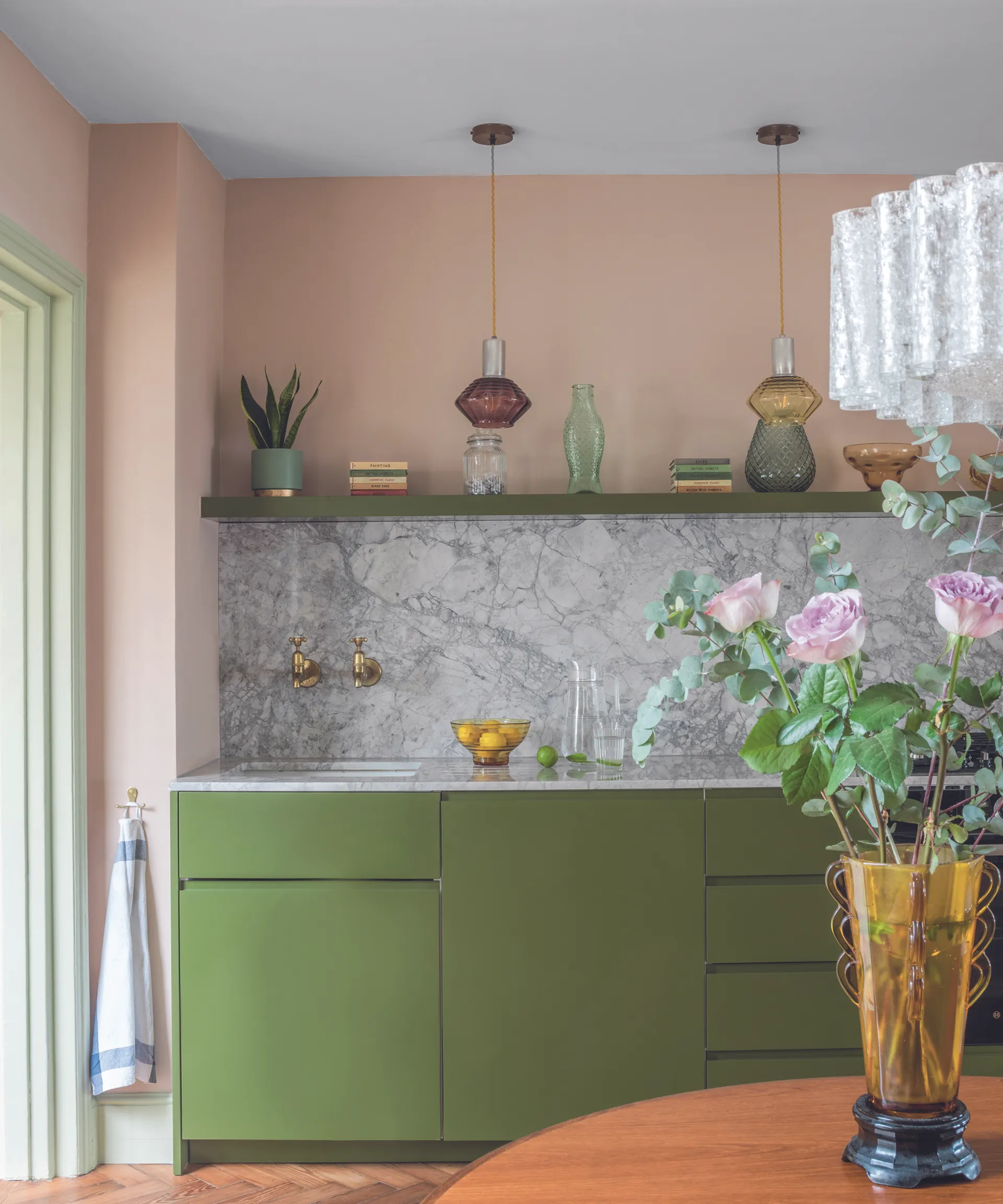
Prep space is king – clear countertops with dedicated uses will not only ensure you kitchen is functional, but elevates the overall look of it, too.
Storage always becomes the priority when designing a kitchen, but it's so important to factor in countertop space, too. It's a detail that will really transform the functionality of your cooking space, and an element you will wish you had thought about more.
The truth is, when you design a kitchen that lacks usable countertop space, the whole space feels less functional. Think about where you will likely prep food, such as chopping vegetables or even baking bread. Dedicating areas of your kitchen countertops near the stove or on an island will add flow to your workable spaces.
Planning out your countertop space will also help to ensure your surfaces don't become cluttered or filled with small appliances – clean lines and dedicated spaces really will elevate the look and feel of the entire design.
Also consider here whether you need countertop zones that function as a breakfast bar or a homework station for the kids. Useable surface space has to be considered early on so it doesn't end up cluttered or being absorbed into another use.
9. Forgetting to Tailor Storage to Your Lifestyle

A dedicated coffee bar is always a beloved detail – double points if you can integrate it into an appliance garage, like in this design.
We always talk about the importance of well-designed storage, but we aren't just talking about abundant space. We've already touched on scale when it comes to cabinetry depth, but you also need to actually tailor your storage to the way you use your kitchen.
If you use a lot of small appliances, like blenders, toasters, and hand mixers, consider adding an appliance garage so these essential pieces have a home to live in that is out of sight.
Similarly, if your morning cup of Joe is a non-negotiable, consider curating a dedicated coffee station with storage that caters to your coffee maker, beans, and favorite mugs without feeling cluttered.
Intentional storage space really makes a difference to your design. Without it, there is no order to your kitchen and how you store everything, leading to a dysfunctional zone you just don't enjoy using.
10. Having Too Many Appliances on Show

There's a reason all of the chicest kitchens feature integrated appliances. They simply look better, and this design is all the proof you need.
This is your sign to really think about your appliances and where they will live. A kitchen with multiple different appliances, both big and small, on show will make your space feel busy and overfilled, which is the last thing we want these multi-functional rooms to feel like.
'One common kitchen design mistake we often see is cluttering the space with too many visible appliances. While functionality is essential, an overload of appliances can disrupt sightlines and take away from the architectural and material details that give a kitchen its character,' says Karen Ferguson, senior principal of Harrison Design.
'Instead, we recommend planning for discreet appliance placement from the beginning. Less frequently used appliances, such as microwaves or steam ovens, can be located in a nearby pantry or scullery. This approach keeps the primary kitchen feeling calm, intentional, and visually cohesive while still maintaining full functionality.'
For the larger appliances that need to live in the main kitchen, such as a refrigerator and dishwasher, consider integrating them so you have a seamless flow of cabinetry, rather than visible appliances in mismatched styles and finishes. It's a small detail to factor into your kitchen design that will make a huge difference in the long run.
Your kitchen ideas should always be a balance of style and function. Design your space around how your lifestyle and the way you use your space, rather than simply selecting a layout that seems to be the most popular. Just make sure you read up on the kitchen design rules to never break, as it will help you to get your scheme right the first time.
