How to Choose the Best Refrigerator: An Expert Guide to the Best Refrigerator Brands and What to Look For
Chefs, appliance engineers and designers help us explain what to prioritise in a new refrigerator, and which brands are leading the pack


Refrigerators play a central role in your daily routine. They are in constant use and take up a large footprint in your kitchen. Yet unlike clothes and cars, which we also use daily, there is no test driving or trying them on for size.
How do you make a good decision about what refrigerator to choose when you are limited to fleeting showroom visits? That is where we can help.
I've done the research for you, with the help of repair experts, interior designers, 1000s of customer reviews, and even top fine-dining chefs. As a trained chef myself, I know what the home cook needs from this important appliance, and I have called on people in the industry to fill any gaps in my knowledge.
So, what criteria am I looking for? First, I run through every consideration you need to make when choosing a new refrigerator. From sizing concerns to knowing which tech to invest in, we look at what matters most.
Next, I have consulted experts to list out some of the best refrigerator brands – ones creating beautiful and practical designs that are easy to organize, efficient, and reliable (you never truly appreciate a good fridge until yours goes bust). As someone who loves to cook, I highly rate a refrigerator that is spacious enough to store my weekly groceries and easy to clean.
With these factors in mind, I've scoured feedback from users and professionals to help you choose the best refrigerator for you.
How to Choose the Best Refrigerator for You?
When you're scrolling through the best refrigerators online, it's easy to get lost in the range of models. Each brand offers an array of different designs, shapes, and sizes, all of which look good, but it's hard to know which option will actually suit you and your kitchen.
I enlisted the help of appliance experts, fine-dining chefs, and others spending their lives in kitchen settings to help us navigate the considerations of buying a refrigerator or fridge-freezer.
Types of Refrigerator
- French Door Refrigerators
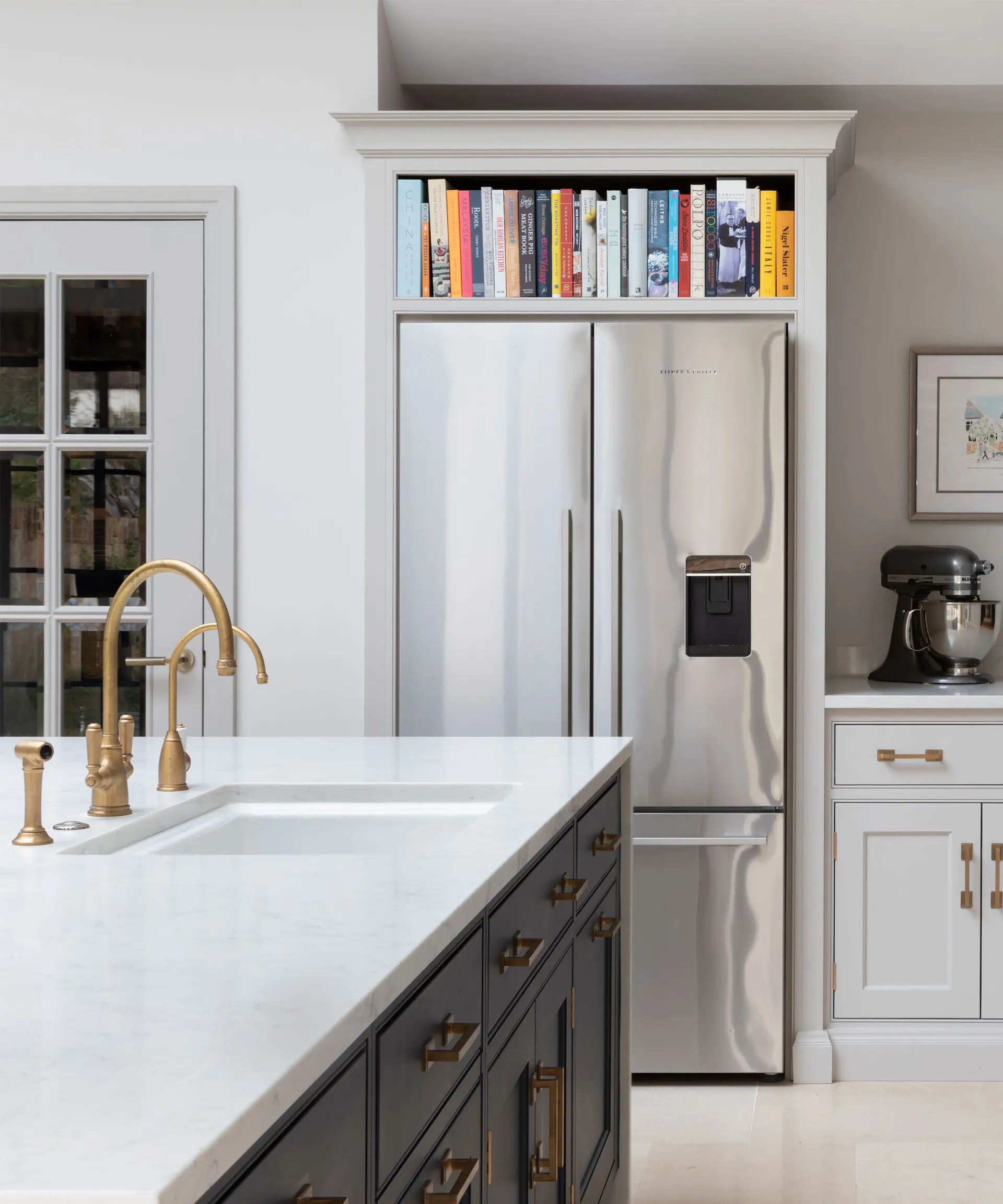
'These are great if you love easy access and tons of space. They have double doors up top for the fridge and a bottom freezer. Perfect for storing wide items like party platters or large trays. If you entertain often or have a big family, this style is a winner,' says expert Chef Dennis Littley. They also work well in narrow kitchens or by islands because the doors require less space to open. - Side-by-Side Refrigerators
Side-by-side configurations are best if you store equal amounts of fresh and frozen foods, and with a vertical design, more food can be kept at eye level. They are great for families who tend to have more frozen foods. - Top-Freezer Refrigerators
Small households and those on a smaller budget will find these suitable. They can also serve as a secondary fridge in garages, basements and poolhouses. They offer affordability, energy efficiency, and reliability, but less room for frozen goods than other options. - Bottom-Freezer Refrigerators
Chef Dennis continues, 'For those who prefer having frequently used items at eye level, bottom-freezer fridges are fantastic. This design makes it easier to reach fresh foods without bending down. If you store more fresh produce and dairy than frozen foods, this could be your match.' - Mini Refrigerators
Compact and convenient, mini fridges are ideal for dorm rooms, offices, or as an extra cooling option in a game room or bar area. They’re great for storing medication, drinks, and snacks, and some models even come with mini freezers for ice. If you need a no-fuss solution for keeping the essentials cold, a mini fridge is the way to go. - Wine Fridges & Coolers
These are a specialist subsection of home cooling, designed to store wines at optimum temperatures and recreate the conditions of proper cellaring. Look for designs with different compartments for reds and whites, UV-resistant glass to prevent light spoilage, and humidity control to protect corks.

What Size Should Your Refrigerator Be?
Before falling in love with a fridge, make sure it fits your space. Measure height, width, and depth – and don’t forget to factor in space for doors to open, ventilation clearance, and walkways. Fridges vary widely by brand and style, and there’s no true industry standard, so measure carefully before you start shopping.
Check internal capacity, configuration, and shape, too. Refrigerators have varying ratios of fridge to freezer – some are a 50/50 split while others will use 60 or 70 percent of the appliance for chilling. What you choose depends on how much of your grocery shop is fresh, and how much is frozen. If you love to batch cook, don't skimp on freezer space.
Don't overlook how the configuration dictates the size of what you can store, either. ‘If you’re looking for plenty of wide refrigerator storage, ideal for large platters or pizza boxes, think ‘Over/Under’ models, which place a pull-out freezer drawer below a wide eye-level fridge section, for full-width, easy access,’ says Ricky Davies, director, Sub-Zero & Wolf.
In terms of volume, a family of four needs a refrigerator with at least 20 cubic feet of space to comfortably fit a weekly grocery shop, leftovers and prepped lunches. Work to a volume of approximately 5 cubic feet per person.
For maximum capacity, opt for a full-size refrigerator and freezer placed side-by-side. Many people do not choose modular column options to create adaptable, cooling walls. Also look out for flexible storage, which is when one compartment (usually a drawer) can be set between 32°F and -8°F (or 0°C and -22°C). There is more on temperature control below.
Refrigerator Specs & Features
Refrigerator functionality can be split into physical and technical features. To decide what suits you, think about your household's habits. What kind of things do you eat most regularly, and would certain functions help preserve or store those more effectively?
Shelves, Bins & Racks
More shelves mean less rummaging, but think about the height you need between shelves. Most fridges have adjustable shelves, or look for split levels that can store shorter items like condiment jars next to tall bottles.
If you don't have a separate beverage fridge, look at integrated wine racks or bottle storage in the doors. Flexible drawers and shelves will be the most practical option for most people.
Climate- and humidity-controlled produce bins help keep food fresher for longer, saving on food waste. These are becoming standard in most refrigerators.
Water & Ice Dispensers
Having fresh filtered water and ice on tap can reduce plastic consumption and encourage everyone to drink more water, but can be another thing to maintain if underused. Consider whether integrated water pitchers and ice dispensers are useful or just nice-to-haves. Choose plumbed-in if possible, as the alternative requires refilling. This can be messy or is often forgotten, leading to empty pitchers that go moldy.
The latest options use UV lights to keep drinking water fresh, and integrated filters are also beneficial.
Lighting
Interior visibility helps you keep track of your food, reducing waste. Higher-end fridges tend to have better, more evenly distributed lighting to help you easily see into drawers and corners.
Lights in the freezer compartment are less common. They add cost, and many freezers have pull-out bins which would not be illuminated in use anyway. If you choose a French door refrigerator, or one where the freezer compartments are separate drawers, these are more likely to include LEDs.
Technology and Special Features
Don’t pay for tech you won’t use. Practical features worth seeking out include frost-free, auto-defrost and anti-bacterial finishes, which all help reduce cleaning and maintenance. Next, focus on functions that improve food quality or save time.
‘We’re seeing a lot of demand for rapid cooling drawers, too,’ adds Lucy Dunstan, product manager, Smeg. ‘Perfect for quickly chilling wine and soft drinks when entertaining, the handy alarm alerts when drinks are ready to serve.’
There are other alarms your refrigerator may have – the most useful being one to alert you to open doors. This is available on most mid- and high-end refrigerators now to help prevent food spoilage.
Temperature Control
All fridges have temperature settings, but many modern options have taken this to the next level to help you set up different zones. It is the case that various parts of your fridge or freezer should be cooler due to thermodynamics, but appliance manufacturers have created features to give homeowners greater control.
This is great if you find your storage needs change frequently. For example, meal preppers might have lots of fresh produce after a grocery shop, but then need to adapt their storage once they have batch cooked. As mentioned before, compartments that can be switched between fridge and freezer mode are also a great pick for family homes.
Zoneable temperature control is not essential, though. You can still keep your food fresh by following storage best practices. ‘Simply organize drawers by ingredient type, check the user manual for advice, to enjoy food that lasts up to five times longer,’ says Cesar Fernandez, Home Economist, at Miele.
Smart Features
Smart features often refer to WiFi ‘connected’ tech, which, at its most basic, allows you to control your refrigerator remotely via a phone, Alexa or other device. Advantages include being able to monitor stock and change temperature settings on the go. Some models also notify you when food is out of date and offer recipes based on ingredients stocked.
We’re not quite at the stage where your refrigerator can automatically order groceries, but those with internal cameras let you check supplies while out shopping. Models with built-in screens are useful for sharing family calendars, watching TV, and searching recipes. If you like the idea of a smart fridge, we have compared features from two of the market leaders in our LG vs. Samsung smart fridge head-to-head.

Sub-Zero creates a range of fridges that can be freestanding or integrated for a seamless look
Refrigerator Style and Finish
A refrigerator is a major visual and functional piece, and you don't want it to end up an eyesore. Whether you lean modern or vintage, there are plenty of options so you can choose a model that complements your kitchen’s design.
Celebrity interior designer Hilary Matt advises choosing a refrigerator brand with timeless style that 'seamlessly integrates into the overall design of the kitchen.'
Stainless steel and matte black have been popular modern finishes for a few years now, but consider fingerprint-resistant finishes for a sleeker look (and to save on cleaning time). We are also seeing a growing number of glass-doored fridges – best suited to those with strong organizational skills as everything is on display.
For neutral color palettes, seek out chic satin white, beige and ivory. And if you want a fridge that looks as good now as it might have done 60 years ago, retro designs from Smeg and Big Chill continue to be fun yet trend-proof. Smeg even collaborated with Dolce and Gabbana on an infamous $10,000 hand-painted version of one of their fridges. It's truly iconic.
Don't forget the interior – Jennair is known for its stunning Obsidian range with striking black insides.

How to Choose an Energy Efficient Refrigerator
Good energy efficiency is crucial for an appliance that runs 24/7. A fridge with a poor rating can cost more than twice as much to run as the top-rated models. That can mean the difference between $60 and $150 in energy bills for refrigeration per year. Look for the EnergyGuide Label to give you estimated annual running costs in kilowatt-hours. This is a system led by the Federal Trade Commission (FTC).
The best refrigerators carry an Energy Star Certification administered by the Environmental Protection Agency (EPA). This is awarded to fridges that are 10 percent more energy-efficient than the FTC standard. The best models have a further 'Most Efficient' rating, which is granted yearly to models that exceed standards by 20 percent.
Many energy-efficient fridges also use advanced preservation systems, which can reduce food waste (a win-win for your wallet and the planet). Keep an eye out for customisable climate drawers to protect produce, dual compressors, and ethylene gas filters that slow over-ripening fruit.
Best Refrigerator Brands
If you're looking for the best refrigerator brand, these are the expert-recommended names. From luxury appliance makers to more budget-friendly brands, this is where to start. We have grouped them by need so you can choose the right category for you.
- Ultra Luxury and Commercial Grade Refrigerators
- Premium & Mass Luxury Refrigerators
- Tech Forward & Smart Refrigerators
- Quality Mass Market
- Statement & Design Brands
Ultra Luxury and Commercial Grade Refrigerators
The thought of having the type of refrigerator found in restaurants would not have been on homeowners' wish lists a decade or so ago, but celeb influence and higher expectations of home chefs have seen a rise in these types of appliances. These models can offer a fully integrated look or be flush-mounted into cabinetry, adding to the architecture of your kitchen.
Brands to look out for include Thermador, Sub-Zero, Gaggenau, and SKS. They have dual compressors, are extremely well made, and offer 20+ year lifespans. As expected, they are expensive and will require a good $10,000+ of your kitchen budget.


Premium & Mass Luxury Refrigerators
If you want an aesthetic option but don't have space or budget for the refrigeration elite, look at the range of premium built-in or freestanding models from the likes of JennAir, Monogram, and Fisher & Paykel. German and Scandinavian brands are also top runners in this category, where style and tech combine for high-efficiency appliances from the likes of Miele, Bosch and ASKO.
You don't have to forego the bespoke look in this category either, as some brands (like GE Café) offer customizable hardware and flat-panel finishes for that integrated look.


Tech Forward & Smart Refrigerators
If you want a wide range of features to keep your fridge – and even your calendar – organized, look at these mid-budget smart refrigerators. Korean rivals LG and Samsung are best known in this space, taking decades of TV and laptop tech experience to add screens and connectivity to their fridges.
The US market is catching up, though. GE has a SmartHQ range of refrigerators with hands-free water dispensers and temperature alerts; Frigidaire has been exploring connected features to offer monitoring and flexible storage; and some Whirlpool models can send you temperature and maintenance alerts.


Quality Mass Market
Some of the best refrigerators are the many high-quality, yet accessible models from everyday appliance brands. KitchenAid, GE Profile, Whirlpool, and Maytag are household names for good reason – they have plenty of capacious options for busy families, don't cost too much, and are lauded by engineers for their reliability.


Statement & Design Brands
If you are looking at freestanding refrigerators, why not make them part of your decor? Smeg and Big Chill are best known for bright colors, retro styling, and vintage designs. Some models are fairly simple when it comes to the technology side, but meet modern performance expectations. Their target audience really is people looking to make a statement, perhaps in a guest house, bar area, or pool house where all you require is straightforward chilling, freezing, and reliability.


How We Researched the Best Refrigerator Brands
I would love to fill a home with the top models from all the best refrigerator brands – and more – so that I could interrogate each and every feature. However, this would be unsustainable. Luckily, there is a lot of data out there, which has helped me to decipher the best refrigerator brand (though I admit, it wasn't easy, and it demanded weeks of effort dedicated to research).
I have read through thousands of customer and expert reviews, as well as watched videos and spoken to customers with experience owning these refrigerator brands for many years. I also spoke to repair experts, asking them which brands they most commonly repair, their most hated and loved brands, and which models they have in their homes.
Finally, I visited showrooms where some of these refrigerators are on display, so that I could see what they look like in real life, too.
With hundreds of hours dedicated to refrigerator research, I know these appliances as well as, if not better than, many people who have them in their homes. If there's a useful feature, I know about it. If there's an annoying quirk, I know about that too. All this means that when you end up with one in your home, there will be no nasty surprises.
Meet the Expert Panel

Chef Dennis Littley is a classically trained chef, writer, and recipe developer who is dedicated to making home cooking easy. He has over 40 years of restaurant experience and helps people bring that quality to their own meals. We consulted him to marry his knowledge of professional-grade appliances with home-chef needs.

Lucy has worked with premium appliance brand Smeg for over 20 years, with roles in product support and product management. She has a wealth of experience in the luxury appliance space, understanding both the technology and aesthetic concerns of shoppers.

Miele's culinary manager, Cesar, understands how to get professional results at home by using premium appliances. He is an expert in home economics, demonstrating his skills as a chef and possessing a wealth of knowledge on everything from ovens to cooling appliances.

Derek Holifield is the product and production engineer at Polar Temp, bringing over 13 years of hands-on experience in the refrigeration industry. He has experience with ice makers and ice merchandisers, combining practical knowledge with a passion for building reliable, efficient equipment. Derek is dedicated to ensuring the end user receives the most reliable ice merchandiser possible.

Hilary Matt is an interior designer based in New York City, specializing in residential and commercial interiors. Function and comfort are the most important things to Hilary when designing a space, as well as timeless design.

Gregg is the CEO of Murray Lampert Design, Build, Remodel in San Diego, California. His experience in construction, home remodeling, and home services spans over 42 years. His areas of expertise include project management, job costing, cost of repair, architectural and interior design, structural engineering, professional installation, and more.

Our Content Director Lindsey has been writing about homewares and appliances for nearly a decade. In that time, she has tested countless small appliances and attended trade shows such as IFA Berlin to open every refrigerator door, drawer, and panel in sight. She is a keen home cook who redesigned her small kitchen around her many appliances (and an all-important wine rack), so she has been on both sides of appliance expertise as a researcher and customer.
Refrigerator Buying FAQs
Still have some unanswered questions? Here are some other things people wonder about when choosing a new refrigerator.
Should I Choose an Integrated or Freestanding Refrigerator?
This should be one of your first decisions and is often dictated by whether you are replacing an existing unit or starting from scratch with a new kitchen. Built-in refrigerators offer a seamless look with no gaps between the appliance and cabinetry.
They do need the rest of the kitchen to be designed around them, however, which can be more restrictive. If you are in the kitchen-design stage, you will need to mention early on that you want a built-in refrigerator.
On the other hand, a freestanding fridge-freezer will make a strong statement and can move with you should you relocate. But if you did want a built-in look, a good kitchen designer can create this with freestanding models. Just be sure to allow four inches above and at least two inches at the side and back for ventilation.
How Much Should You Spend on a Fridge Freezer?
Prices can range widely depending on size, brand, and features. The average is $1,500, but this is because you can find models ranging anywhere from $400 for a basic fridge or unit with a top-freezer to $15,000 and more for built-in and modular column designs from Sub-Zero and Viking.
Set your top-line budget early so you can focus on options that fit. Don’t forget to include delivery and potential installation costs. Also weigh up long-term savings, since more expensive models may save you money on energy or food waste.
If you're overwhelmed by options or shopping for your first big appliance, prioritize capacity, function, layout, and energy efficiency. A fridge’s core job is to keep food cold and fresh, so if in doubt, start by looking at simple models with good storage and a high rating before adding in your non-negotiable tech that will drive up cost.
How Much Does Refrigerator Installation Cost?
Standard home delivery can add another $100 to $350 to your costs. This will be at the higher end if installation is required. Plumbing for ice makers and mains-fed water will require additional fees.
Where Can I Buy One of the Best Refrigerators?
We cover the best refrigerator brands below, but if you want to browse a selection, start with these retailers that have a wide range.
The Home Depot, Best Buy, and Lowe’soffer a full selection of LG, GE, and Maytag refrigerators (alongside other brands), often with delivery, installation, and protection plan options. I found their websites easy to navigate, and the customer reviews extensive and helpful.
AJ Madison is one of the largest independent appliance retailers, known for carrying more expensive brands such as Sub‑Zero and Bosch, as well as more affordable options from GE and Maytag. There are extensive filtering tools to help you find what you need, which is good because they have LOTS of choices.
Amazon also carries a few models and can be helpful if you're looking for mini refrigerators with speedy delivery. They also offer large discounts for Amazon Prime Day, which now occurs biannually in July and October. I wouldn't use them for my main refrigerator though, as other retailers offer more direct support and warranties.
Wayfair has a range of the best refrigerator brands too, including Smeg's standard models – while upmarket Williams Sonoma carries Smeg's more luxurious, designer SKUs, as well as wine coolers and mini fridges.
Wherever you shop, make sure to take note of the returns window. Some retailers have very tight turnarounds for you to report defects.
When Should I Buy a New Refrigerator?
You should buy a new refrigerator approximately every 12 years, according to the United States Department of Energy. Every appliance will be different, so if your food is spoiling more quickly than you would expect, it’s being loud, consistently frosting, or using more energy, look into it.
Should I Buy a Fridge-Freezer or Separate Appliances?
Whether you should buy a fridge-freezer or separate appliances is really a matter of capacity. If you’re a big household, buying separate appliances can be useful, but if you wouldn’t fill that space, it’s much easier to combine two-in-one. It can also be a lot easier having both a refrigerator and freezer in one place. You could always supplement a 70/30 split fridge-freezer with a chest freezer in a garage or basement.
If you do need a lot of storage space for fresh and frozen food – perhaps you live further from a grocery store or have a larger family – and you have a large kitchen, look into modular column refrigerators that offer a near-bespoke configuration or commercial-grade options for home use. Thermador, Signature Kitchen Suite, Monogram, and Fisher & Paykel are good brands to look into for these options.
How Can You Choose a Reliable Refrigerator?
To find out which refrigerator brands are truly reliable, I asked Derek Holifield, a production engineer at Polar Temp with over 13 years of hands-on experience in the refrigeration industry. He works closely with ice makers, repairs, and merchandisers, and although repairs often vary, he has noted some patterns in brands that are useful to know.
'Whirlpool, Maytag, and KitchenAid (same parent company) must be workhorses, as I rarely have to do refrigerator calls on them. When I've had to deal with getting parts, I've found them easy to find. I've also never really had too many issues pulling their models apart for maintenance,' Dale reveals.
'French door models of LG and Samsung are often complicated to work on. Parts availability can be an issue, too,' Derek explained. This doesn't mean they are bad by any means, but it can make getting a fix more difficult should your product fail. Yale Appliances notes that French door models have been problematic for many brands in the past, and LG's reliability has dramatically improved in recent years.
From Derek's expertise, a few key takeaways stood out for me. The best refrigerator isn’t just the one that looks good out of the box – it’s the one that’s easy to maintain years down the line. All the experts I spoke to recommend looking into the warranty and service rates before you buy. Knowing that alone can save you time, stress, and money in the long run.
When is the Best Time to Buy a Refrigerator?
As with most appliances, the best time to get a good deal on a refrigerator is during the Black Friday sales. This is when we see the largest discounts, meaning you might be able to afford a brand or model that was otherwise out of budget. It is also between some of the biggest tech events of the year, so major manufacturers are releasing new products.
However, as many of us know, when we need to buy a fridge doesn't always land at the time of the great sales. If your refrigerator breaks down, that forces your hand. But if you are buying a new refrigerator as part of a kitchen redesign, do keep an eye out for upcoming sales.
